Search Results
The Okefenokee’s outlook
Students will define various types of wetlands and identify their unique characteristics before learning about the Okefenokee Swamp’s function as a carbon sink and its ecological and cultural importance. After learning about the Okefenokee, students will create an educational conservation campaign about the Okefenokee or another vulnerable ecosystem.
Run like a rabbit
In this activity, students will play a game called “Run Like a Rabbit” to model population dynamics and then analyze how predator and prey populations changed over time during the game. Students will then read the Science News article "In a Quebec park, a science game brings predator-prey dynamics to life” and identify how the game described in the article differs from the game they played. After they analyze how predator and prey tactics affect population dynamics, students will identify a new tactic that was not included in the “Run like a Rabbit” game and will create a new rule for the game to reflect this tactic.
Critter crater
Learn how researchers use the scientific method to study a beloved landmark — Chicago’s “Rat Hole.” Practice designing your own experiment and creating a hypothesis. Learn to draw conclusions from data, all while using your investigative spirit to study the nuances of this mysterious impression, then make your own observations.
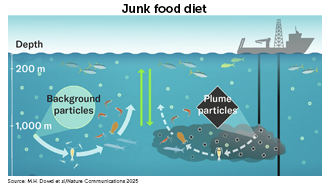
Plume food will not make plankton plump
Tiny floating plankton can accidentally eat sediment particles kicked up by deep sea mining. Plankton that munch these nutrient-poor particles could starve, which could lead to a starvation cascade affecting creatures at higher levels of ocean food webs.
Ancient ecosystem clues
Students will describe what they can learn from different types of fossils, from bones to microfossils. Then they will learn about an example of fossilized vomit and answer questions about how paleontologists use fossilized “clues” to learn about ancient species’ interactions and ecosystems.
Giant Bats’ Midnight Snacks
Swoop aside, vampire bats. The grisly-eater prize may go to Europe’s greater noctule bats. Discuss how various measurements can combine to increase our understanding of a complex predator-prey behavior, all while interpreting graphs and discussing how other forms of evidence could improve the current model.
Puzzling problems
In a research study about group coordination and cooperation, researchers tasked both humans and ants to solve the same sort of puzzle individually and in groups. Students will describe what they learn about the study’s experimental design, first after watching videos of the ant trials, then after watching videos of the human trials, and finally after reading a comic that summarizes the research study.
One species’ trash is another’s treat
Scientists have long noted that polar bears seem to leave much of their prey behind, preferring to eat only the blubber. On first glance, this might look wasteful. But abandoned portions of that carcass might actually benefit other species in the ecosystem. Practice carrying out percentile calculations while answering questions about polar-bear predation strategies, all while discussing the ecological interplay between various species in a harsh Arctic biome.
Woodpecker muscles in action
In this lesson, students will review the human muscular system and then explore how its movements compare with those of woodpeckers. Students will also examine a diagram that shows different woodpecker muscle groups and analyze data from a research article about how those muscles are used while hammering.
Ecosystem portrait
In this activity, students will read the Science News Explores article “There’s life beneath the snow — but it’s at risk of melting away” and reflect on how the author of the article educates the reader. After finishing the article, students will create their own ecosystem portrait to educate their classmates about a unique ecosystem.
Developing dioramas
In this activity, students will create their own dioramas. To do this, students will observe their local ecosystem and take pictures of parts of their ecosystem that they believe tell a story. Students will then learn about how dioramas can be used to tell scientific or historical stories and will convert their ecosystem stories into 3-dimensional dioramas.
The art of chemical predation
Predation occurs when one organism, the predator, kills and eats another organism, its prey. In this lesson, students will learn about the recently discovered chemical predation tactics of the feather-legged lace weaver spider, which vomits toxins on its prey. Students will explore the possible evolutionary advantages and disadvantages of this technique and research another organism that uses chemical means for predation.