Search Results

Puffy Planets and Synthetic Cells
Use news articles from the September issue of Science News to have students compare and contrast non-living SpudCells with living animal cells and learn how scientists discovered the density of distant exoplanets.sc
Engineering the basic building block of life
In this lesson, students will learn about the SpudCell, a scientific model that is a step toward creating synthetic life. Students will compare and contrast non-living SpudCells with living animal cells. Then, they will explore what it means to be alive and the importance of scientific models in research.
Super-puffy planets
Jupiter-sized planets with the density of cotton candy orbit distant stars. Learn how researchers use light-related data from their stars to reveal the size and mass of orbiting exoplanets. Answer questions about density and discuss how our limited data unlock secrets of worlds beyond Earth.
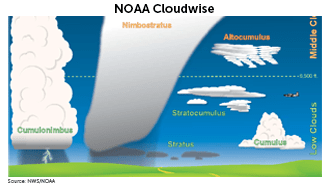
What shape do you see in the sky?
Clouds take all sorts of shapes, from wispy to puffy to towering. Meteorologists, or weather forecasters, spend a lot of time predicting clouds and studying how they form because clouds are behind all storm systems — from tornadoes and hurricanes to rain and snowstorms.
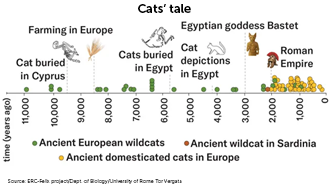
Cats and their ancient 9 lives
Like a toy on a string, the timing of cat domestication has been a moving target. Now researchers have pounced on a new timeline suggesting that tame descendants of African wildcats left the continent more recently than realized.
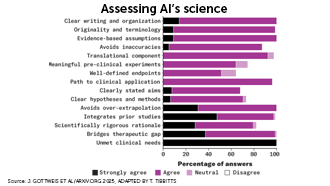
Is AI the new research buddy?
Powerful forms of artificial intelligence are now playing roles in research labs around the world. While they change how humans make discoveries, the AI tools aren’t fully autonomous yet. Some scientists are skeptical, while others are working to make the idea a reality. This could change how science is done..

Cutting Onions and Conserving the Okefenokee
Check out these lesson plans paired to the June/July issue of Science News Explores and use the phenomena of dicing onions to have students discuss how liquids respond to pressure changes and introduce students to the ecological and cultural importance of the Okefenokee Swamp before asking them to create an educational conservation campaign about a […]
The Okefenokee’s outlook
Students will define various types of wetlands and identify their unique characteristics before learning about the Okefenokee Swamp’s function as a carbon sink and its ecological and cultural importance. After learning about the Okefenokee, students will create an educational conservation campaign about the Okefenokee or another vulnerable ecosystem.
Don’t cry over an onion
Don’t cry, just dice that onion with a sharper knife. Scientists experimented to learn what makes the cut: slow slices and sharp blades. Discuss how liquids respond to pressure changes while answering questions about how a better understanding of this minor kitchen problem could translate into major changes in other fields of science.
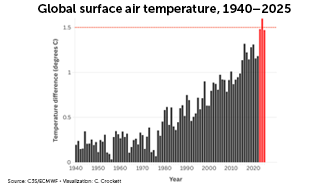
Hot Hot Hot!
The last three years were the hottest on record, a new analysis shows. It was also the first three-year-period in which average global temperatures exceeded 1.5 degrees Celsius above preindustrial levels. That threshold coincides with weather extremes and increased risks to biodiversity and human health.
Animal joy
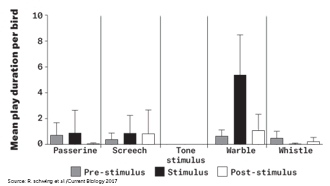
For decades, scientists have struggled to identify or measure joy in animals. Better measurement of creatures’ positive emotions would allow scientists to make strides in studying the causes of happiness and how animals communicate it. So a team of researchers is trying to develop a “joy-o-meter,” a set of metrics to help understand animal emotions.
Debate your AI use
In this activity, students will consider the use of AI in the science classroom. Students will gather information to prepare for a student-moderated debate on whether AI should be used as a tool in the science research process. During the debate, students will collaborate with their peers to formulate their arguments and rebuttals. After the debate’s conclusion, students will work together to determine a policy for ethical use of AI in the science classroom.