Earth and Space Sciences
We summarize the week's scientific breakthroughs every Thursday.
- Earth
Diagram the way to net-zero greenhouse gas emissions
Students will review, discuss and diagram atmospheric greenhouse gases and their impact on Earth. Then students will analyze a graph to begin thinking about what it will take to achieve net-zero emissions. Learning Outcomes: Reviewing greenhouses gases and their impact on Earth, diagramming human impact, understanding the idea of net-zero emissions.
- Humans
Human Population Hits a Milestone
The world population has reached 8 billion people, according to the United Nations. In this guide, students will learn about how the human population has grown over time and how it is projected to grow in the future, then analyze a graph of world population data. In a quick activity, students will think about how a growing human population might impact various industries and how changes at the national or international level might help those industries support a larger population.
- Science & Society
Preparing for population growth
In this quick activity, students will brainstorm the effects of population growth on industries such as agriculture and medicine, then will work collaboratively to come up with changes at the national or international level that will help those industries support the growing population.
- Math
Graphing global population trends
Students will explore a graphic representation of trends in the size of the global human population and analyze the importance and implications of projected data.
- Humans
The human population sets a new record
Students will answer questions about the Science News article “The world population has now reached 8 billion,” which explores trends in human population growth. A version of the article, “Human population hits a milestone,” appears in the December 17, 2022 & December 31, 2022 issue of Science News.
- Space
What’s the deal with DART?
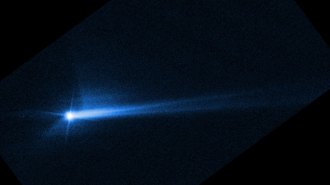
In this quick activity, students will create a TikTok video about the outcome of a NASA mission to knock an asteroid off course.
- Physics
NASA’s DART Mission Is a Success
Did you hear about the spacecraft that crashed into an asteroid — on purpose?! In this guide, students will learn about NASA’s DART mission and discuss the core physics principles behind it.
- Space
Bumping asteroids off course
Students will answer questions about a NASA mission to smash a spacecraft into an asteroid after reading a Science News article and watching a Science News TikTok video about the mission. A version of the article, “NASA’s DART mission is a success,” appears in the November 5, 2022 issue of Science News.
- Science & Society
Spinning tales about spiders
Students will answer questions about the online Science News article “News stories have caught spiders in a web of misinformation,” which describes new research looking at how spiders are portrayed by the media. A version of the article, “News stories give spiders a bum rap” appears in the September 24, 2022 issue of Science News.
- Humans
How Much Heat Can We Handle?
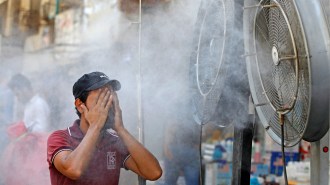
Summers are getting hotter. Use this guide to help students explore the science of heat and its effects on the body, and then apply what they learn through diagramming.
- Humans
Spread the word
In this quick activity, students will create a social media post to raise awareness of a public health issue. They will consider how to craft an engaging message that communicates the issue while also appealing to the public.
- Earth
Feeling the heat
Students will answer questions about the Science News article “Humans may not be able to handle as much heat as scientists thought,” which explores the effects of extreme heat on the body and what that means for us as heat waves intensify around the globe. A version of the article, “How much heat can we handle?” appears in the August 27, 2022 issue of Science News.