Search Results
Starting small to curb climate change
When it comes to fighting global warming, it’s hard to know where to start. How can individuals make meaningful contributions to this effort? This activity, designed for in-class or at-home learning, encourages students to find ways they can reduce their own carbon footprints, as well as help others work toward the same goal.
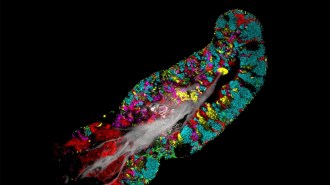
Where Bacteria Live On Our Tongues
In this guide, students will learn about bacterial communities on the human tongue and use existing knowledge of interspecific interactions to create metaphors about relationships in the students’ own communities. In an activity, students will practice note-taking and summarizing skills.
Ecological relationship status
Students will use their knowledge of interspecific interactions to explore bacterial communities on human tongue cells. Then, students will apply those concepts to create metaphors for relationships in their own community.
Career share and compare
These discussion prompts encourage students to discuss and compare the work and background of two SN 10 scientists to explore the varied paths to becoming a successful researcher.
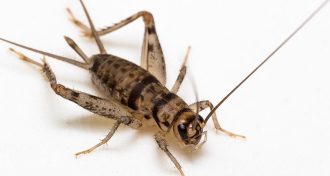
Down on the (Cricket) Farm
This guide encourages students to assess their own views on insect eating, to explore the nutritional value of insects and to consider the challenges of insect farming.
Exploring insect farming
Students will answer questions based on the Science News article "Down on the (cricket) farm."
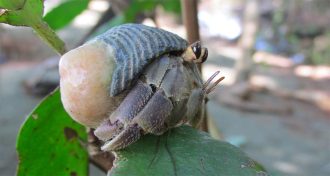
Hermit Crabs Are Drawn to the Dead
This guide asks students to connect ecological concepts to the real world and examine how science gets translated from research study to news article.
Surveying the hermit crab housing market
Students will answer questions based on the Science News article "Hermit crabs are drawn to the dead."
Web of changes
Students will think through and diagram an Arctic and local food web and will explore how ecosystem disruptions can impact the food webs.
Explore volcanic eruptions, and their devastating aftermath
These discussion prompts explore volcanic explosivity and collapse, the ecosystem and health effects of eruptions and how to keep people safe during natural disasters.
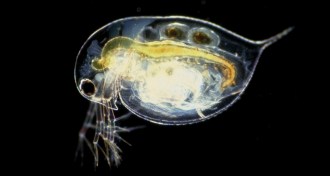
Rising Carbon Dioxide Threatens Lake Food Webs
Students will explore how rising carbon dioxide is threatening a lake food web, and will measure how the environment affects the heart rate of water fleas.
Surveying a sensitive ecosystem
These discussion prompts cover the pH scale, the solubility of gases, food webs and how organisms react to climate change.