AI vs the Big C … Plus, Hearing Health & Staying Cool
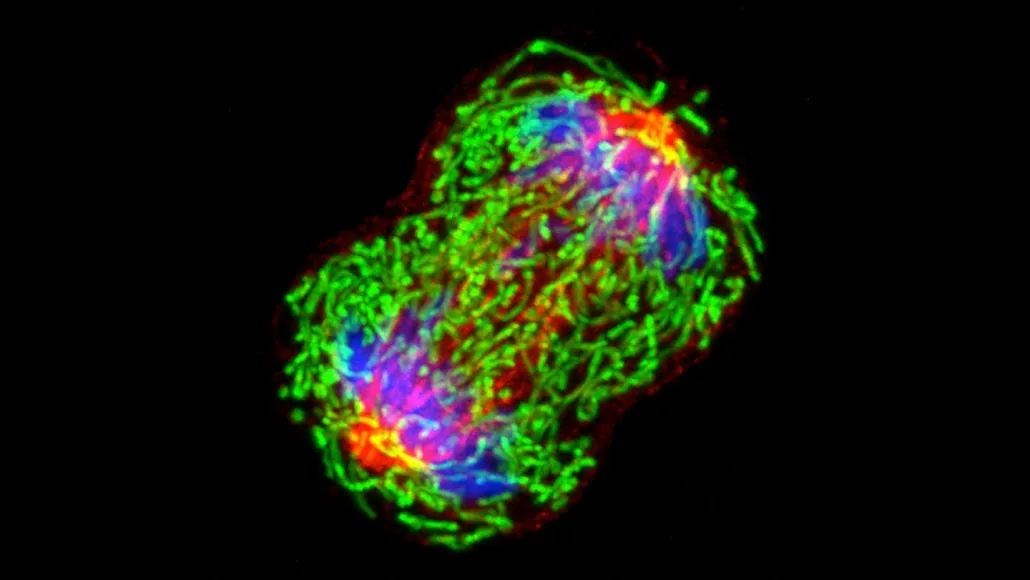
Cancer cells, like these dividing breast cancer cells, can shed DNA fragments into the bloodstream. Tests to spot these fragments could aid early cancer detection efforts.
Wei Qian/Univ of Pittsburgh, NCI
By Susanna Camp
🔬Spotting Tomorrow’s Tumors Today
When it comes to cancer, timing is everything, and early detection saves lives. But what if “early” could mean before it even starts? SN‘s Meghan Rosen unveils exciting new research into pre-diagnosis DNA detection from simple blood samples, hinting at a future where we preempt cancer’s very inception. As we wait for the new technology to develop, we wanted to explore how AI is accelerating the transformative leap in cancer detection using liquid biopsies (laboratory tests done on a sample of blood, urine, or other body fluid to look for cancer cells from a tumor or small pieces of DNA, RNA, or other molecules).
🕵️♀️The Microscopic Clues in Your Bloodstream
Tumor cells shed DNA fragments into the bloodstream. In a study led by Yuxuan Wang, an oncologist at Johns Hopkins University School of Medicine, researchers found they could identify pre-cancerous DNA as far as three years in advance of a diagnosis by testing teaspoon-sized amounts of blood plasma. This means evidence of pre-cancer can be identified even before a tumor is large enough to be detected by traditional imaging.
☠️The high cost of late diagnosis
The current landscape of cancer detection is fraught with challenges. Many cancers are not diagnosed until later stages, when treatment options are more limited and outcomes are less favorable. Traditional screening methods, while valuable, often have drawbacks: they can be invasive (think colonoscopies), expose patients to radiation (from mammograms, CT scans, and the like), or even non-existent (pancreatic cancer, for example, is rarely detected early). The late diagnosis of many cancers contributes significantly to mortality rates and the immense emotional and financial burden on patients and healthcare systems. The need for better, earlier, and less burdensome detection methods is driving medical researchers and analysts toward AI as a second set of eyes in the laboratory.
🧪Liquid biopsies and AI
Liquid biopsies such as the technique used in Wang’s research offer a minimally invasive approach to cancer screening. Artificial intelligence and machine learning combined with this method have the potential to speed diagnosis. AI algorithms sift through vast amounts of complex genetic data from blood samples, identifying subtle patterns and biomarkers that would be imperceptible to the human eye, bringing unprecedented speed and scale to cancer research.
Here are some of the pioneering companies combining liquid biopsies and AI:
- Guardant Health aims to “conquer cancer with data.” The company has developed digital sequencing technology for cancer detection, offering products like Shield, a blood test for early-stage colorectal cancer screening (typically conducted with a colonoscopy or stool-based test). They raised a total of $557 million, including a $360 million round led by SoftBank, before their 2018 IPO. Now valued at a billion dollars, they continue to secure significant capital and are a leader in liquid biopsies. (One notable caveat: the company is currently being sued for patent infringement by competitor Tempus AI.)
- Freenome combines multiple data types, including DNA and RNA sequence information, with machine learning to develop blood tests for early cancer detection. The firm has programs for colorectal and lung cancer. They’ve raised over $1.3 billion, including a $250 million round in 2024 led by Roche and a16z Life Sciences Growth Fund.
- GRAIL is known for its Galleri multi-cancer early detection blood test, which uses next-generation sequencing and AI to detect a signal shared by more than 50 types of cancer. (The tests can be self-administered, but results should be interpreted by a healthcare provider in the context of medical history, clinical signs, and symptoms.) The company was acquired for $8 billion in 2021 by Illumina, but the parent company divested as a result of a 2023 antitrust lawsuit and now operates as a standalone company (NASDAQ: GRAL).
- Oxford Cancer Analytics (OXcan) is developing liquid biopsy blood tests using advanced proteomics (the study of the entire set of proteins in an organism) and AI for early cancer detection, initially focused on lung cancer. Based in Oxford, in England, and Toronto, they’ve raised $11 million from a Series A round earlier this year.
We’re keeping an eye on AI to take down the Big C.
🗣️ Hear us out: the future of hearing health
The science behind hearing loss is clear: loud sounds can irreversibly damage the delicate hair cells in our inner ears. Science News’s neuroscience writer Laura Sanders explores the impact of the sounds of summer such as rock concerts, lawn mowers, fireworks and the like, with recommendations for how to preserve our hearing.
🚨Sounding the alarm on neurological impairment
Research reveals a correlation between hearing loss and cognitive decline, including an increased risk of dementia and reduced mental processing speed. The theory suggests that the brain expends immense energy trying to interpret muffled sounds, leading to cognitive overload. Furthermore, hearing loss can lead to social isolation, a known risk factor for neurological health issues.
Correlation, of course, doesn’t equal causation — scientists haven’t proved that hearing loss is the cause of the decline. But it is clear that protecting our hearing, a critical component of maintaining overall brain health and mental acuity, starts with prevention. Use earplugs at concerts and when operating power tools. And keep an eye on developments such as new audiotech that can let you listen to audio without headphones. Another key to protecting your hearing is diagnostics.
✅ Accessible assessments
Despite the profound impact of hearing loss on quality of life and cognitive function, many people remain unaware of their condition or delay seeking professional help. Stigma, inconvenience, and the high cost of traditional audiology visits are all significant barriers to evaluating your hearing. This creates a pressing demand for innovative, user-friendly, and scalable diagnostic tools. There’s a clear market opportunity for solutions that can democratize hearing assessment, track changes over time, and facilitate timely intervention when needed.
🎵Tuning into hearing health innovators
The best way to assess your hearing and find out if you have hearing loss is to do a hearing test performed by a trained audiologist. At-home tests can get the process started. Here are some market leaders offering accessible and effective hearing diagnostics and solutions:
- Mimi Hearing Technologies, based in Berlin, Germany, makes a popular hearing test app and personalized audio software that adapts sound to individuals’ unique hearing abilities, integrated into headphones and other devices. They’ve raised a total of more than $25 million, most recently from a Series B.
- HearX Group develops the hearScreen smartphone-based hearing test for community health workers and school nurses, as well as self-screening solutions, aiming for affordable access to hearing care globally. Based in South Africa and Illinois, the company raised over $17 million before merging with hearing aid manufacturer Eargo in March 2025, raising its valuation to $100 million.
- Sound Scouts offers a gamified hearing test app designed for both children and adults, and validated by the National Acoustic Laboratories, which is funded by the government in Australia, where the company is based. They’ve raised over $5 million from grants and seed rounds.
The future of hearing health might just be a sound investment.
😅 Sweat Equity: Investing in the Future of Cool Buildings
Forget the old “cool roof” that merely reflects sunlight. A new paint sweats to keep structures from overheating. Dive into the cool science behind cooling materials Larissa G. Capella’s illuminating portrait for SN.
🏢 When Buildings Break a Sweat: The Science of Thermoregulation
The experimental cement-based paint was developed by scientists in Singapore, combining three cooling strategies: radiative cooling (shedding heat by emitting infrared light), solar reflection, and evaporative cooling (emitting vapor to reduce temperature). The material was tested over a period of two years, and was shown to dramatically reduce temperatures. Moreover, the paint stayed white during that time (unlike traditional paint or commercial cooling paint, which yellows). The material self-regulates in response to the environment. As the air cools or humidity drops, the paint re-absorbs moisture, preparing for its next “sweat cycle.” If it can be scaled, this passive, adaptive cooling mechanism promises to dramatically reduce the reliance on energy-intensive air conditioning, offering an efficient and elegant solution to thermal management in buildings.
🔥The Hot Market for Cool Solutions
Every year seems to bring record-breaking heat, raising the imperative to reduce energy consumption, lower carbon footprints, and cut operational costs across residential, commercial, and industrial sectors. Data centers, for example, generate an enormous amount of heat, and are prime targets for innovative cooling technologies. While the specific “sweating paint” is a nascent research development, the broader field of advanced, energy-efficient coatings and passive cooling materials is thriving.
🪭Painting a Profitable Future: Advanced Cooling Technologies
Companies in this space are leveraging innovative materials science to create the next generation of thermal management solutions for buildings. Here are a few of the coolest:
- SolCold makes a coating based on nanotechnology for houses, warehouses, data centers and storage containers. The coating consists of two layers: the outer one that filters out the sun’s rays and the inner one that actively cools the material by turning heat into light. Based in Israel, they’ve raised nearly $15 million to date from grants and a recent Series B round.
- SkyCool Systems develops radiative cooling panel systems that resemble solar panels. They passively cool buildings, reflecting heat away from surfaces and emitting it into space. Based in Mountain View, CA, the firm has raised over $9 million from grants and seed investments.
- The Purdue Research Foundation Office of Technology Commercialization, while not specifically a startup, helps carve a path to market for engineering innovations such as the “whitest paint.” Developed by Purdue professor of mechanical engineering Xiulin Ruan, the material keeps surfaces cool enough to reduce the need for internal air conditioning. The paint made a splash on the news circuit when it was featured on the PBS NewsHour, The Late Show With Stephen Colbert, and Saturday Night Live.
With that cool news, we now return you to your summer reading.
Disclaimer: The Science News Investors Lab newsletter is for informational purposes only and does not constitute investment advice. Society for Science and Science News Media Group assumes no liability for any financial decisions or losses resulting from the use of the content in this newsletter. Society for Science and Science News Media Group do not receive payments from, and do not have any ownership or investment interest in, the companies mentioned in this newsletter. Please consult a qualified financial advisor before making any investment decisions.