Shark shields and the materials science market
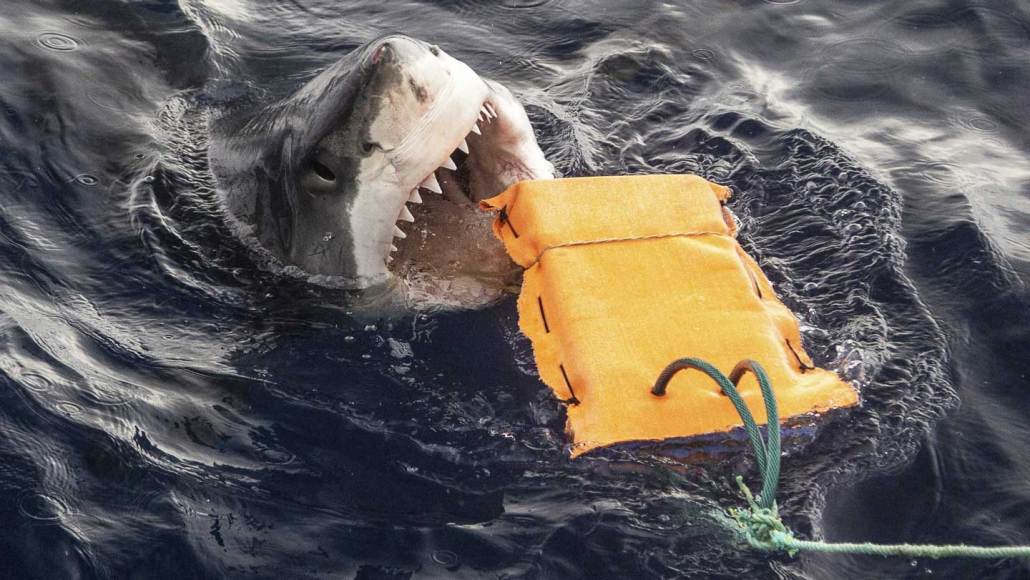
This white shark is chomping down on a new type of bite-resistant wetsuit material near Neptune Island Group Marine Park in South Australia.
Flinders University
In 2024, there were 71 recorded shark bites globally with seven fatalities. While your fear of sharks may be mostly irrational, that danger is dramatically higher for those who spend lots of time in the ocean, like surfers or divers. Carly Kay reports for SN on a new wetsuit that may protect its wearer from shark bites.
🏄 Built-in shark shield
Existing shark-resistant suits like full-body chain mail are heavy and make swimming difficult. Researchers from Australia — which boasts a terrific surf culture — tested four bite-resistant materials to soup up the synthetic rubber neoprene that’s common in wetsuits. One had strategic sections of chain mail, and others incorporated Kevlar — the stuff of bulletproof vests — or lightweight yet durable fibers used in sailboat ropes.
The researchers then lured white sharks and tiger sharks to a boat, baiting them to bite a buoylike object covered in either a bite-resistant or traditional wetsuit. All four materials almost entirely resisted severe damage, even when the sharks dragged and thrashed the object. The standard neoprene suits were deeply punctured, but the test materials only had shallow indentations, as if a housecat had bitten them. This innovation may prevent shark-attack victims from bleeding out, which is the primary cause of death from this rare episode.
👨🚀 A materials science market
Though shark bites are exceedingly rare, there’s value in investing in protective material development. Applications for shark-bite resistant wetsuits and clothing could extend to hikers and campers who risk bear attacks. Investing in protection against these unlikely but sometimes deadly encounters could reduce hospital visits and save lives.
🏊 Bite thwarters
- Shark Stop: Among the products included in this study, Shark Stop upgrades wetsuits with ultra-high molecular weight polyethylene nanofiber, which is abrasion-resistant and stronger than steel. Founded in 2021, this crowdfunded company got a cash infusion from a Kickstarter campaign in 2022 that was fully funded in under 48 hours, with 273 backers pledging over $153,700 when the founders asked for $65,400 — demonstrating a demand to fill this niche.
- Vector Textiles: This North Carolina–based company produces pesticide-free clothing that protects its wearer from mosquito bites, which are far more prevalent than shark bites and can have deadly consequences when they spread diseases. In 2015, they received a $500,000 grant from the Department of Defense.
These materials help make nature a little safer for us to enjoy.
Disclaimer: The Science News Investors Lab newsletter is for informational purposes only and does not constitute investment advice. Society for Science and Science News Media Group assumes no liability for any financial decisions or losses resulting from the use of the content in this newsletter. Society for Science and Science News Media Group do not receive payments from, and do not have any ownership or investment interest in, the companies mentioned in this newsletter. Please consult a qualified financial advisor before making any investment decisions.