You breed tomato, I breed potato: Hybrid cash crops
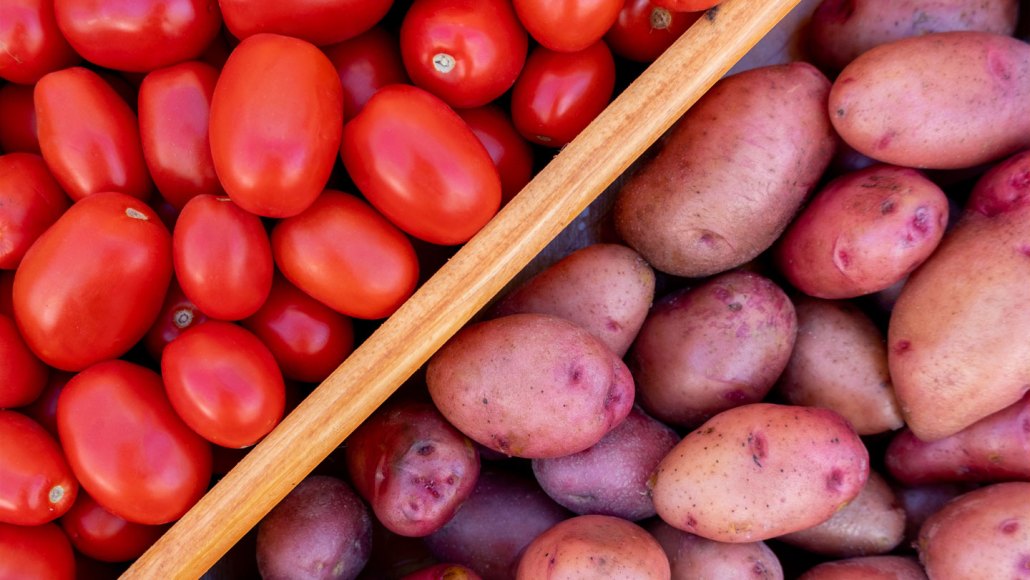
Potatoes came from a cross between an ancient species of tomato and a tuberless potato-like plant, a new genetic study shows.
Korneeva_Kristina/Getty Images
Pluots, tangelos and apriums are all examples of hybrid fruits. But some hybrid produce may surprise you, like one starchy tuber we all know and adore: the potato. Javier Barbuzano reports for SN on new research that shows an instance of natural interbreeding between an ancient tomato plant and a potato-like species created our beloved spuds.
🥔 A surprising mashup
About nine million years ago in the Andes mountains, a tomato plant crossbred with a species that resembled potato plants, but lacked tubers, or bulbous, subterranean plant stems that can sprout new plants from its “eyes.” This interbreeding led to tubers, which were inherited across the thousands of cultivated and wild potato varieties. A team of researchers published their findings on this hybridization in the journal Cell this past July.
After analyzing dozens of genomes from cultivated and wild potato varieties, the team found that every species examined had a mixed genetic composition with about half coming from tomatoes and half from tuberless potato plants. This consistent combination indicates potatoes began as a single hybrid crossing between these two groups.
New hybrids are often sterile because of genetic incompatibilities. Still, the cultivated potato (Solanum tuberosum) and its many tuber relatives prove that hybridization has the ability to form new, complex organs and drive evolution. And while most of the over 100 wild potato species are too bitter or toxic to eat, indigenous Andeans found a delicious wild potato variety and cultivated it, demonstrating how crop domestication and hybridization can work hand in hand.
🧬 Hybrids come to market
Humans have long been selecting for traits like high yield or pathogen resistance in staple crops like potatoes. This strategy has proven necessary in the face of blights like the 19th-century Irish potato famine and current threats like the Colorado potato beetle. But this choice has inadvertently narrowed genetic variability in cultivated potatoes, making them less adaptable to extreme environmental factors like heat and flooding. Still, selecting crops for traits associated with success has grown more popular, especially with the controversial introduction of CRISPR; the global gene-editing market is estimated to reach a valuation of over $17 billion by 2032. But there are many ways to modify crops to make them more resilient — or to create new hybrids entirely.
🌱 Hybridization for hardiness
- Wild Bioscience: A biotech spinout from the University of Oxford, this Series A crop improvement startup was founded in 2021. Its computer algorithms uncover promising genes from wild plants that could help crops weather climate change or enhance harvests for global food security. So far, it’s raised over $59 million from the Ellison Institute of Technology this past October.
- Ohalo Genetics: Founded in 2019, this startup based in Aptos, California specializes in accelerating crop growth. Their technology entails cultivating offspring plants that possess the entire genome of both parent plants — as opposed to half from each — which creates a higher likelihood of beneficial trait combinations to help them succeed. They raised $40 million in January 2024.
- Seed-X: This Series A company, founded in 2016 and based in Delaware, uses AI imaging software coupled with a massive seed data bank to identify and sort the most genetically promising seeds. In June 2022, they raised $10 million.
As advanced as our cultivation has become, a nine-million-year-old hybrid might still be the one to beat.
Disclaimer: The Science News Investors Lab newsletter is for informational purposes only and does not constitute investment advice. Society for Science and Science News Media Group assumes no liability for any financial decisions or losses resulting from the use of the content in this newsletter. Society for Science and Science News Media Group do not receive payments from, and do not have any ownership or investment interest in, the companies mentioned in this newsletter. Please consult a qualified financial advisor before making any investment decisions.