How could an amino acid police colon cancer?
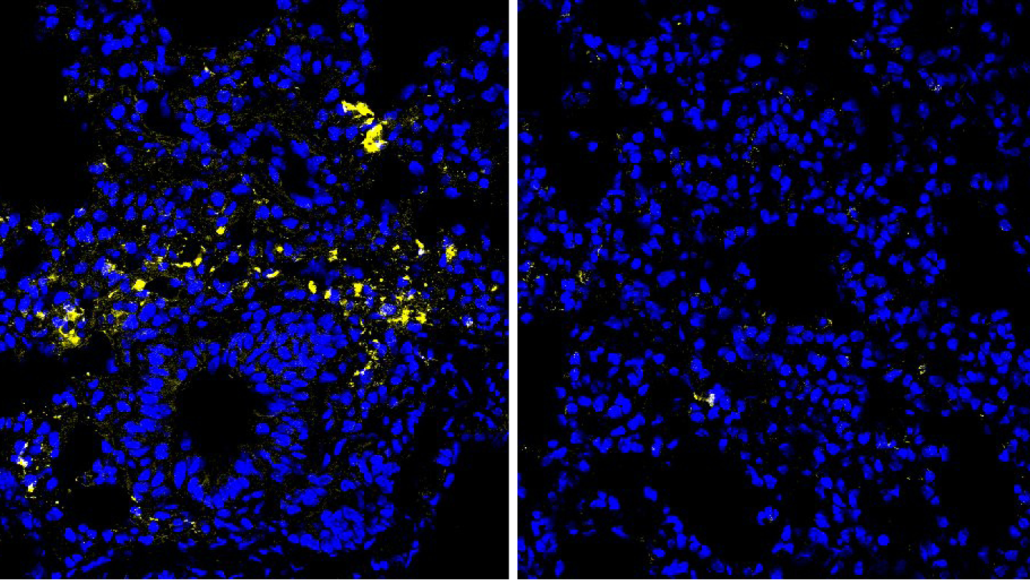
Microscopy images of lung tissue showing blue cell nuclei and yellow coronavirus.

After SARS-CoV-2 infection, mice that had been fed a low arginine diet had more virus (yellow) in their lungs (cell nuclei shown in blue) compared with those fed a high arginine diet (right).

Q. Wu et al/Cell 2026

In recent years, drugs that help the immune system fend off tumors have given many patients new options for treating their cancer. But there’s still a lot researchers don’t know about this area. A new study in mice dangles a tantalizing possibility: that the amino acid arginine, found in protein-rich foods like turkey and in dietary supplements, might bump up the supply of immune system bloodhounds that can catch the merest whiff of cancer.

This is early-stage research. It’s too soon for people to start gobbling up extra helpings of an arginine-rich Thanksgiving feast with the expectation of preventing tumors. But experts say the find is definitely worth following up on. Science News’s Meghan Rosen serves up a taste.

⚙️ A critical cog in the immune protein assembly line

Let’s get technical for a moment: proteins are the biological building blocks of life, crafted from 20 different amino acids. While your body manufactures 11, the other nine—the “essential” ones—must come from your diet. Others, like arginine, are classified as conditional, meaning a dietary source for them becomes vital during periods of illness or physiological stress, when the body can’t make enough.

Not yet a subscriber?

Access to this content requires an Investors Lab subscription. Sign up for a free trial today to explore exclusive, data-backed insights into scientific breakthroughs set to disrupt industries.