Conversations with Maya: Roderic Pettigrew
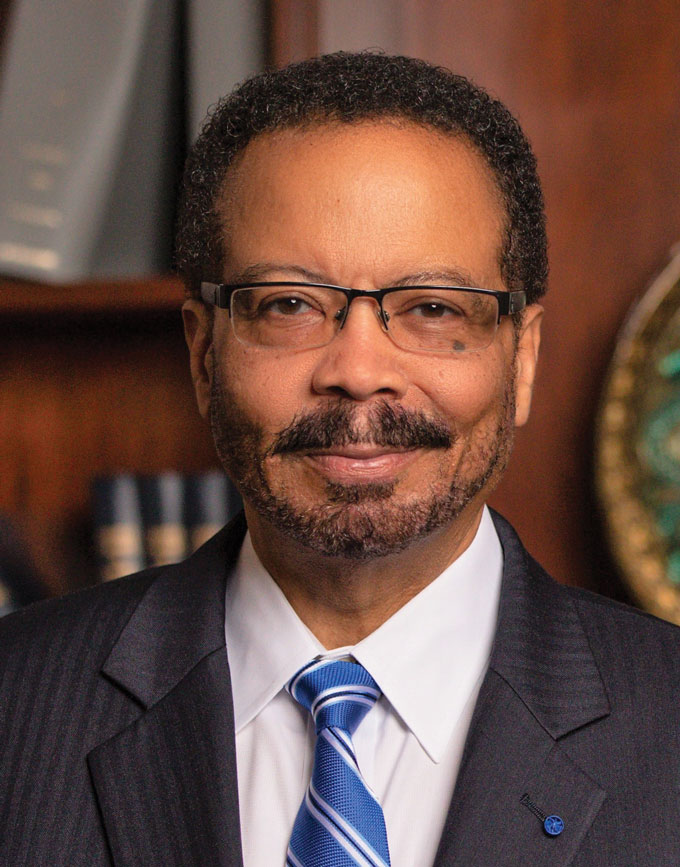
Maya Ajmera, President & CEO of the Society for Science and Publisher of Science News, chatted with Roderic Pettigrew, an alumnus of the 1967 International Science and Engineering Fair (ISEF). Pettigrew, who won the Vannevar Bush Award from the National Science Foundation and was the founding director of the National Institute of Biomedical Imaging and Bioengineering (NIBIB), currently serves as CEO of Engineering Health and Executive Dean for Engineering Medicine at Texas A&M University, in partnership with Houston Methodist Hospital. We are thrilled to share an edited summary of their conversation.
How did competing in ISEF in 1967 impact your life and are there moments that still stand out to you?
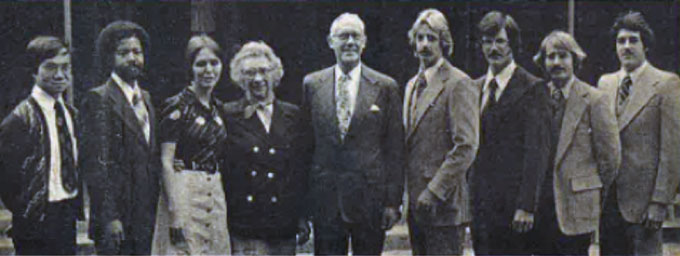
Going to ISEF was quite a memorable experience. Growing up in the segregated South in the ’60s, this stands out as a significant event in my history. I appreciated it at the time, and I appreciate it even more in retrospect.
Even though I was born during the era of Jim Crow and racial segregation, I was fortunate in two ways. One, my immediate family was solid. My parents were people of impeccable character. They valued the dignity of others. They taught us to always consider the well-being of others. Second, as a young person, I was always interested in science. I often describe myself as having come out of the womb a scientist.
In 10th grade in Albany, Georgia, I had a highly impactful teacher, Robert Roquemore, who taught us that being a scientist means you are able to understand the laws of nature and the basic principles that govern how things work. Those principles can lead you to discovery.
At ISEF in San Francisco, Mr. Roquemore was so thrilled when my name was called as a fourth-place prize winner. I was just delighted to be participating. I recall that during the award ceremony, Mr. Roquemore was behind me and had to kick me under my seat when my name was called because my reaction was delayed. He was just ecstatic. He sent a telegram back to Monroe High School in Albany, and I won’t forget it. His telegram said, “Pettigrew, takes fourth! Pettigrew takes fourth!” Given all of the obstacles we had to overcome, it was as if I had won a gold medal.
Your undergraduate education was in nuclear science and engineering. How did you find your way to the biological sciences?
I always had this basic interest in the welfare of man and a love of science. Those two come together in the biological sciences and medicine. When I was a graduate student at MIT, I had no medical school plans, but I did plan to work on problems that would improve people’s lives.
While conducting my Ph.D. research, I spent a lot of time at Massachusetts General Hospital. Being in that environment was eye-opening. I began to think that not only did I want to work as a physical scientist, but I felt I could be more effective if I really understood those problems firsthand, which is what led me to medical school.
You were the founding director of NIBIB. What was your experience in building the institute from the ground up?
It was a marvelous experience to be named the founding director. I consider myself to be very privileged and a classic example of having the right blend of talents, experience and interest at the right time.
The experience was uniquely challenging because although Congress was responsive to the call to establish this new institute, the National Institutes of Health (NIH) itself, including NIH leadership, was not happy about the new institute and didn’t see the need for it. From a practical standpoint, adding another institute meant that whatever funding the new institute received would not be available to the existing institutes. So for that reason, there was some resistance and hurdles that we had to overcome. In addition, there was a need to harmoniously blend the professional engineering and medical communities that had not operationally converged. The value of this, however, was inexorable.
What was your biggest medical accomplishment as part of the institute?
The institute became the home for what is now referred to as convergence research. It became the home for the integration of the physical sciences, life sciences and engineering. The power of convergence is indisputable and is in great evidence now. We even see it in this pandemic. It’s through convergence that we arrived at these vaccines at unprecedented speed and the multiple widely available tests.
The technologies that emerged from NIBIB have been in development for some time, but they involve genetic engineering, they involve immune engineering, they involve bringing together the physical sciences and the life sciences. That’s really what I’m proud of. Realizing this convergence and its impact — both now and in the future.
You have spoken about the Black Lives Matter movement. What are your thoughts about its impact?
My comments following the Central Park peaceful bird watcher incident and the George Floyd killing were about the need for everyone to recognize that humanity binds us all. In so doing, I sought to also illuminate the clear systemic nature of racism as a real social phenomenon with which we still wrestle. I have experienced this all of my life despite efforts to make meaningful contributions to society and interact with people as people.
Ultimately, it was a call to understand the commonality we share. It was also a call to appreciate the inherent value that experiential, racial and ethnic differences bring to the composite human community. It was a call to appreciate our common core as humans, to be humane and to embrace the flavor that comes from noncharacter-based differences, such as ethnicity, cultural variations, differential life experiences and perspectives.
It’s been encouraging to see people from different walks of life come together and demand changes to eradicate systemic racism. Many sectors are starting to realize that humanity does indeed bind us, and the lost opportunity and self-injury our entire society will continue to endure if social injustice is not addressed.
Recruiting students of color into STEM fields has long been a challenge. As a dean, how are you expanding access?
Diverse teams are more effective at problem-solving. There is a national need to recruit more diverse students in order to properly respond to the growing challenges facing society. Having a diverse faculty base certainly helps when recruiting students, but expanding access to STEM starts long before they reach higher education, and this merits sustained attention as undergraduates.
Black students, like all students, need to be recognized and valued for their potential and the critical role they play in enhancing the effectiveness of the scientific enterprise through diversity. These students should be nurtured and mentored throughout the pipeline. Key elements include sufficient numbers to provide a supportive community, a culture that welcomes and provides a sense of belonging, mentors that offer guidance, sustained assistance and a plan for addressing financial impediments.
There are so many challenges in the world today. What keeps you up at night?
As someone who is driven by problem-solving, it is hard to sleep at all amidst so many challenges plaguing society. A more recent challenge that’s been at the top of my mind is the racial and societal inequity in health care illuminated by COVID-19. This has been even more greatly compounded by inequities in vaccinations, consequent to both an understandable history-based hesitancy among minorities and systemic inequities in access and communication.
Data from the U.S. Centers for Disease Control and Prevention shows that minorities are inoculated at levels far below their share of the population. Black, brown and Indigenous Americans constitute a population that is more likely to suffer more severe consequences. This is an illustration of a broader problem in our society in which those with the greater need are often those who don’t benefit from modern medicine.
I think the convergence of the sciences and engineering can accelerate the development of purposeful technologies to institute functional guardrails and ease of practical implementation into our health care delivery system. I also think we can engineer technological innovations to help overcome the social divide that works against health equity and more broadly address the composite social determinants of health. There is this opportunity, which science, inclusive of social science, can help answer.