On moonshots and Minneapolis
Who cares about going to the moon when the world is in chaos?
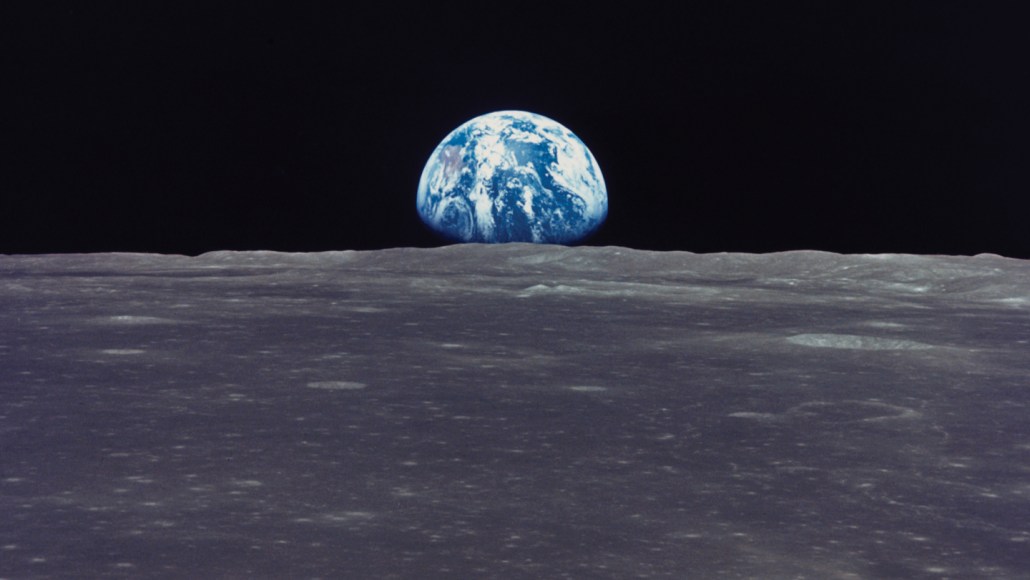
Earth peeks above the lunar horizon in this 1969 photo from Apollo 11, the first mission to put humans on the moon. Though such missions are touted for their power to unite humankind, they also bring our earthly problems into sharp relief.
NASA
This is a human-written story voiced by AI. Got feedback? Take our survey . (See our AI policy here .)
Since the beginning of the year, I’ve been gearing up to cover the launch of NASA’s Artemis II mission. This launch aims to bring humans back to the vicinity of the moon for the first time in more than 50 years, with an eventual eye toward landing humans on the moon and learning how to live there long-term.
I expected to feel unalloyed excitement for this moment. I’ve been enraptured with space since I was 8 years old. I dreamed of being the first woman to land on Mars and search for alien microbes. I followed that passion to an astronomy degree and a career writing about space, for the joy of sharing my cosmological enthusiasm.
One of the things I love most about space exploration is its inspirational power and its potential as a unifying force. The first moon landing is remembered as a moment when the entire world looked up in simultaneous amazement.
“For one priceless moment in the whole history of man, all the people on this Earth are truly one,” President Richard Nixon said in his phone call to Neil Armstrong and Buzz Aldrin after they landed on the moon in 1969.
So in early January, as I eagerly listened to lunar science talks at an astronomy meeting in Arizona, I wondered if Artemis II would invoke the same feeling. We could certainly use it in 2026.
Two days later, U.S. Immigration and Customs Enforcement agents shot and killed a woman about a mile from my house in Minneapolis.
The woman, Renée Good, was demographically identical to me. We both moved to Minneapolis less than a year ago and had children the same age. She had been observing several of the thousands of ICE agents who inundated Minneapolis under the Trump administration’s Operation Metro Surge. The largest immigration enforcement deployment in United States’ history, it has been met with ongoing resistance from many Minnesotans.
I came home from the conference to find masked agents in military vests driving around my neighborhood. I witnessed them arrest someone across the street from my house while surrounded by neighbors blowing whistles and crying, “You can’t do this!”
Thousands of protesters filled the parks and streets, enduring frigid temperatures and chemical weapons deployed by federal agents. The situation intensified when immigration officers shot and killed Alex Pretti, a 37-year-old intensive care unit nurse who had been observing enforcement actions.
My immigrant neighbors hid in their homes with sheets pulled over the windows in a way that reminded me of my Jewish relatives hiding during the Holocaust. My kids were scared. I was scared. It was very hard to think about anything else.

Meanwhile, NASA prepared to launch Artemis II. I sat staring at the draft of my preview story with a hollow feeling in my chest: Who cares about people going to the moon?
This feeling was a departure, not just from myself, but from history — or so I thought. For my entire life, I had bought into the popular image of the Apollo missions as a symbol of the astonishing things people are capable of when they work together. But that image is incomplete. It turns out plenty of people felt profoundly who cares about the Apollo moon landing — or worse, that it was a shameful waste of money and effort.
The 1960s, like now, were marked by deep political division and social unrest. The civil rights movement, the burgeoning gay rights movement and the Vietnam War were just some of the things that brought people out into the streets.
It’s probably a coincidence that both of NASA’s moonshots came during a time of mass protests, says historian Neil Maher of the New Jersey Institute of Technology in Newark. But in the ’60s, some of the protests were aimed at the Apollo program itself.
Many of these movements were critical of the U.S. government investing resources into putting men on the moon rather than helping people on Earth, Maher says. Civil rights activists held a sit-in under a mock-up of the Apollo Lunar Landing Module in Houston and organized a three-day “March Against Moon Rocks.”
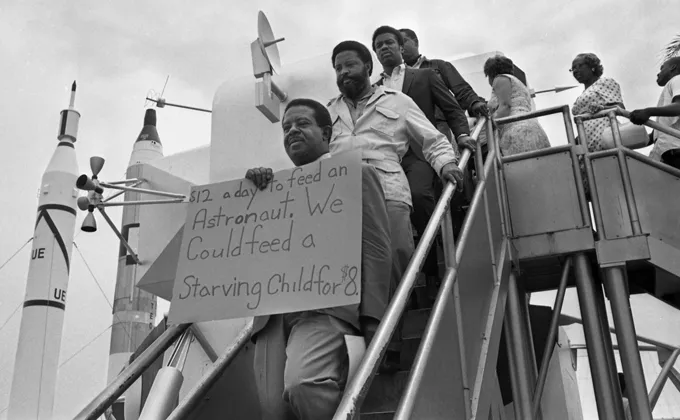
On the eve of the Apollo 11 launch, activist Ralph Abernathy, the president of the Southern Christian Leadership Conference and an adviser of Martin Luther King Jr., led a peaceful march to the gate of the Kennedy Space Center in Florida. Abernathy brought 25 poor African-American families and four mules pulling two wagons to illustrate the contrast between “the perceived backwardness of African-American agriculture and the technological wonders of the space race,” Maher says. He held a sign that read “$12 a day to feed an astronaut. We could feed a starving child for $8.”
While the Apollo 11 landing was televised around the world, African-Americans in a Chicago bar pointedly watched baseball instead, Maher says. In Harlem, some 50,000 people attending a cultural festival booed the news. After the astronauts returned to Earth, activists interrupted ticker tape parades and dinners held in the astronauts’ honor.
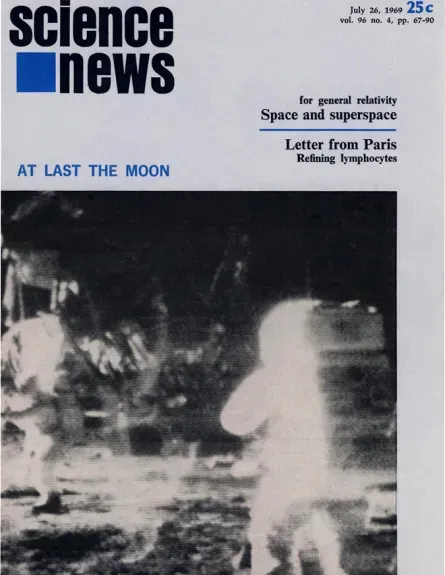
Science News’ coverage of Apollo was ambivalent, too. “It is impossible to minimize the astronauts’ accomplishment,” editor Warren Kornberg wrote in the July 26, 1969 issue. “But the verdict of history may well be that, while the world erupted, we ignored the real challenge and chased a rocket trail to the moon.”
Some letters from Science News readers called that view “naïve” and argued that the moon program wasn’t all that expensive, really. Others were even more critical of the moonshot.
“The newscasters who ‘ooohed’ and ‘aahed’ over Armstrong’s footfall on the moon noted such delusions as ‘all Americans are proud tonite!’” wrote one reader. “Phooey … [many suffering people] were NOT proud. We are frustrated and ashamed.”
Even the sense of wonder at the human accomplishment of leaving the bounds of our home planet was not a given at the time.
“What has happened to awe?” lamented space sciences editor Jonathan Eberhart in a sidebar to the 1969 story detailing Apollo 11’s landing. “Perhaps it has simply become unfashionable, uncool.” He implored readers to “try, briefly, to ignore the flashy rockets and the heroic astronauts. Try to feel the smallness of man and the vastness of what he is doing.”
I feel weirdly reassured that not everyone was thrilled about Apollo. Maybe that means it’s okay for me to be less than thrilled about Artemis.
Still, I grieve for that feeling of unity and common purpose in exploring space.
NASA certainly wants Artemis II to evoke that feeling. Like Apollo 11, “this is another chance where the whole world can look up and see something fantastic happen, that is the result of hard work and dedication and ingenuity,” says Marie Henderson, the mission’s deputy lunar science lead and a planetary scientist at NASA Goddard Space Flight Center in Greenbelt, Md.
But I am having a hard time accessing that sentiment right now, with the government behind Artemis slashing the country’s scientific infrastructure, denying basic science in dangerous ways and defending its agents shooting civilians in the streets.
Maybe both things can be true. Space exploration “can be this incredibly powerful thing that can bring us together,” Maher says. “It can also be this thing, like a mirror, that illustrates that we have a lot of divisions and problems. That’s the beauty of it, that it can do both things.”
I still believe in the power of space exploration to give us humans perspective on our problems on Earth. I don’t want to grow cynical about the moon. I hope my sense of transcendence in space comes back.
In the meantime, I’m finding that feeling of unity in my Minneapolis neighbors: The protests centered on communal singing. The ubiquitous 3-D printed whistles. The intimidatingly organized networks of regular people making school and grocery runs for families afraid to leave their homes. The courage and tenacity on display here every day.
People are capable of astonishing things when they work together.