Bottoms up? Beer vaccines and other edible meds
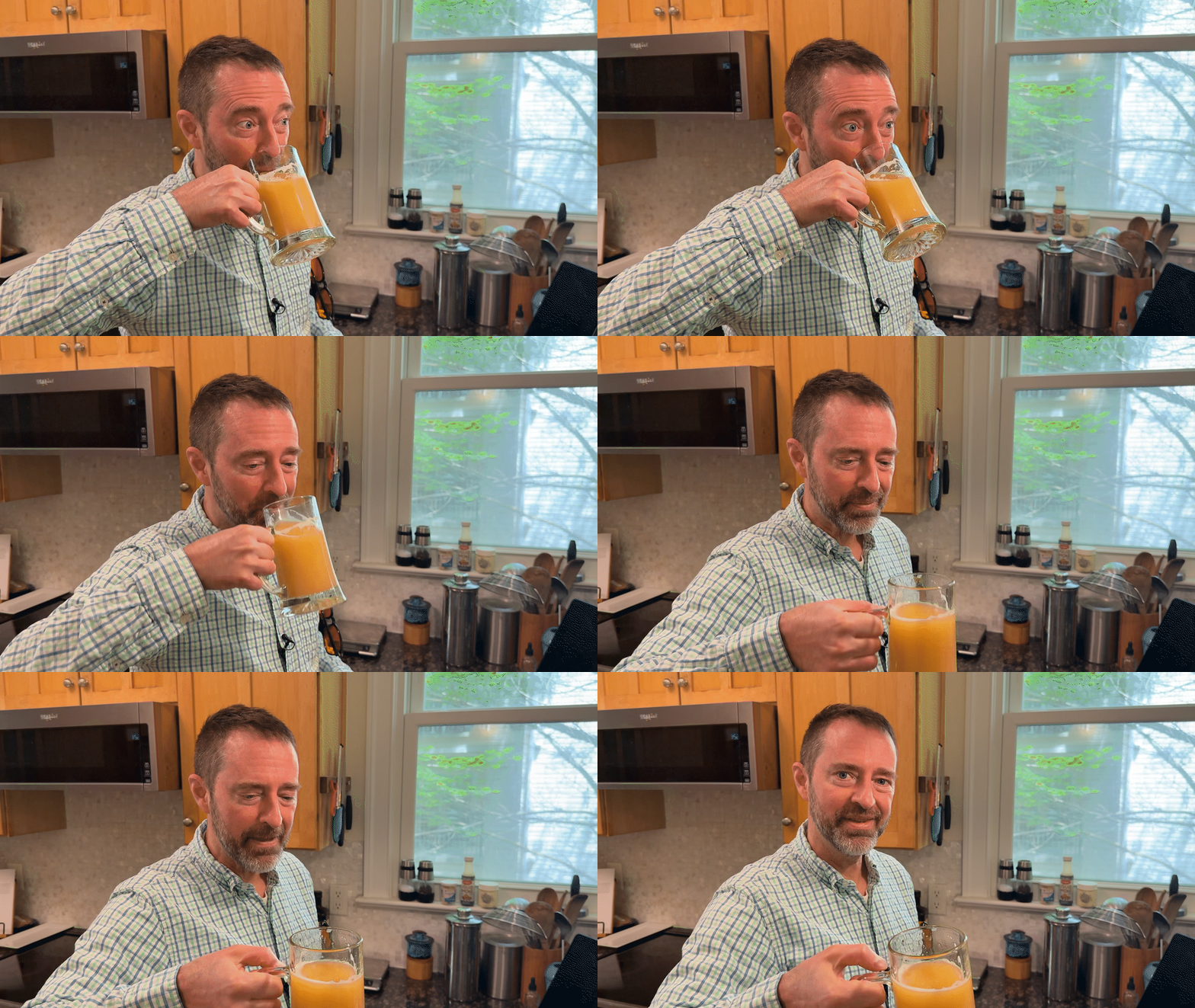
Chris Buck takes a sip of a vaccine beer he brewed in his kitchen using yeast he engineered in a tiny lab in his dining room.
Farivar Hamzeyi
By Susanna Camp
A scientist’s recent medicinal brew — an ale designed to be a vaccine — is sparking a debate on nontraditional delivery methods for immunization. SN’s Tina Hesman Saey offers a taste of the controversy.
👨🔬 Brewing immunity
Chris Buck, a virologist at the National Cancer Institute in Bethesda, Md., brewed a beer from common baker’s yeast that he coaxed to produce tiny, harmless viruslike particles. The viral target of this experimental vaccine is linked to bladder cancers and conditions affecting 1 to 3 percent of people in the United States. His team fed the yeast to mice and then exposed them to the virus. The mice were successfully protected from infection. Crucially, the test showed that the yeast-encapsulated vaccine particles remained intact and effective despite the harsh, acidic environment of the stomach. Buck concluded that this delivery mechanism could work in humans to train the immune system to recognize and fight real viruses safely.
Enter said humans.
After a quick taste test in which the brew was deemed “delightful,” Buck experimented on himself and found that he was able to produce antibodies. Friends, colleagues and family members who sampled the beer reported no ill effects, but there are no data on whether they made antibodies. He then posted the method for making vaccine beer on a data sharing platform and on his Substack. Experts have expressed skepticism about the small sample size, lack of controlled testing, and absence of peer review.
🍽️ Transparency in the food chain
Using food as a delivery vehicle isn’t entirely new; the agricultural and aquaculture industries have long used edible vaccines to protect livestock and fish populations from devastating outbreaks without the labor of individual delivery. While oral human vaccines — such as the polio version adopted in the 1960s — have a long history of global use, their expansion into the commercial food supply introduces a complex layer of bioethics. (Notably, the oral polio vaccine was discontinued in the United States in 2000.)
Unlike controlled veterinary environments, the human food supply demands absolute transparency. Under the current Health and Human Services leadership, all vaccine platforms face intense scrutiny, and no consensus exists on the logistics of a “vaccine beverage.” Consequently, if edible technologies move mainstream, comprehensive labeling and fail-safe distribution will be mandatory to ensure these products are consumed only by those who explicitly consent.
💊 Needle-free frontier
There’s no shortage of controversy holding back the vaccine beer, but a few companies are already commercializing the future of other shelf-stable, noninjectable medicine:
- Vaxart: A leader in the field of oral recombinant vaccines, Vaxart is developing a room-temperature-stable tablet. By eliminating the need for needles and deep-freeze storage, they are targeting multiple infectious diseases including norovirus and seasonal flu. Vaxart went public in 2018 and thrived during the pandemic, but was recently delisted from the Nasdaq because it no longer maintained a bid price of above $1.00 per share. It is now traded on the OTCQX market. The company raised over $50 million in 2024.
- Vaxess Technologies is developing shelf-stable transdermal patches with biotips that gradually dissolve into the body, along with delivery systems that keep vaccine proteins intact at varying temperatures. Vaxess has raised over $80 million to date, including a recent $9 million venture round to fund its collaborative work with AstraZeneca and other pharma partners.
- It’s not out of the question to think some of the current leaders in the animal vaccination industry could pivot to humans. Two to watch: Benchmark Holdings, a U.K.-based leader in developing sea-lice treatments that are delivered directly through fish feed. The Bulgarian company Huvepharma focuses on oral vaccines for poultry. Both companies are also invested in drinking water treatment.
A needle-free future? We’ll (potentially) drink to that.
Editor’s Note: This edition was updated on February 2, 2026 to correct the details of Buck’s experiment. While family, friends and colleagues have sampled the beer, there are antibody results only for Buck. Furthermore, only one family member other than Buck consumed the full dosage.
Disclaimer: The Science News Investors Lab newsletter is for informational purposes only and does not constitute investment advice. Society for Science and Science News Media Group assumes no liability for any financial decisions or losses resulting from the use of the content in this newsletter. Society for Science and Science News Media Group do not receive payments from, and do not have any ownership or investment interest in, the companies mentioned in this newsletter. Please consult a qualified financial advisor before making any investment decisions.