The cancer end game: find, seek, capture
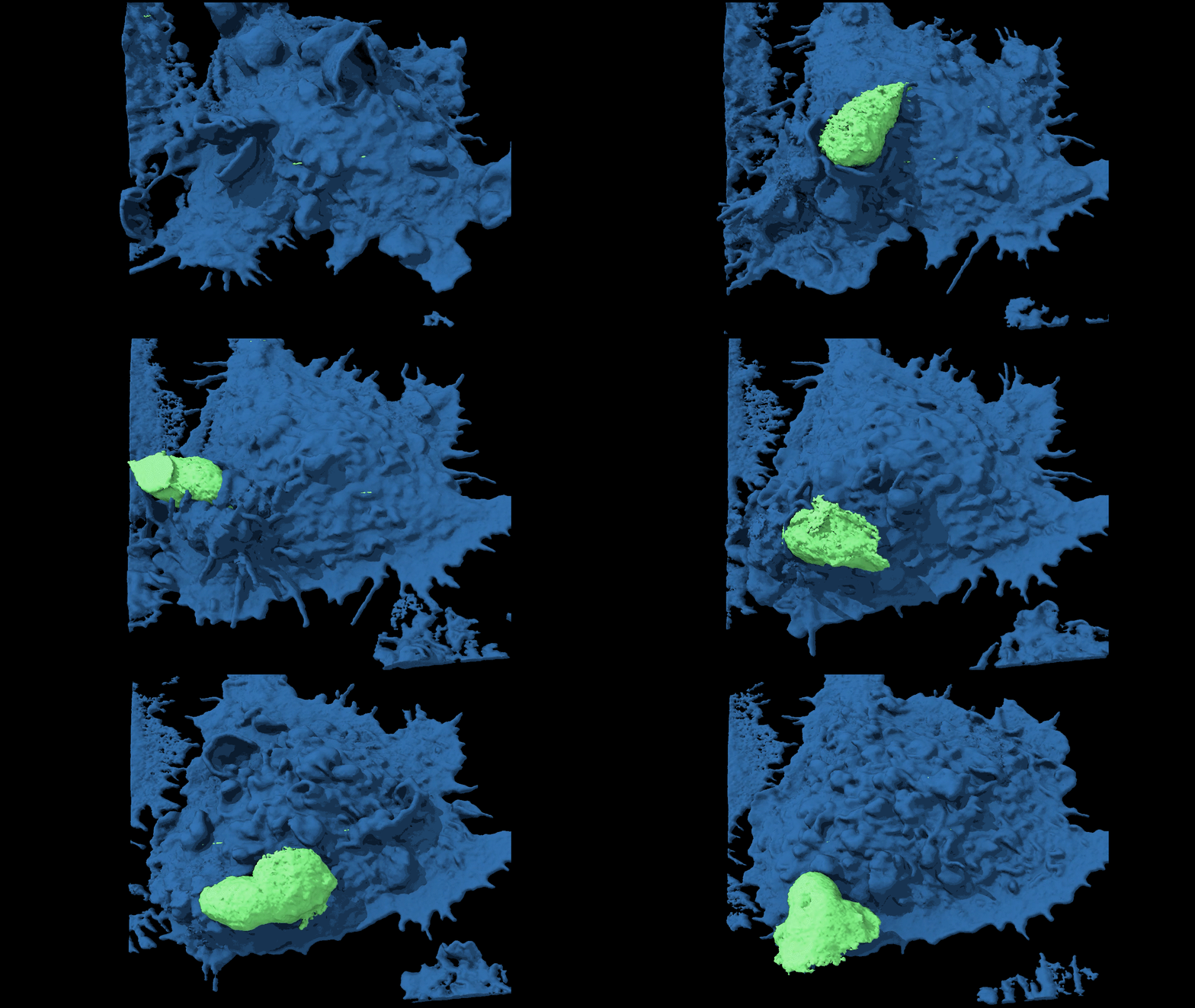
In this microscopy video, a cancer cell appears to wriggle away from an immune cell.

A leukemia cell (green in this false-color fluorescence microscopy video) evades being eaten by an immune cell (blue) by constantly moving. Instead of engulfing the cancer cell, the immune cell can only nibble at its edges.

Dewi Nurmalasari and Brandon Scott

Cancer cells are notoriously wily. They know how to hide, move fast and evade capture. There’s a cadre of researchers dedicated to studying unhealthy cells and the immune cells whose mission is to search and destroy them. As explained by Science News’s Meghan Rosen, a new discovery in oncology may help.

😋 The macrophage munch

Late last year, researchers studying a type of blood cancer called B cell lymphoma reported a sophisticated cellular bait-and-switch. The team attached markers to cancer cells to facilitate their detection by macrophages (immune cells that eat intruders, including cancer cells). Eventually, however, the macrophages ate the markers away, returning the malignant cells to their state of invisibility. More critically, once cloaked, the cells demonstrated high motility, rapidly relocating to evade the immune system’s reach. While immunotherapies — a relatively new addition to physicians’ anticancer arsenal — focus on detection and destruction, this newfound motility suggests a more advanced dynamic at play. The researchers concluded that marking the target is only the first step — the next generation of oncology must focus on preventing cancer cells’ escape.

🏋️‍♀️ Immunotherapy heavyweights

This discovery is likely to impact several big players in cancer treatment development.

Premium Subscription

Access to this content is for Investors Lab subscribers only. Investors Lab delivers exclusive, data-backed insights into scientific breakthroughs set to disrupt industries.