Watch a cancer cell evade capture

By moving around, some cancer cells force attacking immune cells to just nibble at the edges

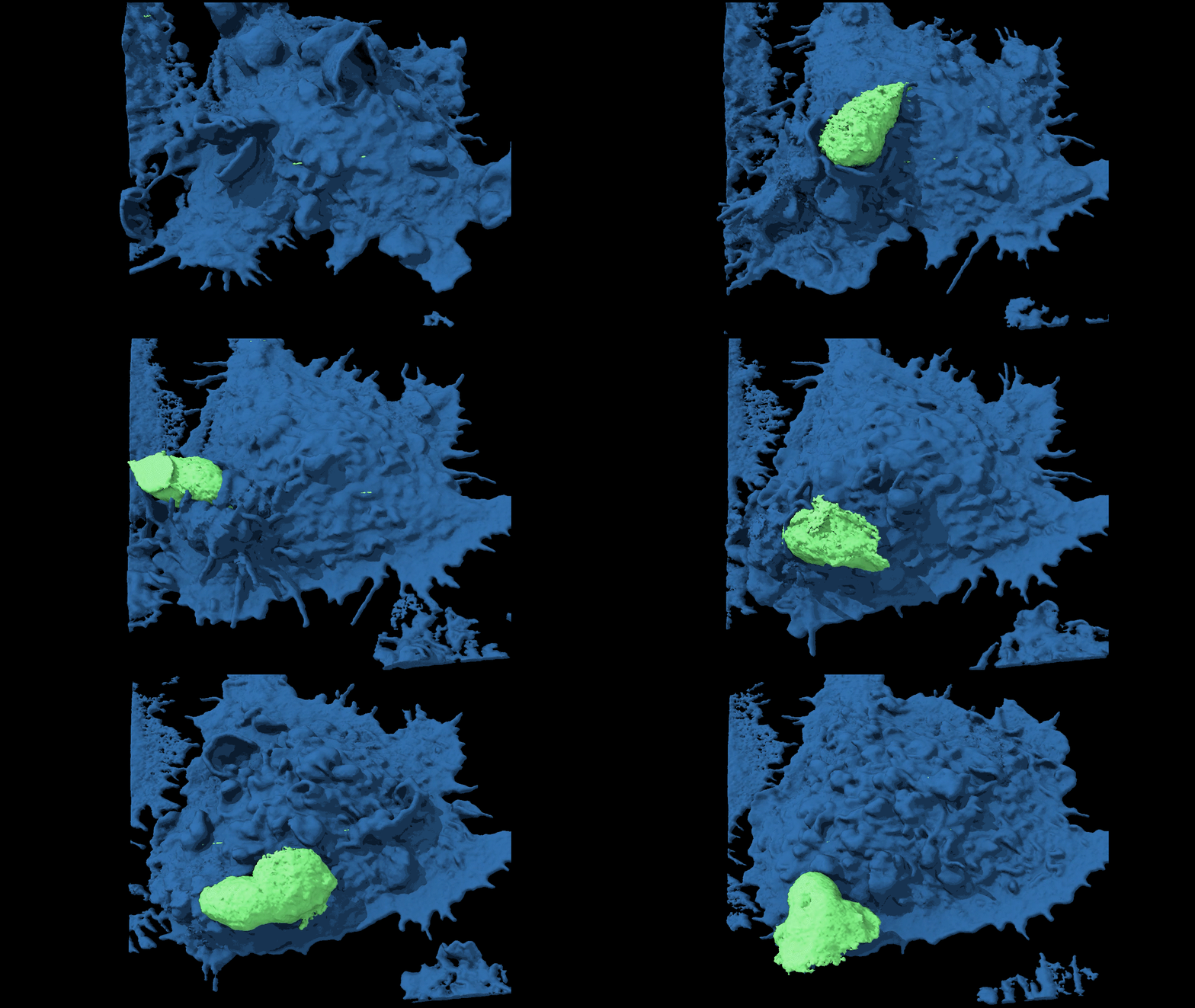
In this microscopy video, a cancer cell appears to wriggle away from an immune cell.

A leukemia cell (green in this false-color fluorescence microscopy video) evades being eaten by an immune cell (blue) by constantly moving. Instead of engulfing the cancer cell, the immune cell can only nibble at its edges.

Dewi Nurmalasari and Brandon Scott

PHILADELPHIA ­— Cancer cells’ quick moves may make them skilled escape artists.

Some cancer cells appear to wriggle away from immune cells trying to gobble them up. These evasive maneuvers — caught on video using fluorescence microscopy — seem to prompt immune cells to nibble at the edges of a cancer cell rather than engulf it completely. It’s a stunt that ultimately lets cancer cells slip away and go free.

“We’re suggesting that motility plays a role in essentially saving the cell,” says microscopist Brandon Scott of South Dakota Mines in Rapid City.

Scott’s team first observed the phenomenon in cells from a cancer called B cell lymphoma, he said December 6 at the Cell Bio meeting. The researchers sicced the immune system on the cancer cells using a drug that sticks to them. It acts as an “eat me” sign, Scott says. Immune cells called macrophages see the sign and scarf up cancer cells like pint-size Pac-Men.

The drug helps the immune system clear out cancer cells, Scott said, but it doesn’t always get them all. In one experiment, his team saw one of the usually stationary cancer cells flail around — and avoid the immune Pac-Men. “We asked the question, ‘Why weren’t you eaten?’” he said.

So the team experimented with leukemia cells known to be highly motile, treating those cells with a different “eat me” drug. But even with those dining directions, macrophages had trouble finishing their dinner. As the blobby immune cells wrestled to get the job done, the cancer cells seemed to dance out of their grasp. But they didn’t escape unscathed.

The macrophages munched off pieces of the cells’ exterior, eventually stripping away all the “eat me” signs, microscopy videos revealed. That made the cancer cell effectively invisible. This knack for hiding seems to stem from the cells’ movements. When the team treated leukemia cells with a drug that wrecks their motility, they got eaten, Scott said.

Scott’s work could lead to new therapeutics designed to hinder cancer cells’ movement. That might make the cells more easily devoured by the immune system. That day is probably years away, Scott says. But understanding how exactly immune cells eat other cells could offer a foundation for future therapies. He compares it to fixing an engine: Instead of popping the hood and tinkering around willy nilly, it’s important to first “sit down and try and learn all the parts and the pieces and how they all fit together.”

Meghan Rosen is a senior writer who reports on the life sciences for Science News. She earned a Ph.D. in biochemistry and molecular biology with an emphasis in biotechnology from the University of California, Davis, and later graduated from the science communication program at UC Santa Cruz.