The Great Pyramid: 5,000 years of ROI
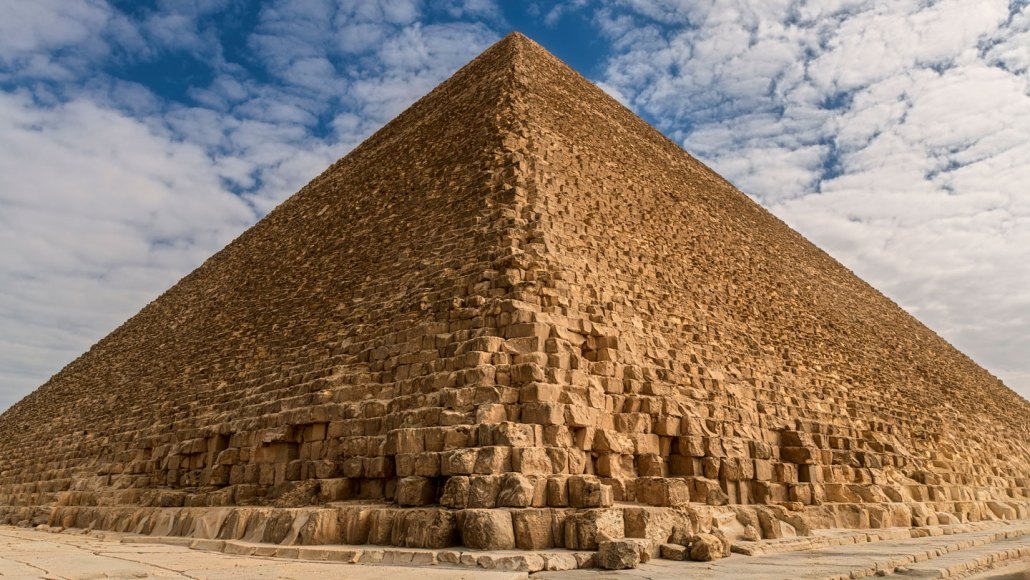
Egypt’s Great Pyramid, where the Pharaoh Khufu is entombed, has withstood damage from earthquakes due to a combination of its shape, internal design and building materials, according to a new study.
Nicola Micheletti/Moment/Getty Images
By Susanna Camp
Those of us who live in San Francisco, where there are earthquakes aplenty and only a couple of buildings older than 200 years old, have a sixth sense for seismic safety. So our antennae went up upon the recent findings explaining how Egypt’s Great Pyramid of Giza has resisted seismic damage over millennia. Skyler Ware frames the story for SN.
🪨 Seismic science behind the stone
How do you build a structure in an earthquake zone that can last a few hundred years, let alone nearly 5,000? Recent research published in Scientific Reports set out to answer the enduring question of how the pyramid has avoided the destructive vibrations that typically collapse buildings during earthquakes. The researchers didn’t want to shake the iconic pyramid on purpose and potentially damage it, so they experimented with ambient vibrations from ocean waves and city traffic to measure how the pyramid reacts to kinetic energy. The study revealed that the pyramid vibrates differently from the terrain it sits on, which blunts a phenomenon that increases vibrations’ strength — and the risk of damage — during a quake. And the pyramid’s mass-distributing internal design, including clever “pressure-relieving chambers,” effectively dampens seismic waves before they reach the top. This engineering feat somewhat neutralizes the behavior of the structure as a massive inverted pendulum, a common flaw in modern skyscrapers that amplifies shaking.
🏢 Building to stand the test of time
The global earthquake-resistant building materials market is expected to reach $50 billion by 2033. While building like an Egyptian pharaoh isn’t scalable, several companies are applying high-tech principles to modernize durability.
- Bridgestone (yes, the tire maker), also develops seismic isolation bearings, which are critical for protecting large-scale buildings and high-rise structures from earthquake damage. By “floating” the building on these rubber-and-steel bearings, the system absorbs seismic energy and significantly reduces the impact of tremors on the building’s upper floors. Bridgestone has a market cap in the range of $28 billion.
- Earthquake Protection Systems is an engineering and manufacturing firm that focuses exclusively on seismic isolation technology. Their technology allows buildings to move like a gentle pendulum during quakes. The invention can be customized for specific soil conditions and structural requirements, enabling critical large-scale facilities like hospitals and airports to remain fully functional even after significant seismic events. EPS is a private company with an estimated revenue of $20 million.
- Aster Co., Ltd., based in Tokyo, markets a protective coating made of acrylic silicone resin reinforced with glass fiber. When applied to masonry, it creates a flexible film that prevents walls from collapsing during strong tremors, providing a cost-effective alternative to traditional seismic retrofitting. As a private venture, the company does not disclose its internal profit or revenue data. They are currently scaling their operations through international projects in countries including the Philippines and Indonesia.
When you’re designing an asset with a horizon of hundreds of years, the cheapest building today is almost always the most expensive one tomorrow.
Disclaimer: The Science News Investors Lab newsletter is for informational purposes only and does not constitute investment advice. Society for Science and Science News Media Group assumes no liability for any financial decisions or losses resulting from the use of the content in this newsletter. Society for Science and Science News Media Group do not receive payments from, and do not have any ownership or investment interest in, the companies mentioned in this newsletter. Please consult a qualified financial advisor before making any investment decisions.