1,576 results
1,576 results for: Bees
- Animals
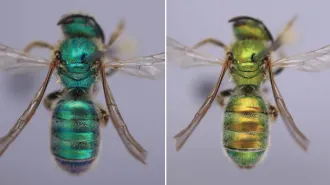
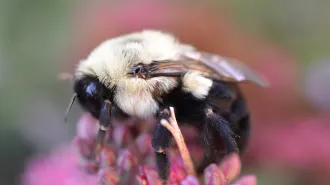
Humidity makes these bees turn green
North American sweat bees change color depending on the surrounding humidity. It might be a more widespread phenomenon among insects.
- Animals
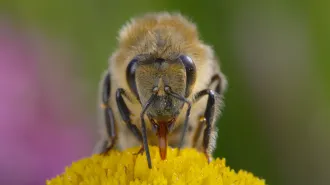
Secrets of the Bees zooms in on life in a hive
A new documentary available on Disney+ and Hulu appeals to our sense of wonder to highlight why bees need saving.
- Animals
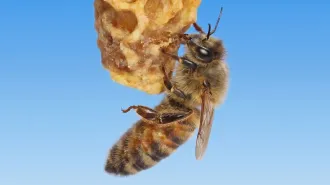
A secret to making a queen bee may lie in the wax around it
Queen-cell wax helps shape honeybee queen development, challenging the idea that royal jelly alone makes a queen, a new study suggests.
- Animals
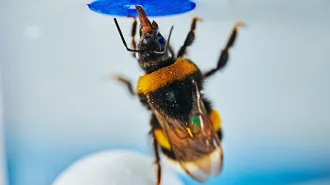
Bumblebees can solve problems on their own
With no training, bumblebees can work out how to use a ball like a ladder to feed on sugar from an out-of-reach flower.
- Animals
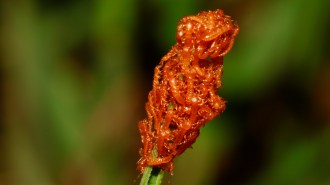
These beetle larvae lure in bees by mimicking flowers
These parasitic beetle larvae lure in bees with complex floral aromas before hitching a ride back to their nests and eating their eggs.
- Animals
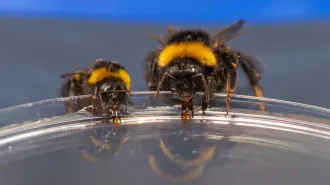
Submerged bumblebee queens breathe underwater
Submerged bees breathe and use strategies that don’t require oxygen, lab tests show. In nature, that trick could help the bees survive floods.
- Physics
Queen bumblebees are poor foragers thanks to sparse tongue hair
The density of fine hairs on bumblebees’ tongues determines how much nectar they can collect — and workers put queen bees to shame.
- Animals
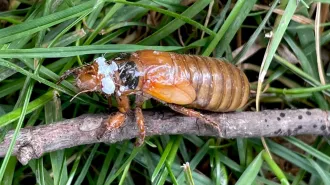
To climb trees, cicadas look to the shadows
Tree-climbing cicadas find their perches by looking for patches of darkness, a strategy known as skototaxis.
- Animals
Trucked-in honeybees may edge out bigger bumblebee foragers
The finding could guide beekeepers to keep hives out of most vulnerable areas of the Irish heathlands.
- Paleontology
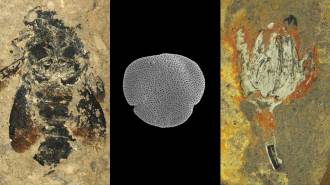
These ancient bumblebees were found with their pollen source
Insects have long pollinated plants, but evidence of ancient pairing is rare. Fossils now show bees and linden trees goes back 24 million years.
- Plants
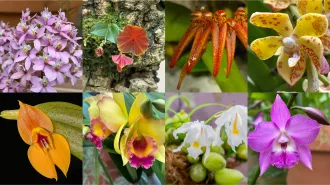
Check out 6 ways orchids use tricks to reproduce
This spring, these six orchids will lure pollinators with mimicry, scent or other unusual strategies.
- Animals
Honeybees and shrimp are now getting vaccinated
A shrimp vaccine for commercial use could protect the environment and prove vaccines aren’t just for vertebrates.