1,576 results
1,576 results for: Bees
- Plants
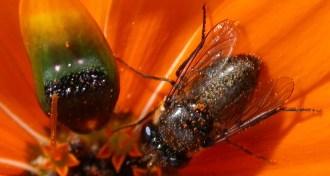
Dastardly daisies
This flower isn’t just any old sex cheat. It can be sexually deceptive three ways and in 3-D.
- Plants
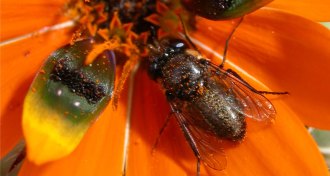
Sexually deceived flies not hopelessly dumb
Pollinators tricked into mating with a plant become harder to fool a second time.
- Life
Big study raises worries about bees trading diseases
Pathogens may jump from commercial colonies to the wild.
- Ecosystems
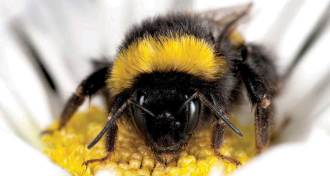
Do your bit for bumblebees
The Xerces Society for Invertebrate Conservation and its partners have launched the Bumble Bee Watch website to track sightings. When you see a bee bumbling around, snap a photo.
- Paleontology
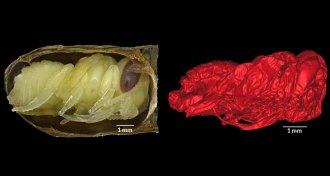
La Brea Tar Pits yield exquisite Ice Age bees
Ancient bee pupae snug in leafy nest give clues to Pleistocene climate.
- Plants
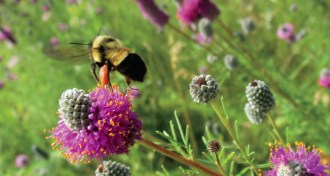
Fugitives spread bumblebee diseases
Pathogens hitchhike on commercial bees that escape from greenhouses. These escapees bring disease to wild bumblebees.
- Humans
Honey of a discovery
Investigators have discovered the remains of 3,000-year-old beehives in Israel, offering a glimpse of the oldest known beekeeping operation.
-
- Life
Giant honeybees do the wave
Giant bees coordinate and make waves that would rival those in any football stadium. Predators of the bees don’t find it cheering.
- Life
Curtain drops after ants’ final act
A handful of ants remain outside to close the colony door at sunset and sacrifice their lives in the act.
- Life
Honeybees play follow-the-leaders
Avert your eyes, Margaret, it's a streaker bee! High definition cameras have caught streaker honeybees flying fast above the swarm, leading the crowd to a new home.
- Humans
Letters from the February 4, 2006, issue of Science News
Double trouble? “Sleep apnea could signal greater danger” (SN: 11/26/05, p. 349) says that “twice as many … with sleep apnea had a stroke or died of that or another cause. …” This sounds serious, but your readers can’t correctly assign importance to “twice as many” because you omit numbers of deaths. David KollasTolland, Conn. […]