1,576 results
1,576 results for: Bees
- Animals
Insect queens sterilize workers with similar chemical
When exposed to a form of saturated hydrocarbons that mimicked the queen’s scent, the worker insects’ ovaries degraded.
- Ecosystems
Pesticide makes bees bumble
The pesticide spinosad, previously thought safe for bees, may damage their ability to forage for nectar.
-
Bad Dancers: Childhood chills give bees six left feet
Honeybees kept just a bit cool when young grow up looking normal but dancing badly, which impedes their ability to communicate with other bees.
- Animals
To Bee He or She: Honeybees use novel sex-setting switch
After more than a decade of work, an international team has found the main gene that separates the girls from the boys among honeybees.
- Animals
Honeybees use right antennae to tell friend from foe
Asymmetry in sense of smell alters insects' behavior in lab tests.
- Animals
Climate change may bring dramatic behavior shifts
Shifting temperatures and rainfall are expected to alter animal lifestyles from the poles to the tropics.
-
From the July 25, 1931, issue
98-TON BUTTERFLY VALVE, A SIMPLE DEVICE A good place for a photographer to take a picture, this penstock will be serving an even better purpose when it begins to carry water through the dam to turn the huge turbines of the Ruskin power plant, British Columbia. The flow of water through this 19-foot-diameter intake pipe […]
-
From the September 19, 1931, issue
ORCHIDS THAT LOOK LIKE GIRLS Plucked from their stems and stood on the table, they are the daintiest little dancers imaginable–dancers in the latest fashionable costumes at that. Their skirts are long and concealing, tight over the slim hips and flaring widely at the bottom. The dancers stand poised, their arms thrown up and out, […]
- Animals
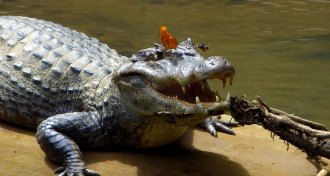
Caiman tears make a salty snack
An ecologist observed a bee and a butterfly hovering around a caiman, engaging in lacryphagous behavior, slurping up the crocodilian’s tears.
- Humans
Letters from the October 6, 2007, issue of Science News
Cat scam? Oscar the cat possibly does identify dying patients (“Grim Reap Purr: Nursing home feline senses the end,” SN: 7/28/07, p. 53), but the story you printed presents anecdotal rather than scientific evidence and does not belong in a science magazine. Julie EnevoldsenSeattle, Wash. Correlation is not causation. Could it not be that, somehow, […]
- Humans
Letters from the January 12, 2008, issue of Science News
Shades of meaning In “Going Coastal: Sea cave yields ancient signs of modern behavior” (SN: 10/20/07, p. 243), researcher Curtis Marean refers to Stone Age people using a reddish pigment for “body coloring or other symbolic acts.” What reason is there for jumping to this conclusion? As with cave painting and figurines, there seems to […]
- Environment
Decline in birds linked to common insecticide
In addition to harming bee populations, neonicotinoid insecticides may also be detrimental to bug-eating birds.