Conversations with Maya: Walter Gilbert
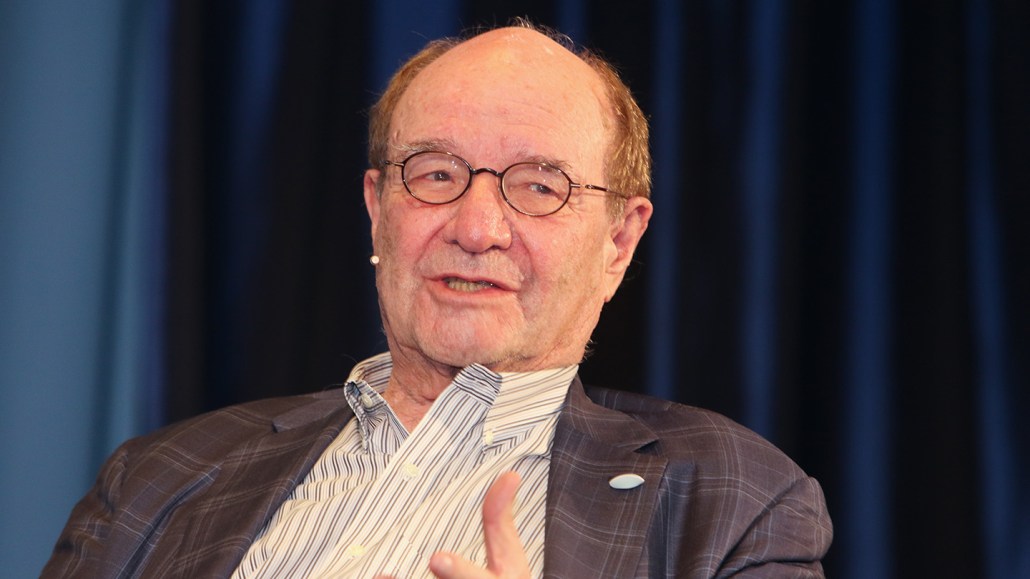
Walter “Wally” Gilbert is the Carl M. Loeb University Professor Emeritus and Emeritus Chair of the Society of Fellows at Harvard University. Gilbert is an alumnus of the 1949 Science Talent Search (STS), a program of Society for Science.
Society for Science
Maya Ajmera, President & CEO of Society for Science and Executive Publisher of Science News, spoke with Walter “Wally” Gilbert, Carl M. Loeb University Professor Emeritus and Emeritus Chair of the Society of Fellows at Harvard University. Gilbert had a long career at Harvard, first as a theoretical physicist, then as a molecular biologist. He discovered many aspects of protein synthesis and gene control. In 1976, he discovered a simple and rapid way to sequence DNA, and for this, in 1980, he was awarded a Nobel Prize in Chemistry (shared with Frederick Sanger and Paul Berg). He cofounded Biogen in 1978 and served as the company’s CEO from 1981 to 1984. Then he cofounded Myriad Genetics in 1992. Today, Gilbert is an accomplished digital art photographer. Gilbert is an alumnus of the 1949 Science Talent Search (STS), a program of Society for Science.
Do you remember your STS project?
At that time, one submitted an essay, and my essay focused on a speculative idea, proposing that it might be possible to separate the elements zirconium and hafnium in one step, rather than through extensive fractional crystallization. For the next step of the competition, we had to display a project, and I thought that a hypothetical idea did not make an interesting display, so I showed off a camera-telescope I had made to photograph sunspots.
The competition was held at a hotel in Washington, D.C., where I lived. Although I didn’t stay in the hotel with the other finalists, I remember hanging out with them. Nine of us went to Harvard together, including the mathematicians Henry Landau and Bob Blattner, so when I got there, I had a whole set of STS friends.
You started your career as a physicist. What drew you to the field of genetics?
I went to college thinking I would become a chemist. I then became interested in theoretical physics and earned a Ph.D. in mathematics at the University of Cambridge in England. Later, I joined the faculty at Harvard as a theoretical physicist.
While at a party at Cambridge in April 1956, I met Jim Watson and we spent several hours talking, subsequently becoming friends. He came to Harvard that year as an assistant professor, while I returned to Harvard as a graduate student. In the late spring of 1960, Watson told me that exciting things were happening in his lab. They were trying to find messenger RNA and show that such a molecule existed in bacteria. I visited his lab and watched Watson and François Gros do an experiment. Watson gave me six papers to read; I came back the next day and joined in the experiments.
We proceeded to work together and published our paper on the discovery of messenger RNA mid-winter. I found myself happily doing experiments and learning biology by asking people how to do things.
In 1980, you received a Nobel Prize for developing methods to sequence DNA. What do you remember most vividly about that period of work?
In the early 1970s, we set out to determine the sequence of bases that comprise a 24-base-long segment of DNA. We took two years to work out that sequence. It was one of the first DNA sequences published.
But at that rate, one would never be able to work out the thousands of bases that made up typical genes. Then, in the mid-1970s, the Russian molecular biologist Andrei Mirzabekov convinced me to do an experiment that would show how the proteins called repressors contacted the DNA. The experiment’s result was so clear that I not only discovered how the repressor touched certain G’s and A’s in the operator sequence, but I could also identify all of the positions of the G’s and A’s. We then developed a method that could sequence hundreds of bases in an afternoon, which was published in 1977. Fred Sanger in England simultaneously developed a different method.
Everybody began to sequence. They came to my laboratory to learn how to do it. By 1980, a million bases of DNA had been sequenced around the world. By 1985, 10 million bases of DNA had been sequenced. The rate has continued to increase by a factor of 10 every five years since then. The first human genome, 3 billion bases, was sequenced around 2000. Now machines can sequence a human genome in 30 minutes.
You were one of the first major academic scientists to step into world of biotechnology, helping to found Biogen. What was it like to build one of the first biotech companies at a time when the industry itself barely existed?
I discovered that I have an entrepreneurial drive, which I didn’t realize when I was a laboratory scientist. Small companies are a great deal of fun although they require total dedication. You may run the company, but you’re also likely to sweep the floors because you can’t afford a janitor. In a small company, speed is of the essence because you’re burning through money.
Originally, Biogen’s other cofounders and I didn’t know what we were going to do. But soon we focused on interferon and the hepatitis B vaccine, which were developed to be the first products that went to market and became major sellers. Those successes really supported Biogen, although we didn’t realize how long it was going to take to get anything to market. We started the company in 1978, and interferon entered the market in 1986.
You’ve also invested in numerous start-ups over the years. What qualities do you look for in a young biotech company or in its founders?
That’s difficult to know. That said, I’m looking for quality of leadership and quality of focus. You can try to look at someone’s idea, but companies often start out thinking they’re going to do one thing and go on to do something else.
I characterize one aspect of being a CEO as this: it’s not the role where one is going to make all the decisions, but one has to make sure the decisions happen. In science, in order to publish a good paper, we must wait until we have all the evidence accounted for. In business, you need to make decisions rapidly. The role of a CEO is to take the responsibility, so that people are free to make a decision quickly and not be punished if it turns out to be a wrong step.
How would you contrast your approaches to innovation as a scientist versus an artist?
The underlying drive is very similar. As a scientist, I want to discover something new. I have the same impulse in art. I take photographs, superimpose them and fiddle with them, using a computer. The goal is to create a picture that I think is interesting, new and beautiful. The thirst to create something new is shared: in science, new and true, in art, new and beautiful.
what advice would you give to young scientists who want their rigorous research to have real-world impact?
In order to have an immediate impact, it’s important to get involved in an applied science that could have immediate consequences. You know what the goal is, and you work on it. A medicine to cure human disease, for example.
There’s another side of science that is curiosity-driven basic research. We want to find out something about a problem that no one understands, or even suspects. This research creates all the new ideas that shape the future of the world.
I occasionally describe it this way: We can build companies out of today’s applied research discoveries. Those companies develop products that work today. Basic research, meanwhile, will lead to more discoveries, which will build tomorrow’s companies. Tomorrow’s companies will develop products that are undreamed of today.
What advice do you have for young scientists today?
My basic advice is simple: Follow your curiosity.
There are many challenges facing the world today. What is keeping you up at night?
We’re living through a period in which American science is being willfully destroyed. Given the lack of funding here, young scientists may need to go abroad to find employment. The center of world science is moving away from America, which has chosen money over knowledge.