Skip to content
Subscribe today

Every print subscription comes with full digital access

Subscribe Now
  • All Topics
    • Health
    • Humans
      • Anthropology
      • Health & Medicine
      • Archaeology
      • Psychology
      • View All
    • Life
      • Animals
      • Plants
      • Ecosystems
      • Paleontology
      • Neuroscience
      • Genetics
      • Microbes
      • View All
    • Earth
      • Agriculture
      • Climate
      • Oceans
      • Environment
      • View All
    • Physics
      • Materials Science
      • Quantum Physics
      • Particle Physics
      • View All
    • Space
      • Astronomy
      • Planetary Science
      • Cosmology
      • View All
  • Magazine
  • Menu
    • All Stories
    • Multimedia
    • Reviews
    • Puzzles
    • Collections
    • Educator Portal
    • Century of Science
    • Unsung characters
    • Coronavirus Outbreak
    • Newsletters
    • Investors Lab
  • About
  • SN Explores
  • Our Store
Donate
Home INDEPENDENT JOURNALISM SINCE 1921 SIGN IN
Home INDEPENDENT JOURNALISM SINCE 1921
  • All Topics
    • Earth
      • Agriculture
      • Climate
      • Oceans
      • Environment
    • Humans
      • Anthropology
      • Health & Medicine
      • Archaeology
      • Psychology
    • Life
      • Animals
      • Plants
      • Ecosystems
      • Paleontology
      • Neuroscience
      • Genetics
      • Microbes
    • Physics
      • Materials Science
      • Quantum Physics
      • Particle Physics
    • Space
      • Astronomy
      • Planetary Science
      • Cosmology
    • Tech
      • Computing
      • Artificial Intelligence
    • Chemistry
    • Math
    • Science & Society
    • All Topics
  • Health
  • Humans
    • Humans
      • Anthropology
      • Health & Medicine
      • Archaeology
      • Psychology
    • Recent posts in Humans

      • Archaeology

        Neandertals made antibacterial ointment, but may not have known it

        By Martin J. KernanMarch 24, 2026
      • Health & Medicine

        Amid vaccine policy whiplash, here’s how a pediatrician talks to families

        By Aimee CunninghamMarch 20, 2026
      • Health & Medicine

        GLP-1 microdosers are chasing longevity

        By Jamie DucharmeMarch 20, 2026
  • Life
    • Life
      • Animals
      • Plants
      • Ecosystems
      • Paleontology
      • Neuroscience
      • Genetics
      • Microbes
    • Recent posts in Life

      • Physics

        These insects fly with their legs. Physics explains how

        By Emily Conover22 hours ago
      • Animals

        Female giant rainforest mantises grow up to strike harder than males

        By Susan MiliusMarch 23, 2026
      • Space

        How realistic is Project Hail Mary?

        By Tina Hesman Saey and Carolyn GramlingMarch 20, 2026
  • Earth
    • Earth
      • Agriculture
      • Climate
      • Oceans
      • Environment
    • Recent posts in Earth

      • Space

        How realistic is Project Hail Mary?

        By Tina Hesman Saey and Carolyn GramlingMarch 20, 2026
      • Earth

        Earth’s continental plates were moving 3.48 billion years ago

        By Douglas FoxMarch 19, 2026
      • Microbes

        How warming is shifting microbial worlds

        By Erin Garcia de JesúsMarch 19, 2026
  • Physics
    • Physics
      • Materials Science
      • Quantum Physics
      • Particle Physics
    • Recent posts in Physics

      • Particle Physics

        Antimatter traveled by truck for the first time

        By Emily Conover16 hours ago
      • Physics

        These insects fly with their legs. Physics explains how

        By Emily Conover22 hours ago
      • Animals

        Female giant rainforest mantises grow up to strike harder than males

        By Susan MiliusMarch 23, 2026
  • Space
    • Space
      • Astronomy
      • Planetary Science
      • Cosmology
    • Recent posts in Space

      • Space

        In a rare event, the moon got a massive new crater

        By Lisa GrossmanMarch 23, 2026
      • Space

        How realistic is Project Hail Mary?

        By Tina Hesman Saey and Carolyn GramlingMarch 20, 2026
      • Space

        One possible recipe for life on Titan is a bust

        By Tina Hesman SaeyMarch 11, 2026
Sponsored Content

Making connections at the Society’s Signature Alumni & Friends Event
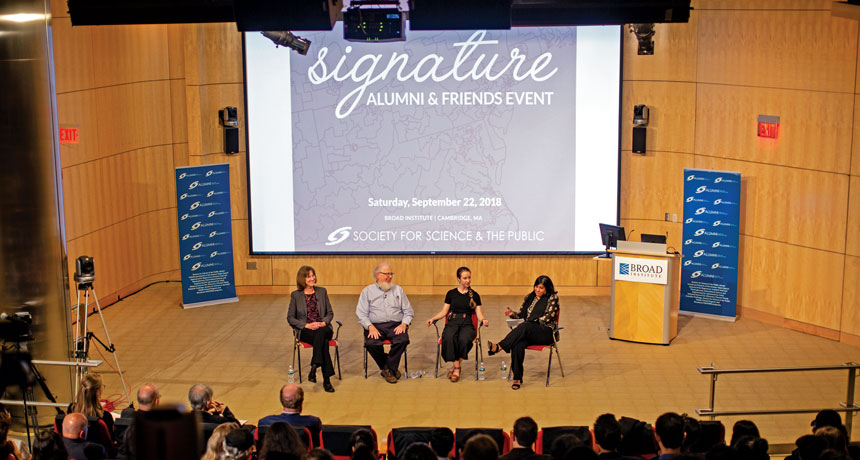
Society alumni event

Panel discussion with (from left) Kristi Snell (STS 1985), Yield10 Bioscience; Tom Knight (STS 1965), Ginkgo Bioworks; Erika DeBenedictis (STS 2010, ISEF 2007–2010; DCYSC 2006), Broad Institute; and moderator Maya Ajmera (STS 1985), Society for Science & the Public.  All photos: Erik Jacobs/Society for Science & the Public 

Share this:

  • Share
  • Share via email (Opens in new window) Email
  • Share on Facebook (Opens in new window) Facebook
  • Share on Reddit (Opens in new window) Reddit
  • Share on X (Opens in new window) X
  • Print (Opens in new window) Print

Each fall, Society for Science & the Public hosts a Signature Alumni & Friends Event for alumni of the Society’s science competitions, as well as teachers, Society members and Science News subscribers. We are thrilled to provide this experience, thanks to the Broad Institute of MIT and Harvard University, for our community.

The event allows us to come together and tap into an incredible network of innovators, researchers, students and educators who share a collective passion for science and technology, a desire to tackle global challenges and who embody the Society’s vision to put the power and wonder of science in everyone’s hands.
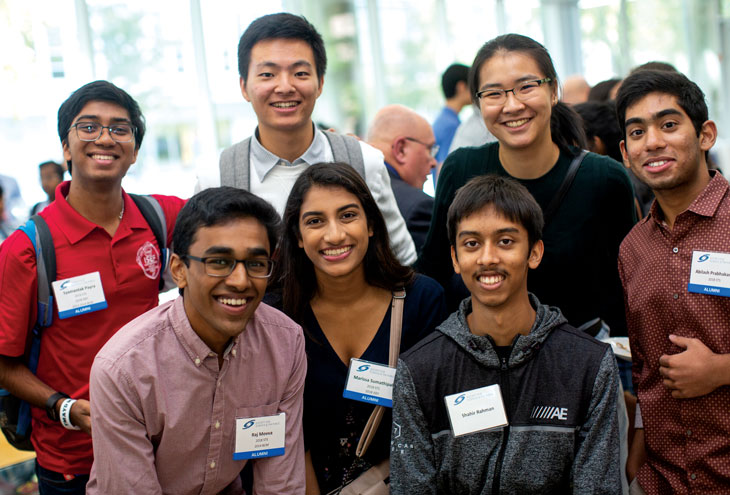
Left to right, top to bottom: Syamantak Payra (STS 2018; ISEF 2016–2018, BCM 2013–2014); Chiu Fan Bowen Lo (STS 2018, ISEF 2018); Grace Tian (STS 2018); Abilash Prabhakar (STS 2018); Raj Movva (STS 2018, BCM 2014); Marissa Sumathipala (STS 2018, ISEF 2017–2018); and Shahir Rahman  
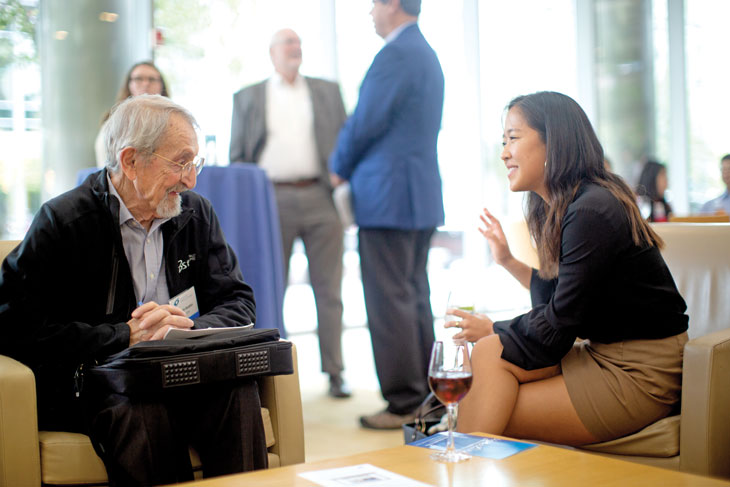
Nobel laureate Martin Karplus (STS 1947) and Yeonsoo Sara Lee (ISEF 2012).  
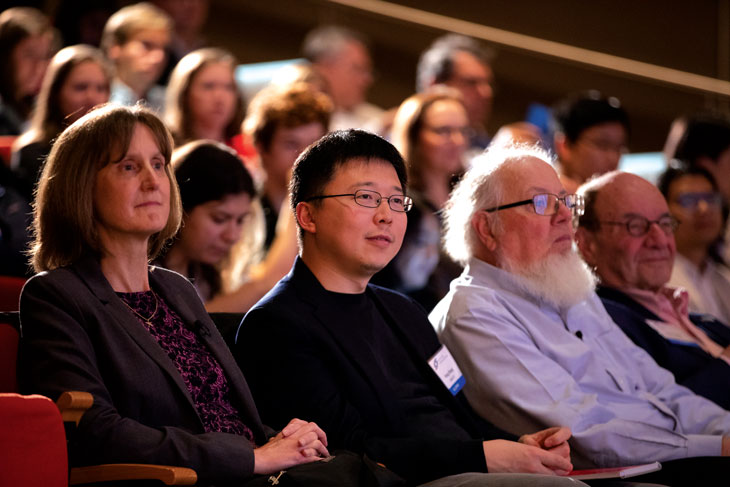
From left, Kristi Snell (STS 1985), Yield10 Bioscience; Feng Zhang (STS 2000; ISEF 1998–1999), Broad Institute; and Tom Knight (STS 1965), Ginkgo Bioworks.  

Science News

Science News was founded in 1921 as an independent, nonprofit source of accurate information on the latest news of science, medicine and technology. Today, our mission remains the same: to empower people to evaluate the news and the world around them. It is published by the Society for Science, a nonprofit 501(c)(3) membership organization dedicated to public engagement in scientific research and education (EIN 53-0196483).

  • Science News Explores
  • Science News Learning

Subscriber Services

  • Subscribe
  • Renew
  • Give a Gift Subscription
  • Customer Service
  • Follow Science News on Facebook
  • Follow Science News on X
  • Follow Science News via RSS
  • Follow Science News on Instagram
  • Follow Science News on YouTube
  • Follow Science News on TikTok
  • Follow Science News on Reddit
  • Follow Science News on Threads

More Information

  • FAQ
  • Newsletters
  • Rights & Permissions
  • Advertise
  • Contact

Society for Science

  • About the Society
  • Society Store
  • Donate
  • Careers

© Society for Science & the Public 2000–2026. All rights reserved.

1776 Massachusetts Ave NW, Washington, DC 20036 202.785.2255
Terms of Service Privacy Policy

Log in

Subscribers, enter your e-mail address for full access to the Science News archives and digital editions.

Not a subscriber?
Become one now.