Never-ending storms make for good plot twists. Could they plague Earth?
The thunderstorms in The Legend of Zelda defy earthly physics
Thanks to physics, storms can't last forever here on Earth. But quirks in geography and wind patterns can prolong harsh weather.
Grace Aldrich
This is a human-written story voiced by AI. Got feedback? Take our survey . (See our AI policy here .)
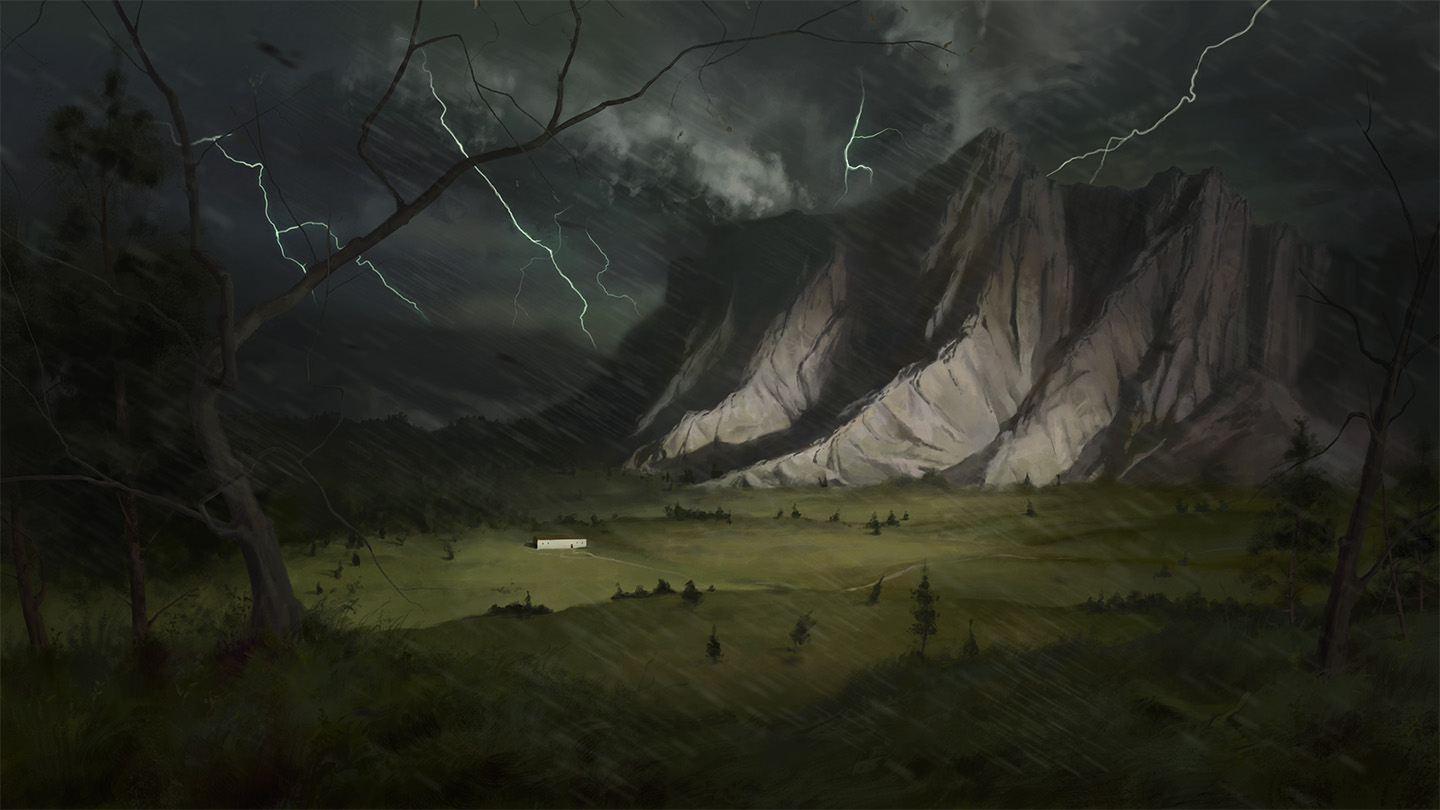
Weather forecasts can get extreme in the land of Hyrule, in the Nintendo series The Legend of Zelda. A downpour in the coastal province of Faron, for instance, prevents Link, the game’s hero, from reaching Calora Lake. And constant lightning and rain threaten the skybound Thunderhead Isles. These storms end only once Link completes a series of quests.
The threat of never-ending storms makes for moody gameplay. But real storms “can’t last forever,” says Stephanie Spera, a physical geographer at the University of Richmond in Virginia.
Storms result from imbalances between moisture and temperature. Though violent at times, thunderstorms help redistribute heat, moisture and electrical charges. “The whole purpose of anything in weather is to get the atmosphere back in balance,” says meteorologist Chris Vagasky of the Wisconsin Environmental Mesonet, a statewide network of weather stations.
To fuel constant thunderstorms, such imbalances would have to persist. But Earth’s atmospheric physics ensures that even the strongest storms eventually fade away.
Constant thunderstorms would need ongoing supplies of storm ingredients, Vagasky says. For one, you’d need a “persistent conveyor belt of warm, moist air.” And heat, maybe 24-hour sunlight. As rising warm air condenses into cloud-forming droplets, then cooling rain and downward winds (which dissipate storms on Earth), the cycling would refuel the storm.
Even if a storm could sustain its internal energy, it couldn’t stay stationary forever, because Earth’s atmosphere is in constant motion. Like massive conveyor belts, jet streams move weather across continents. Wind patterns can also increase how long storms last and even force them to hang out in one place for a bit. In August 2017, Hurricane Harvey stalled over Houston for about four days. Fueled by warm coastal waters, some areas received nearly 130 centimeters of rain before the storm moved inland and broke up.
Like Houston, Faron, of Zelda, lies along a coast, perhaps in a cyclone-prone area where warm seas make storms last year-round. Earthly cyclones die when they make landfall, face windshear or reach colder water at higher latitudes. “They need to be refueled, which is why they die over land,” Spera says. “There’s no energy source.”
While perpetual storms like those in Faron are impossible on Earth, certain scenarios come close.
The Thunderhead Isles storm looks similar to Earth’s Intertropical Convergence Zone, Spera says. This solid band of clouds encircles the globe near the equator. Here, prevailing winds from the Northern and Southern hemispheres meet, lifting warm, humid air heated by the intense sunlight in the tropics. But it’s home to a series of intense but short-lived events rather than single, massive ones, Spera says. And the zone doesn’t stay still: It zigzags across the equator, leading to seasonal monsoon rains in places like the Indian subcontinent.
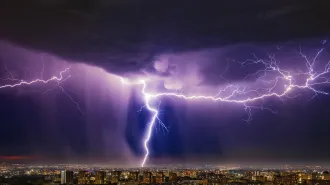
For flashier storms, head to Venezuela’s Lake Maracaibo. Here, a phenomenon called Catatumbo lightning flashes up to 300 days a year and can last nine hours at a stretch. The region holds the world’s record for the most concentrated lightning.
The key is its geography. Winds whisk moist air from the lake and nearby Caribbean Sea up the Andes Mountains. There, it meets colder air within the clouds. Water droplets collide with ice crystals, building up static charges. The bowl-shaped mountains hugging the lake prevent the cumulonimbus clouds from moving, leading to stagnant thunderstorms. “Catatumbo,” Vagasky says, “is one of the closest things that we might see to [the Thunderhead Isles].”