Neuroscience
- Anthropology
How to invent a realistic language for fictional speakers
Linguists can mix, match or even break the rules of real-world languages to create interesting imaginary ones.
- Neuroscience
Seeing and imagining activate some of the same brain cells
By recording brain activity directly, scientists showed that imagining an object can revive parts of the neural pattern used to see it.
- Neuroscience
Human echolocation works step by step
Experts in echolocation use multiple clicks and echoes to sense objects, offering insight into how the brain builds perception.
- Health & Medicine
When our minds wander to the body, it may affect mental health
People’s minds sometimes wander to their bodily sensations, which may reduce symptoms of depression and ADHD, a new study suggests.
- Neuroscience
Clumps of mouse brain cells can learn to play a virtual game
Sure, playing video game is fun. But the ability of tiny brain organoids to pick up a skill could provide insight into how healthy brains work.
- Neuroscience
Yaks may hint at a way to treat brain diseases like MS
A genetic mutation tied to keeping the brain healthy at high altitudes may point to a way to repair nerve damage, experiments in mice show.
- Genetics
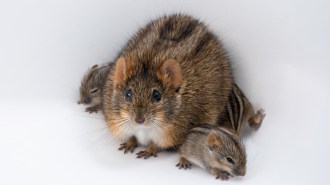
Why African striped mice can be the best of dads — or the worst
Environmental cues can flip a molecular switch in the brain, turning males from caregivers to killers.
- Neuroscience
The remarkable brains of ‘SuperAgers’ hold clues about how we age
A new study reports signs that nerve cells in the brain keep dividing over the decades. It’s not so simple.
- Neuroscience
The right sounds may turn sleep into a problem-solving tool
Lucid dreamers who heard puzzle-linked soundtracks while sleeping were more likely to solve those unsolved problems the next day.
- Neuroscience
Why is math harder for some kids? Brain scans offer clues
Kids with math learning disabilities process number symbols differently than quantities shown as dots — and it shows up in MRIs.
- Health & Medicine
This itch-triggering protein also sends signals to stop scratching
The TRPV4 protein’s dual nature, found in studies with mice, may complicate the hunt for human itch treatments
- Health & Medicine
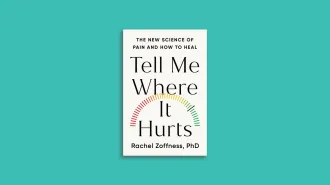
Tell Me Where It Hurts sets the record straight on pain — and how to treat it
A new book by pain researcher Rachel Zoffness demystifies how pain is made and how it can be treated.