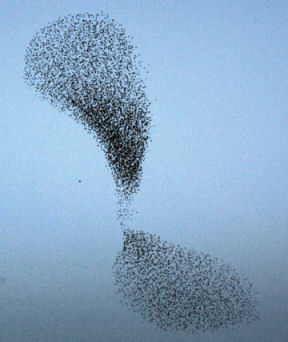
On winter evenings in some southern European towns, tens of thousands of starlings congregate over their roosts. Above the ruins of Rome’s ancient Baths of Diocletian, huge black clouds of starlings assemble and continually morph into new shapes, possibly to signal their position to buddies who are still navigating their way home.