Are pig organs the future of transplantation?
Every Living Creature shares hopeful view of xenotransplantation
Using xenotransplantation, doctors could one day have enough genetically engineered organs from pigs for patients in need.
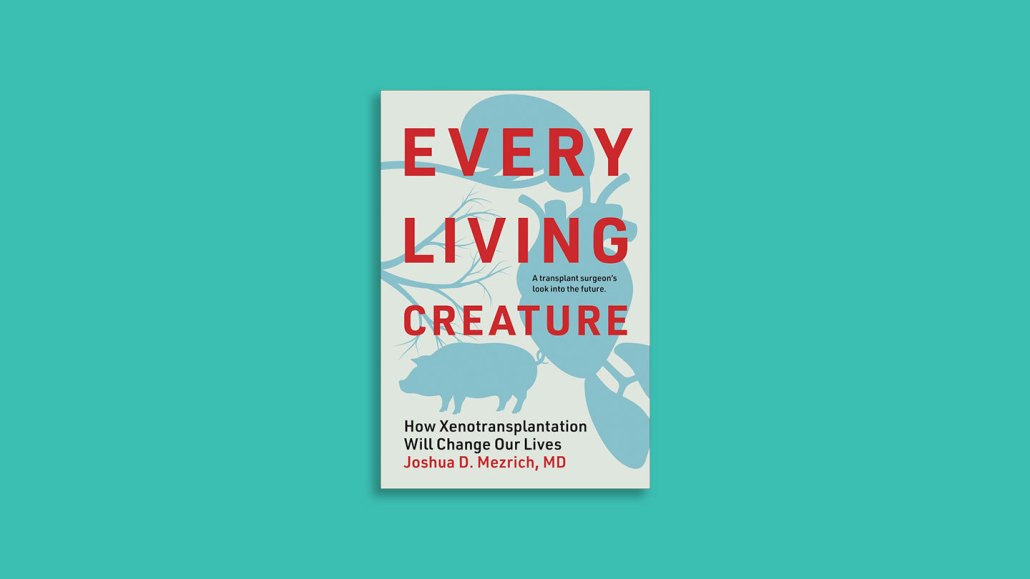
Every Living Creature
Joschua D. Mezrich
The MIT Press, $29.95
Today, more than 100,000 people in the United States are waiting for an organ transplant. They’re seeking kidneys, livers, hearts and lungs — organs from human donors that could give these patients a second chance at life. But every year, nearly 5,000 people on the national transplant list die waiting.
There’s a future, though, in which no one needs to wait — when doctors have enough organs for every patient who needs one. These organs will come from genetically engineered pigs, and they could be even better than the ones we’re born with: resistant to cancer and infection and able to tolerate extreme temperatures and pressures. In this future, drones might zip through the sky ferrying bespoke pig organs directly to surgeons waiting to plug them into patients’ bodies.
“This may sound far-fetched and futuristic, but it really isn’t,” writes transplant surgeon Joshua Mezrich. His new book, Every Living Creature, chronicles the history of xenotransplantation, the practice of moving organs or tissues from one species into the body of another. If doctors can get it to work, xenotransplantation could one day help meet a critical need, increasing the number of organs available for transplant.
That’s the case Mezrich makes, anyway. Amidst the rosy view of a xenotransplantation’s future, he gets serious with the science. This is a book that plunges readers into the vast sea of transplant-related immunology. It offers crash courses in genetics and history and the ethics of using animals to grow organs for humans. It introduces a wide and revolving cast of characters in the field: surgeons and scientists, patients and funders. At times, the story can feel like a whirlwind, whisking readers across decades and from lab to lab and surgery to surgery. But at its core, Every Living Creature is a book about hope.
It’s about doctors with the single-mindedness and perseverance to keep going when the idea of putting pig organs inside living humans seemed impossible. It’s about patients who endure months and years of daily dialysis waiting for a kidney. It’s about people who desperately need a new heart but are too sick to be put on the list and people whose organs are persistently problematic but not problematic enough to qualify for a new one.
This is also a story about the courageous people who volunteer for experimental surgeries. People like David Bennett, the 57-year-old Maryland man who received a pig heart in 2022. Or 58-year-old Lawrence Faucette, also from Maryland, who underwent a similar operation in 2023. These men were the first to have genetically engineered pig hearts transplanted into their bodies. Bennett survived for two months after the surgery, Faucette for nearly six weeks. Both patients who knew full well that their xenotransplants probably wouldn’t extend their lives for the long-term. But they signed up anyway because they hoped doctors could learn enough from their cases to help future patients. Stories like these lend Mezrich’s book emotional heft and root high-flying scientific aspirations to reality.
Mezrich calls himself a “xeno-optimist,” though he acknowledges that the field is prone to hype. Great leaps in the technology that are needed to successfully integrate a pig’s organ into a human have been “just around the corner” for decades, he writes. But that doesn’t mean science hasn’t already made advances, or that the goalposts will always be just out of reach.
Already, we’ve seen progress beyond what doctors achieved with Bennett and Faucette. For example, Tim Andrews was 66 when he received a genetically modified pig kidney in 2025. Andrews lived with the organ for nearly nine months before it failed, and he was able to get a human kidney when one became available in January. In his case, the pig organ helped serve as a bridge to human organ transplantation.
The path ahead is full of hurdles. Scientists need to improve genetically modified organs so the human body can better tolerate them. And biotech companies specializing in pig organs need to scale up their farming facilities. But Mezrich predicts more xenotransplants like Andrews’ in the coming years. He envisions a day — perhaps not too long from now — when life-saving pig organ transplants have become the norm. “Welcome to the future,” he says.
Buy Every Living Creature from Bookshop.org. Science News is a Bookshop.org affiliate and will earn a commission on purchases made from links in this article.