Healthy pregnancies and newborns are possible after CAR T cell therapy

After using the therapy for autoimmune diseases such as lupus, patients had no issues
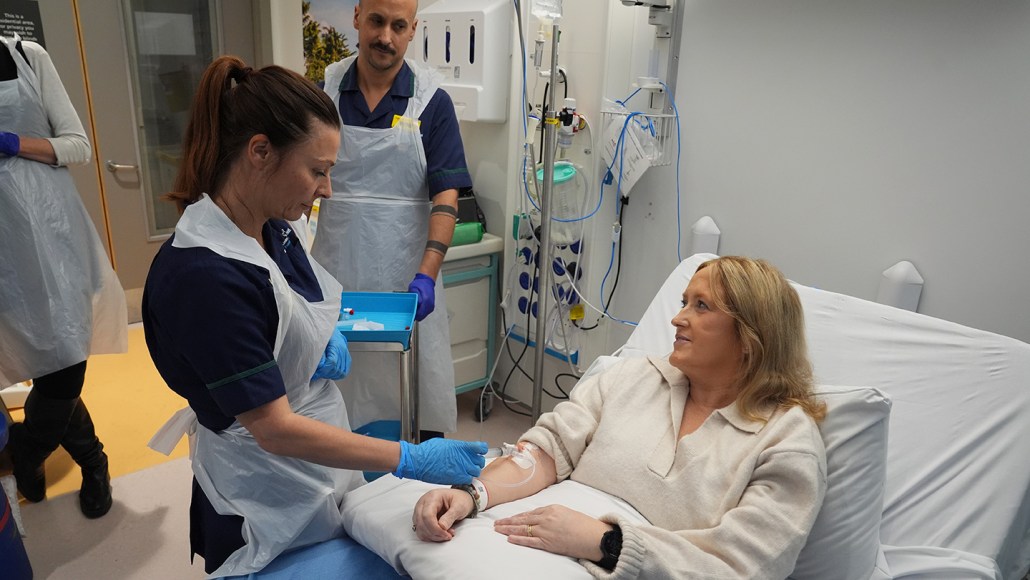
A person sits in a hospital bed while receiving treatment from a medical provider through an infusion in their arm

A patient with lupus receives CAR T cell therapy at University College London Hospital in 2024. A new study reports that women who became pregnant after CAR T treatment for autoimmune diseases like lupus fared well and had healthy newborns.

Press Association via AP Images

Women who had an experimental therapy to treat their autoimmune disease had successful pregnancies, a small study finds.

After CAR T cell therapy, seven women had healthy newborns and five more were experiencing regular pregnancies as of late May, researchers report July 29 in the New England Journal of Medicine.

The study is the largest snapshot to date of pregnancy after using CAR T cell therapy for autoimmune diseases, in which the immune system fires at the body’s own tissue. Untreated, these diseases pose risks to pregnancies, including miscarriage, preterm birth and low birth weight.

CAR T cell therapy was pioneered as a treatment for cancer, but there are very few reports of pregnancy in those circumstances. Often, those patients are no longer in their reproductive years or are taking other toxic drugs.

More recently, the therapy has shown effectiveness against autoimmune diseases. Immunologist Georg Schett, of Friedrich-Alexander-Universität Erlangen-Nürnberg in Germany, and his team reported in 2022 on five patients who received the therapy for lupus and went into remission. The treatment involves engineering certain immune cells, called T cells, into destroyers of other immune cells, called B cells, which are attacking the body. The bone marrow eventually replenishes the B cells with a new generation missing the self-sabotage capability. But the treatment regimen puts a patient at risk of infection and other potentially serious side effects.

For the new study, Schett and colleagues included women from Germany, Belgium, China, Switzerland, France and the United States who gave birth in 2025 and 2026. All had undergone CAR T cell therapy for autoimmune diseases, largely for lupus, and all were in remission. The women became pregnant naturally as soon as one month and as long as three and a half years after treatment. The study investigated whether the women might relapse while pregnant or if aftereffects of CAR T cell therapy might cause problems for the fetus.

None of the women in the study had reactivations of their autoimmune disease. The seven women who gave birth had newborns with normal weights. The babies did not have infections at birth and their immune protein levels matched that seen in healthy newborns. In further testing of five of the newborns, the researchers found the expected immune cell allotments.