A mouth built for efficiency may have helped the earliest bird fly
The 150-million-year-old Archaeopteryx had mouth features similar to those of birds today
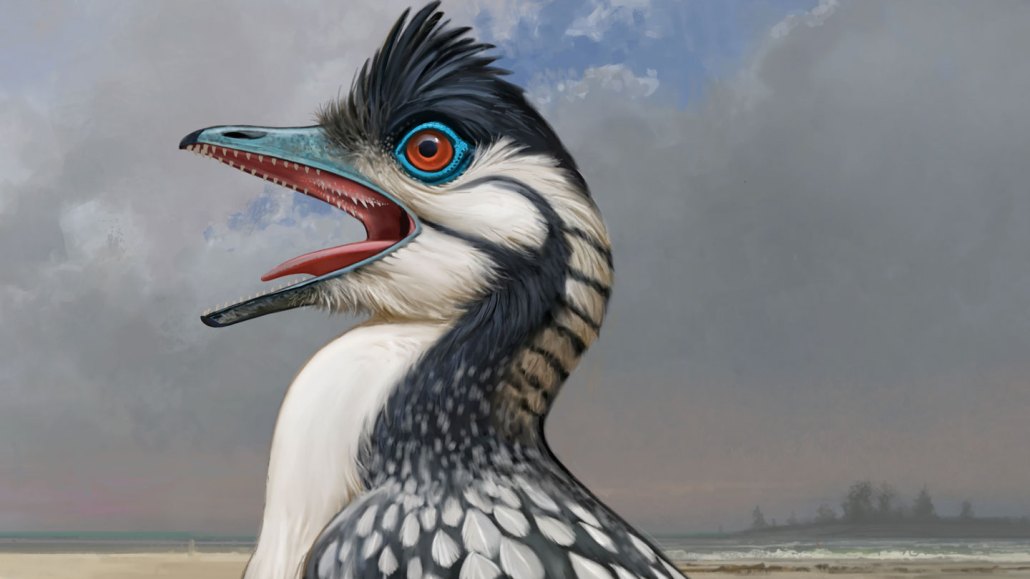
Fleshy “teeth” on the roof of Archaeopteryx’s mouth, a sensory organ at the end of the beak and a highly mobile tongue (all illustrated) may have helped the ancient bird get the energy it needed to fly.
Ville Sinkkonen
About 150 million years ago, in a coastal lagoon in what is now southern Germany, the oldest known bird gobbled up food with a beak built for efficient eating. It’s finely tuned mouth anatomy, revealed in a newly analyzed fossil, may have helped it generate the energy required to fly, researchers report February 2 in The Innovation.
Called Archaeopteryx, the animal had a toothed beak, hooked claws for grasping or climbing and feathered wings that it used for gliding and short bursts of flight. It is the earliest dinosaur that scientists also classify as a bird.
“Archaeopteryx is the oldest dinosaur that we know of to fly using feathered airfoils,” says Jingmai O’Connor, a paleontologist at the Field Museum in Chicago. “Because flying takes more energy than walking or running or swimming, then it should have features associated with more efficient feeding.”
To study one of the most complete fossils of Archaeopteryx, O’Connor and her colleagues used X-ray scans and ultraviolet images to see details of the bird’s mouth that had never been seen before. “We saw three new features of the skull,” O’Connor says.
The first feature was a series of bumps on the roof of the mouth that glowed under UV light, suggesting soft tissues had left a unique chemical trace in the fossil. These dots appeared similar to mouth structures in modern birds called oral papillae, which are firm, fleshy cones that assist with manipulating and ingesting food. The team also found a tongue bone similar to one in modern birds that makes the appendage more maneuverable.
“In the evolution of birds, in response to their increased caloric demands, they evolve a mobile tongue … and they evolve these oral papillae,” O’Connor says. “Like in living birds, these are structures that work together.”
The third feature was a series of small tunnels in the tip of Archaeopteryx’s beak revealed in X-ray scans. These channels may have once housed nerves, which were probably part of a sensitive bill-tip organ seen in modern birds that helps them root around for food.

Archaeopteryx was first discovered in 1861, and scientists have now analyzed 14 body fossils. The newly studied fossil was held by different private collectors for decades before being acquired by the Field Museum in 2022.
After meticulously preparing the specimen, researchers published a scientific description of the fossil in 2025. It is one of the most complete and well-preserved examples of the animal ever seen, containing secondary feathers on the inner part of the wing needed for flight and other features that can help scientists understand the evolution of birds from earlier land-dwelling dinosaurs.
The new study of Archaeopteryx’s feeding capabilities adds key details to this origin story.
“I think it is an important study because prior to it, people hadn’t been looking for these sorts of structures,” says Michael Pittman, a paleontologist at the Chinese University of Hong Kong who was not involved in the new research. “They have three features proposed in the specimen that in modern birds are associated with efficient feeding.”
Confirming that these mouth features assisted with the development of flight, however, is something that Pittman says will require more research.
“Whether it’s a relationship with flight I would say is very much a working hypothesis. I think we need to do more sampling to be able to support that,” he says. “But as a hypothesis, it’s definitely very exciting.”