Can you trust the results from gut microbiome tests? Maybe not

Read this before you make health decisions based on a consumer test of your gut microbes
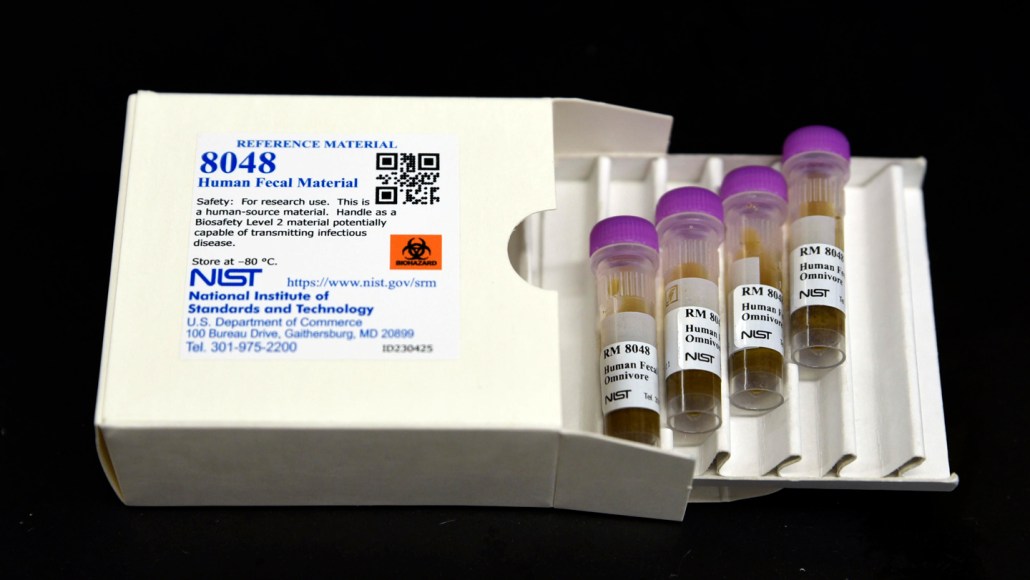
A box labeled Human Fecal Material is open with four vials of samples visible.

The National Institute of Standards and Technology created a standardized fecal sample. Companies that analyzed identical samples of the standard produced results as varied as the microbes carried by different people.

NIST

Finding out what gut microbes a person carries may not be as easy as many companies advertise.

Seven direct-to-consumer microbiome testing companies each got three identical fecal samples but returned different results about which gut microbes were present, researchers report February 26 in Communications Biology.

The results highlight discrepancies among companies that claim to give consumers insight about their gut health. That matters because consumers may take probiotics they don’t need, change their diets in harmful ways or even get fecal transplants based on inaccurate microbiome test results, say researchers from the University of Maryland in Baltimore and the National Institute of Standards and Technology in Gaithersburg, Md. (Molecular geneticist Scott Jackson has since left NIST and is now a consultant for companies whose products involve microbes.)

The NIST team created a fecal standard by putting bowel movements from multiple people in a blender to create a homogenized sample. “We know that it is identical in biology across all those samples,” NIST microbiologist Stephanie Servetas said February 25 during a news briefing. “What this material is meant to do is really to say how reproducible are the results, either between companies or within a company, but it’s not going to be able to tell us who was closest to the correct answer.”

Some companies were consistent with the microbes they identified across the three samples. But one company produced a drastically different result on one of the three samples it tested. It classified the two similar results as “healthy” and the outlier as “unhealthy.” Others identified many of the same types of bacteria across the replicated samples but showed varying amounts of those bacteria. The discrepancies between the companies’ results on the standard sample were similar to variability among samples that came from different people.

NIST began selling the fecal standard to companies last year to use for calibration and quality control, which may result in improved testing methods in the future, Servetas said. The aim isn’t to force companies to adopt the same methods or to stifle innovation, she said, but “there should be some minimum guidelines and some controls” that would make results more consistent. 

Tina Hesman Saey is the senior staff writer and reports on molecular biology. She has a Ph.D. in molecular genetics from Washington University in St. Louis and a master’s degree in science journalism from Boston University.