This space telescope is falling. A robotic spacecraft may save it

NASA’s Swift gamma-ray telescope may get a new lease on life

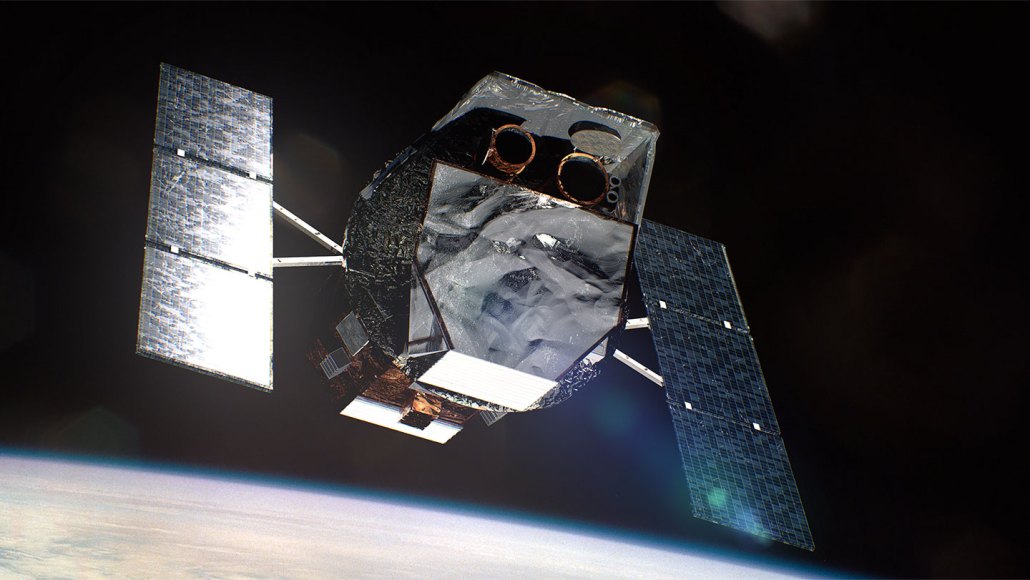
An illustration of a space telescope with extended solar panels with a sliver of Earth in the distance

The Neil Gehrels Swift Observatory is drifting to its demise in Earth’s atmosphere. A space robot called LINK could tug it back into a safe orbit.

Chris Smith (KBRwyle)/NASA’s Goddard Space Flight Center

A robotic tugboat is launching to pull a decades-old space telescope to safety. Early on July 2, a private spacecraft called LINK will launch to rescue NASA’s Swift space telescope from a fiery death in Earth’s atmosphere.

The Neil Gehrels Swift Observatory launched in 2004 to study gamma-ray bursts and other cosmic events. It has been enormously successful and is still making new discoveries.

But all satellites eventually succumb to gravity, and most burn up in Earth’s atmosphere before they reach the ground. In early 2025, NASA scientists realized Swift was losing altitude faster than expected: Strong solar activity starting in 2024 had given Earth’s atmosphere an energy boost, expanding it slightly and putting more drag on objects in low orbits. The extra drag meant Swift would reenter and break up sometime in mid-2026 if nothing was done.

Scientists decided to mount a robotic rescue mission, something never done before. The idea was to launch a simple spacecraft that could grab hold of Swift with robotic arms and pull it into a higher orbit. In September 2025, NASA selected private U.S. spaceflight company Katalyst to carry out the mission, giving it just nine months to get ready.

Engineers in white coats and gloves examine a robotic spacecraft suspended from above in a white-walled room.
Engineers have been testing the LINK robot to make sure it can boost the Swift Observatory back into an orbit safe for it to continue its legendary gamma-ray observations.Scott Wiessinger/NASA

A rocket will launch LINK from the Marshall Islands at 5:09 a.m. EDT on July 2, after a two-day weather delay.

Operators will spend several weeks making sure LINK is working. Then the spacecraft will spend about a month slowly approaching Swift and sending images to Earth, where mission team members will pick the best places to grab the descending spacecraft. Once LINK has Swift in its clutches, it will fire gentle thrusters to slowly raise the orbit over a few months, aiming for Swift’s original altitude of about 600 kilometers.

If successful, similar techniques could boost other space telescopes, including the Hubble Space Telescope.

Swift occupies a unique niche in NASA’s pantheon of telescopes, says principal investigator Brad Cenko, an astrophysicist at Goddard Space Flight Center in Greenbelt, Md. True to its name, it can swivel quickly to follow up on sudden cosmic explosions almost anywhere in the sky within minutes. Hubble, by contrast, takes at least a day to repoint. “It really is NASA’s ‘first responder,’” Cenko said in an email.

Since December, Swift’s operations team has been changing its observing strategy to reduce drag and slow its descent. Currently, it’s not taking science data at all. Once in its new orbit, the observatory will need a reboot. Return to science could take another month or more, but when it does, Swift could have another decade of observations ahead.

“Looking forward to our post-boost era, we are really excited about all the discoveries Swift could unlock,” Cenko said.

Lisa Grossman is the astronomy writer. She has a degree in astronomy from Cornell University and a graduate certificate in science writing from University of California, Santa Cruz. She lives in Minneapolis.