X rays reveal Eros’ primitive nature
Aided by a blast of X rays from the sun, a spacecraft orbiting the near-Earth asteroid 433 Eros has gathered preliminary evidence that the rock is apparently unchanged since the birth of the solar system.
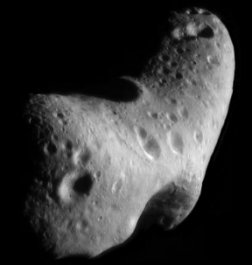
The finding supports the notion that Eros and other S asteroids, the most common class in the solar system, are the parent bodies of ordinary chondrites, the most common class of meteorites that fall to Earth.