
All Stories by Lisa Grossman
- Astronomy
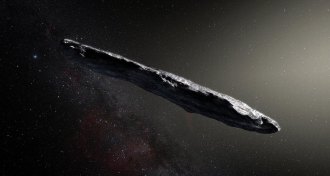
We still don’t know where the first interstellar asteroid came from
Astronomers are tracking stars to see if one of them launched the first interstellar asteroid at Earth.
- Astronomy
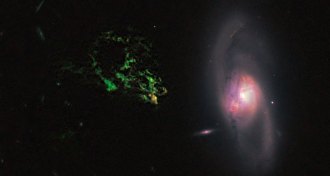
Here’s what really happened to Hanny’s Voorwerp
Glowing clouds of gas known as Hanny’s Voorwerp offer a way to study galaxies and black holes in the distant past.
- Astronomy
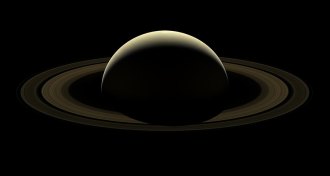
Here is Cassini’s last broad look at the Saturn system
Two days before plunging into Saturn, Cassini took a mosaic image of the gas giant, its rings and its moons.
- Science & Society
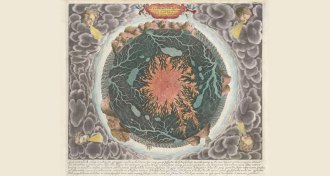
A new map exhibit documents evolving views of Earth’s interior
"Beneath Our Feet" puts maps on display to show how people have envisioned and explored Earth’s subsurface.
- Astronomy
The Arecibo Observatory will remain open, NSF says
The iconic Arecibo radio telescope has survived Hurricane Maria and dodged deep funding cuts.
- Astronomy
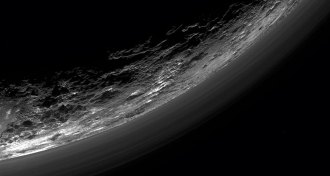
Haze keeps Pluto cool by kicking heat out to space
Pluto may be the only place in the solar system whose atmosphere is kept cool by solid hazes, not warmed by gas.
- Astronomy
New camera on Palomar telescope will seek out supernovas, asteroids and more
The Zwicky Transient Facility at Palomar Observatory in California will seek supernovas, black holes and asteroids.
- Astronomy
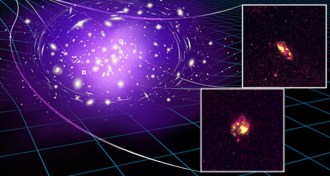
Ancient spiral galaxy is 11 billion years old
The most ancient spiral galaxy seen to date is 11 billion years old and could help reveal how galaxies sprout arms.
- Astronomy
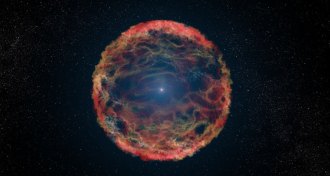
This star cheated death, exploding again and again
The weirdest supernova ever has lasted more than three years, and may be the third outburst from the same star.
- Astronomy
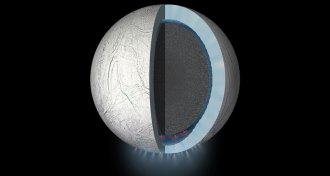
A sandy core may have kept Enceladus’ ocean warm
Friction in Enceladus’ porous core could help heat its ocean enough to keep it liquid for billions of years.
- Astronomy
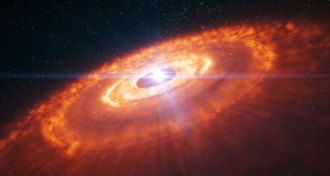
The way hungry young stars suck in food keeps most X-rays in, too
The columns of plasma that feed growing stars develop an extra layer that keeps X-rays in.
- Astronomy
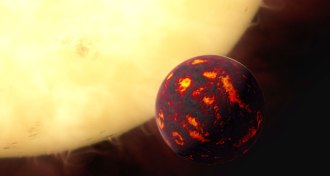
Hot, rocky exoplanets are the scorched cores of former gas giants
Hot, rocky exoplanets are probably the scorched cores of former gas giants, so astronomers shouldn’t trust them for information about true Earth twins.