Small creatures, big returns: Vaccinating invertebrates
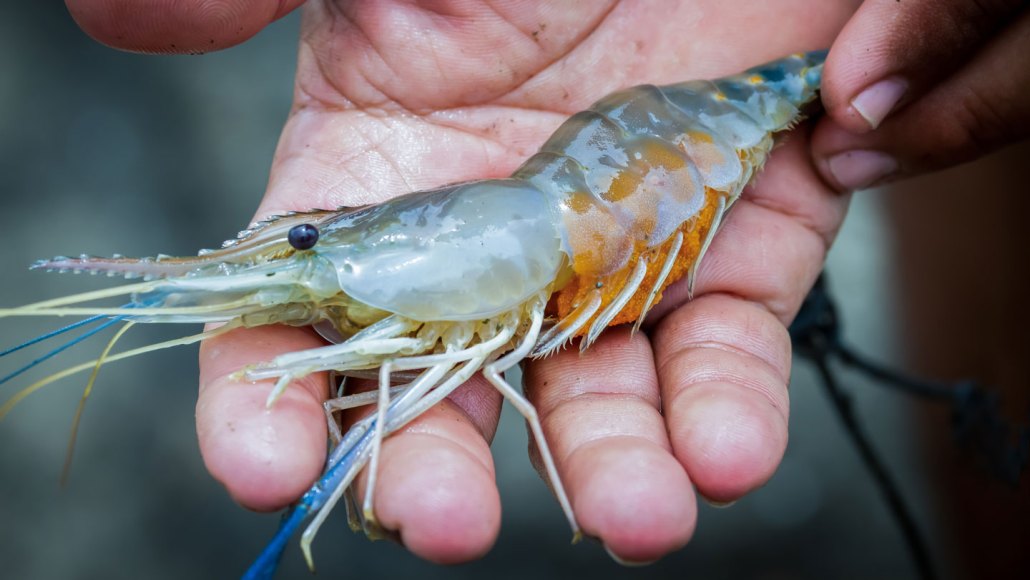
A potential vaccine for shrimp helps protect against early mortality syndrome and white spot syndrome.
peerawat444/iStock/Getty Images Plus
By Susanna Camp
No creature is spared the ravages of disease. For bees, American foulbrood is as ghastly as it sounds: the bacterium that causes this scourge turns infected honeybee larvae into a twisted brown gunk. It’s fatal to bee colonies; beekeepers often burn an infected hive to protect their remaining hives. For shrimp, there’s no cure for white spot syndrome virus. It causes up to 100 percent mortality in infected farmed populations within three to 10 days, and it can spread to wild crustaceans, too.
For years, conventional wisdom held that invertebrates such as honeybees and shrimp lacked the antibody-generating adaptive immune systems of vertebrates and could not be vaccinated. People turned to antibiotics to prevent bacterial outbreaks, but indiscriminate use can disrupt animals’ microbiomes and fuel antibiotic resistance. Now, biotech innovators are vaccinating these creatures against pathogens, and the bee vaccine has bagged the first-ever conditional license for an insect vaccine from the United States Department of Agriculture. Lily Burton brings the buzz for Science News.
💉 Inheriting immunity
The secret lies in transgenerational immune priming. Instead of generating antibodies like a traditional vaccine, scientists think the new vaccines make modifications to invertebrates’ DNA that don’t alter the sequence itself — epigenetic modifications. These allow an adult queen bee or adult shrimp to pass heightened disease resistance to their offspring. In the case of honeybees, feeding the queen an inactivated bacterial pathogen triggers this protective response against American foulbrood and secondary viral infections. For shrimp, proof-of-concept trials have shown the vaccine can dramatically boost survival rates against early mortality syndrome and white spot syndrome virus. It seems that even species without “immune memory” can be trained to defend themselves.
⛓️ Links in the food chain
As concerns over antibiotic resistance and food security intensify, the demand for nonchemical disease prevention is moving beyond the standard livestock sector. Protecting the health of the entire food chain, down to the smallest insect, is a preventative imperative. The global animal vaccine market is projected to exceed $16 billion by 2030. Within that sector, the invertebrate market represents an untapped frontier.
🥾 Bringing the lab to the hive and pond
A new cohort of specialized startups is carving out high-impact niches in aquaculture, pollinator health and biological population control:
- Dalan Animal Health — The firm behind the bee and shrimp vaccines has reported positive results from efficacy studies of the bee vaccine. They expect USDA to grant full licensure for the 2027 season at earliest. The company has raised over $13 million in total funding.
- Redux Bio — Focused on the aquaculture sector, Redux Bio’s technology is designed to mess with how white spot syndrome virus and other diseases replicate. Redux has raised $3 million in seed round funding. The company is conducting early clinical trials ahead of seeking approval from regulatory agencies. They’re eyeing markets in India, Southeast Asia and Ecuador.
From the hive to the pond, the frontiers of animal vaccination just reached new boundaries.
Disclaimer: The Science News Investors Lab newsletter is for informational purposes only and does not constitute investment advice. Society for Science and Science News Media Group assumes no liability for any financial decisions or losses resulting from the use of the content in this newsletter. Society for Science and Science News Media Group do not receive payments from, and do not have any ownership or investment interest in, the companies mentioned in this newsletter. Please consult a qualified financial advisor before making any investment decisions.