The buzz: Who’s news in edible insects
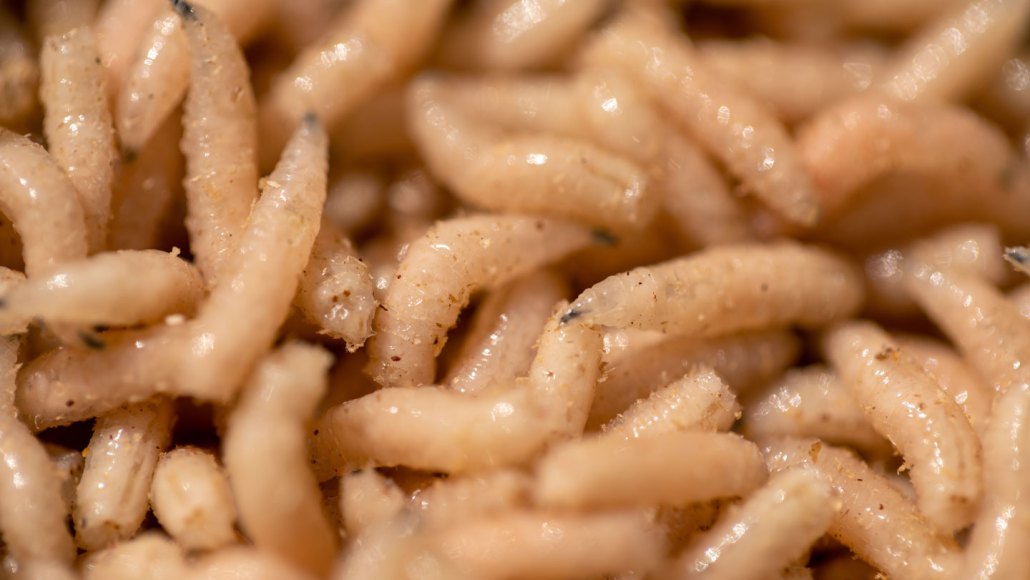
The Neanderthal diet might have included putrefied meat with a healthy sprinkling of maggots.
sankai/Getty Images
By Susanna Camp
In the natural order of things, maggots usually wait for us to stop being alive before they start their meal, but new archaeological evidence suggests our prehistoric relatives weren’t above beating them to the punch. Researchers have posited that Neandertals supplemented their diets with fly larvae — a nutrient-dense micro-livestock that provided essential fats and proteins during lean winters. Is this a proof of concept for the alternative protein market? For SN, Sofia Caetano Avritzer reports on the squirming side dish.
🍽️ Larvae a la carte
Scientists have long speculated that Neandertals were hardcore carnivores like lions, due to high levels of nitrogen present in their bones. But some researchers aren’t so sure, given that humans can only tolerate a certain amount of animal protein. This raised a question: where was the extra nitrogen coming from? In this study, researchers examined muscle from present-day donated cadavers and the maggots munching on them, as a surrogate for animal meat. By combining these findings with ethnographic studies of modern hunter-gatherers, researchers determined that Neandertals may have incorporated insects into their diet, perhaps as a survival strategy. Researchers haven’t found archaeological proof of the practice, but the science suggests that during harsh winters when large game was scarce and plant life was dormant, these larvae served as a critical source of fat and other nutrients, buffering against starvation.
🪳 The bug report
The concept of harvesting and packaging edible insects as a sustainable food source to address global food insecurity is not new. At least two billion people worldwide regularly incorporate insects into their diets. In 2013, The Food and Agriculture Organization (FAO) of the United Nations released its seminal report titled “Edible insects: Future prospects for food and feed security.” It’s a fascinating deep dive down the worm hole into what bugs live where, which are the meatiest and how they might be cultivated.
The report kicked off a wave of innovation in bug harvesting, with a decisive response from the market. Here’s a look at the trends:
- 2013–2018: Early investment focused on consumer packaged goods. The thesis was that ground-up crickets would become an abundant and increasingly sought-after protein alternative. A few well-funded startups launched cricket-flour protein bars and chips. Starbucks even added cochineal extract (a red dye derived from crushed beetles) to its Strawberry Frappuccino for a signature hue — a short-lived foray that they promptly shut down due to consumer backlash. (Fun fact: SN editor in chief Nancy Shute covered the buggy brouhaha for NPR, back when she worked on the food blog The Salt.)
- 2019–2022: After realizing Western consumers weren’t ready for whole insects, the industry pivoted toward refined powders and oils, positioned as a lipid source, and sold to pet food manufacturers, feed stock makers and cosmetics companies as an ingredient. During this time, several pioneers who’d raised significant seed and Series A capital between 2014 and 2018 ended up closing. Notable examples include cricket bar maker Bitty Foods which shut down in 2022, followed by cricket farm operator Aspire Food Group which held on for a few years but ceased operations in 2025.
- 2023–2026: The narrative shifted decisively toward the over $500 billion global animal feed market. Today, the insect of choice is no longer the cricket, but the black soldier fly, valued for its ability to convert organic waste into high-quality feed for fish and poultry.
🦟 The buzz: Who’s news
Here’s a peek at a couple of rising stars in the bug market.
- InnovaFeed: This French biotech leader is building what it calls the world’s largest black soldier fly larvae farms to produce high-quality protein for aquaculture and livestock. InnovaFeed has raised over $490 million to date, including a massive over $250 million Series D led by Qatar Investment Authority.
- Protix: Based in the Netherlands, Protix uses food waste to grow larvae that are then processed into ingredients for pet food and sustainable salmon feed. They’ve raised over $250 million, and including investments from the European Investment Bank and Tyson Foods to expand their international footprint.
Our take? The human food hype was a necessary precursor that funded the R&D for the animal feed reality. Either way, bugs are on the menu.
Disclaimer: The Science News Investors Lab newsletter is for informational purposes only and does not constitute investment advice. Society for Science and Science News Media Group assumes no liability for any financial decisions or losses resulting from the use of the content in this newsletter. Society for Science and Science News Media Group do not receive payments from, and do not have any ownership or investment interest in, the companies mentioned in this newsletter. Please consult a qualified financial advisor before making any investment decisions.