5,553 results
5,553 results for: Forests
-
Forest in the Clouds
See whether BatCam catches a tropical bat visiting a banana, or review QuetzelCam highlights for a murky but impressive view of how such a long-tailed bird jams its plumage into a nestbox. Or, if the cameras aren’t picking up anything in particular, visitors can listen to short recorded commentaries from such denizens as prong-billed barbets […]
-
From the October 17, 1931, issue
MATERNAL CARES MULTIPLY WITH COMING OF COLD Winter has breathed a hint of its coming already, in puffs of frosty air that make us forget the heat of summer that is gone, even of the unseasonable hot spell of early September. But the coming of the cold bodes only ill for the cold-blooded creatures of […]
-
From the November 21, 1931, issue
TURKEYS The beautiful bronze turkeys that furnish the biggest specimens for the family festivities were domesticated before white men came to America. Cortez found them in the markets of Mexico, and showed that he was a gourmet as well as freebooter; for turkeys soon found their way to Spain and thence all over Europe, finally […]
-
From the December 12, 1931, issue
SCIENCE AT THE WORLDS CROSSROADS Everybody has heard of Barro Colorado, the hill that was turned into an island, and was set aside as a great animal sanctuary; but only a few persons have ever set foot on it. In the nature of things, an animal sanctuary cannot be opened to crowds of visitors, so […]
- Health & Medicine
With help from pig tissue, people regrow muscle
Noncellular material implanted in patients attracts stem cells to fix injuries.
- Animals
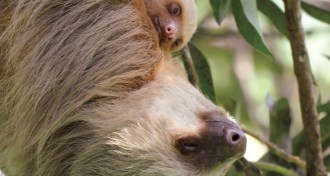
For upside-down sloths, what goes down can’t come up
Upside-down sloths have to hold their organs up and their food down.
- Climate
Forest fires may speed demise of Greenland’s ice sheet
Black carbon released by burning woodland darkens Greenland’s ice sheet, quickening its melt.
- Climate
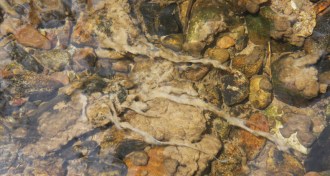
Environmental change may spur growth of ‘rock snot’
A controversial new theory suggests alga that forms rock snot isn’t an invader, but a low-key species native to many rivers.
- Life
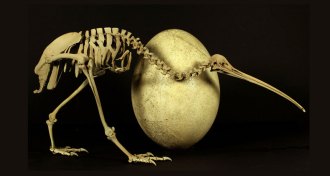
Flightless birds’ history upset by ancient DNA
The closest known relatives of New Zealand’s small, flightless kiwis were Madagascar’s elephant birds, so ancestors must have done some flying rather than just drifting with continents.
- Animals
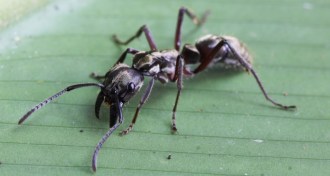
Swimming evolved several times in treetop ants
Certain ants living in tropical forest canopies turn out to be fine swimmers.
- Neuroscience
Sunbathing may boost endorphins in the body and brain
UV light makes mice churn out a molecule that is a cousin of morphine and heroin, a finding that may explain why some people seek out sunshine.
- Animals
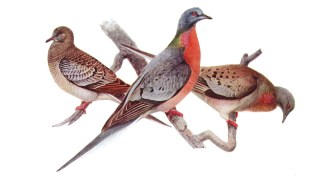
Passenger pigeon population had booms and busts
DNA says the birds recovered from hard times — until people came along.