Skip to content
Subscribe today

Every print subscription comes with full digital access

Subscribe Now
  • All Topics
    • Health
    • Humans
      • Anthropology
      • Health & Medicine
      • Archaeology
      • Psychology
      • View All
    • Life
      • Animals
      • Plants
      • Ecosystems
      • Paleontology
      • Neuroscience
      • Genetics
      • Microbes
      • View All
    • Earth
      • Agriculture
      • Climate
      • Oceans
      • Environment
      • View All
    • Physics
      • Materials Science
      • Quantum Physics
      • Particle Physics
      • View All
    • Space
      • Astronomy
      • Planetary Science
      • Cosmology
      • View All
  • Magazine
  • Menu
    • All Stories
    • Multimedia
    • Reviews
    • Puzzles
    • Collections
    • Educator Portal
    • Century of Science
    • Unsung characters
    • Coronavirus Outbreak
    • Newsletters
    • Investors Lab
  • About
  • SN Explores
  • Our Store
Donate
Home INDEPENDENT JOURNALISM SINCE 1921 SIGN IN
Home INDEPENDENT JOURNALISM SINCE 1921
  • All Topics
    • Earth
      • Agriculture
      • Climate
      • Oceans
      • Environment
    • Humans
      • Anthropology
      • Health & Medicine
      • Archaeology
      • Psychology
    • Life
      • Animals
      • Plants
      • Ecosystems
      • Paleontology
      • Neuroscience
      • Genetics
      • Microbes
    • Physics
      • Materials Science
      • Quantum Physics
      • Particle Physics
    • Space
      • Astronomy
      • Planetary Science
      • Cosmology
    • Tech
      • Computing
      • Artificial Intelligence
    • Chemistry
    • Math
    • Science & Society
    • All Topics
  • Health
  • Humans
    • Humans
      • Anthropology
      • Health & Medicine
      • Archaeology
      • Psychology
    • Recent posts in Humans

      • Health & Medicine

        It masquerades as malignant. But this bone-covered tumor is benign

        By Carly KayJanuary 23, 2026
      • Neuroscience

        A spot in the base of the brain has a love of language

        By Laura SandersJanuary 22, 2026
      • Anthropology

        This hand stencil in Indonesia is now the oldest known rock art

        By Tom MetcalfeJanuary 21, 2026
  • Life
    • Life
      • Animals
      • Plants
      • Ecosystems
      • Paleontology
      • Neuroscience
      • Genetics
      • Microbes
    • Recent posts in Life

      • Animals

        How Greenland sharks defy aging

        By Meghan Rosen18 hours ago
      • Health & Medicine

        It masquerades as malignant. But this bone-covered tumor is benign

        By Carly KayJanuary 23, 2026
      • Neuroscience

        A spot in the base of the brain has a love of language

        By Laura SandersJanuary 22, 2026
  • Earth
    • Earth
      • Agriculture
      • Climate
      • Oceans
      • Environment
    • Recent posts in Earth

      • Earth

        A long-lost tectonic fragment may be shaking Northern California

        By Carolyn GramlingJanuary 16, 2026
      • Climate

        Earth’s last 3 years were its hottest on record

        By Carolyn GramlingJanuary 13, 2026
      • Climate

        Hidden tree bark microbes munch on important climate gases

        By Douglas FoxJanuary 8, 2026
  • Physics
    • Physics
      • Materials Science
      • Quantum Physics
      • Particle Physics
    • Recent posts in Physics

      • Physics

        Physics theories about the multiverse are stranger than fiction

        By Maria TemmingJanuary 23, 2026
      • Particle Physics

        Physicists discovered neutrinos 70 years ago. The ghostly particles still have secrets to tell

        By Emily ConoverJanuary 21, 2026
      • Physics

        Queen bumblebees are poor foragers thanks to sparse tongue hair

        By Emily ConoverJanuary 12, 2026
  • Space
    • Space
      • Astronomy
      • Planetary Science
      • Cosmology
    • Recent posts in Space

      • Physics

        Physics theories about the multiverse are stranger than fiction

        By Maria TemmingJanuary 23, 2026
      • Space

        Seismometers can track falling space junk

        By Javier BarbuzanoJanuary 22, 2026
      • Cosmology

        A massive cosmic ring may challenge a key assumption about the universe

        By Lisa GrossmanJanuary 21, 2026
Sponsored Content

Remembering Vera Rubin, a trailblazer at the telescope and beyond
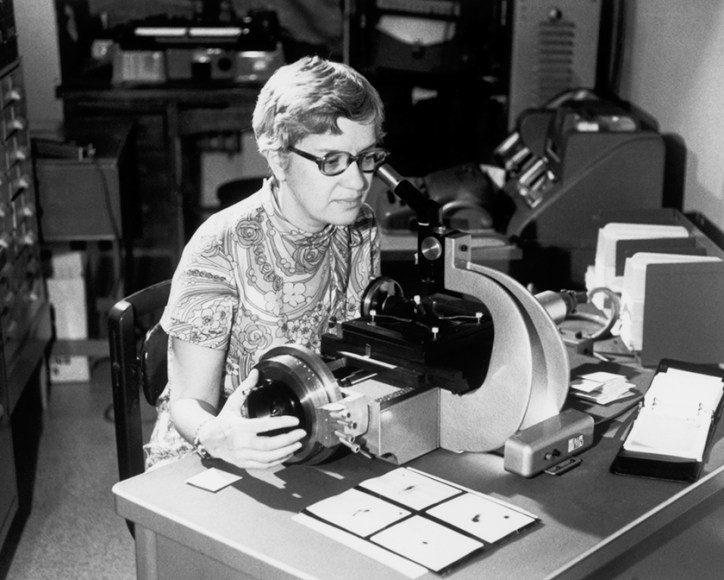
Astronomer Vera Rubin was determined to unravel the universe’s deepest secrets. She is best known for confirming the existence of dark matter.

Astronomer Vera Rubin was determined to unravel the universe’s deepest secrets. She is best known for confirming the existence of dark matter. Photo credit: AIP Emilio Segre Visual Archives, Rubin Collection.

Share this:

  • Share
  • Share via email (Opens in new window) Email
  • Click to share on Facebook (Opens in new window) Facebook
  • Click to share on Reddit (Opens in new window) Reddit
  • Click to share on X (Opens in new window) X
  • Click to print (Opens in new window) Print

When we stare up at the night sky, we see shimmering stars, fuzzy galaxies and faint clouds of gas and dust. It is what we cannot see, however, that will forever remind us of astronomer Vera Rubin. Rubin is best known for confirming the existence of dark matter and, along the way, serving as an advocate for women in science and an inspiration to those who wanted to become scientists. She died December 25, 2016. She was 88.

“I hope the day comes when women and minorities in science are so common that Vera’s efforts to break down barriers will be hard to appreciate,” says Deidre Hunter, an astronomer at the Lowell Observatory in Flagstaff, Ariz. Hunter worked closely with R­ubin, often going with her to telescopes around the world to study the stars. Hunter says she hopes Rubin will ultimately be remembered for her scientific achievements, which revolutionized our understanding of the universe. Rubin’s passion for astronomy and her humanity should not be forgotten, either, Hunter says.

Rubin respected everyone she worked with, whether astronomers, writers or students, old or young, famous or not. She encouraged everyone to believe they had something to contribute and sought every opportunity to share her p­assion for science as often as she could, including working with Society for Science & the Public. Rubin served on the Society’s Board of Trustees from 2002 to 2008, providing guidance on how the Society could inform, educate and inspire — all actions she strove to achieve in her own life.

“Vera Rubin was truly inspirational,” says Neta Bahcall, an astrophysicist at Princeton University. “She was passionate about science, science education, women in science, promoting science literacy, teaching young people. She was amazing.”
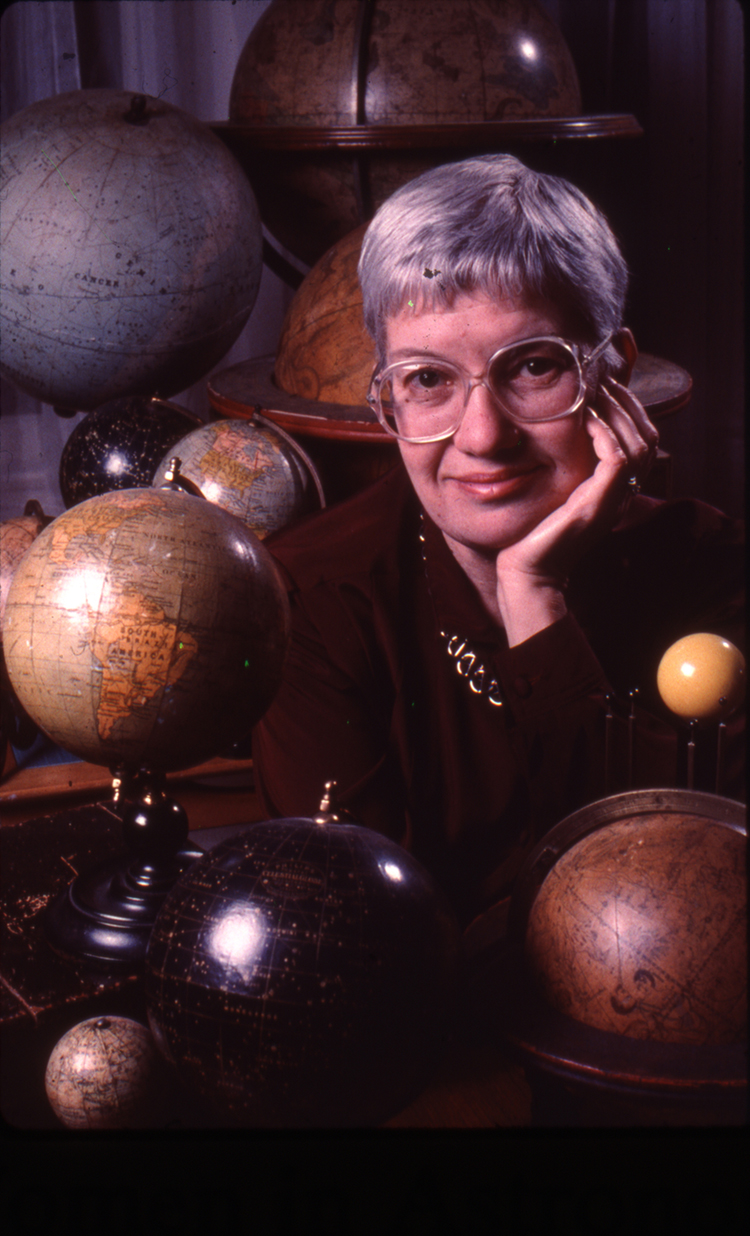
Vera Rubin turned her attention to stars in the 1960s.
Vera Rubin turned her attention to stars in the 1960s. Photo credit: Mark Godfrey, courtesy AIP Emilio Segrè Visual Archives, Gift of Vera Rubin.
Rubin was born Vera Cooper on July 23, 1928, in Philadelphia. At age 10, she moved with her family to Washington, D.C. There, she stared out her bedroom window (she said you could still see the stars from the city in the 1930s and 1940s) and traced the paths of stars along with the trails of meteors that flashed across the night sky. She said she knew then that she wanted to become an astronomer. Little did she know that at about the same time, the idea of dark matter was being discussed, very skeptically, in the astronomy community. A few years later, Rubin chose to attend Vassar College in New York, in part because the institution had offered her a scholarship and because she had read that Maria Mitchell, the first American woman to become a professional astronomer, had worked there.

After graduating from Vassar, Vera married Robert Rubin and attended Cornell University, where she studied with physics g­iants Richard Feynman and Hans Bethe. She also explored the motions of galaxies, and in 1950, rocked the astronomy community with a bold result: The universe a­ppeared to spin around a central axis. Rubin’s argument and analysis were met with intense skepticism and ultimately didn’t stand the test of time. But the experience taught her to be dogged in her determination to unravel the universe’s deepest secrets.

Rubin turned her attention to stars in the 1960s. She wanted to know how fast they circled the center of their galaxy. As she started to measure the speeds of stars farther and farther from a galaxy’s center, she saw something unexpected: Stars farther out circled the galactic center at speeds similar to stars closer in. That would be like Pluto circling the sun at the same velocity as Mercury. If that happened, the solar system would be spinning so fast it would fly apart. So should the galaxies. But they didn’t. Mysterious matter was keeping them together. Rubin calculated that to stay together, a galaxy had to have at least six times as much of this unknown dark matter than ordinary matter. Her work confirmed that dark matter did, in fact, exist.

Decades later, scientists still aren’t sure what dark matter is. The most prominent theories say it is a particle, which has led physicists to build elaborate experiments to detect it. So far, they have been unsuccessful. But these failures never discouraged Rubin. To her, Bahcall says, it just meant that we should keep searching.

— Ashley Yeager

Science News

Science News was founded in 1921 as an independent, nonprofit source of accurate information on the latest news of science, medicine and technology. Today, our mission remains the same: to empower people to evaluate the news and the world around them. It is published by the Society for Science, a nonprofit 501(c)(3) membership organization dedicated to public engagement in scientific research and education (EIN 53-0196483).

  • Science News Explores
  • Science News Learning

Subscriber Services

  • Subscribe
  • Renew
  • Give a Gift Subscription
  • Customer Service
  • Follow Science News on Facebook
  • Follow Science News on X
  • Follow Science News via RSS
  • Follow Science News on Instagram
  • Follow Science News on YouTube
  • Follow Science News on TikTok
  • Follow Science News on Reddit
  • Follow Science News on Threads

More Information

  • FAQ
  • Newsletters
  • Rights & Permissions
  • Advertise
  • Contact

Society for Science

  • About the Society
  • Society Store
  • Donate
  • Careers

© Society for Science & the Public 2000–2026. All rights reserved.

1776 Massachusetts Ave NW, Washington, DC 20036 202.785.2255
Terms of Service Privacy Policy

Log in

Subscribers, enter your e-mail address for full access to the Science News archives and digital editions.

Not a subscriber?
Become one now.