Archaeology
- Archaeology
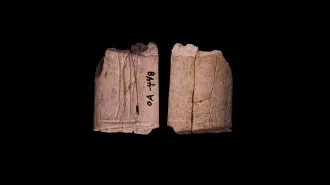
Neandertals used rhinoceros teeth as tools
Finds at sites in Spain and France suggest that Neandertals used the teeth of ancient rhinos for heavy-duty fabrication.
- Archaeology
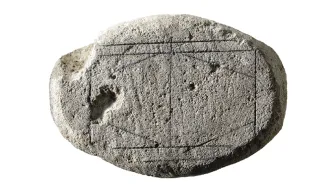
The oldest known dice date back about 12,000 years in North America
A study of ancient artifacts suggests Native American dice games began thousands of years earlier than previously documented.
- Paleontology
Early apes may not have evolved in East Africa
Fossil jaw remains found in Egypt suggest that the earliest modern apes evolved in North Africa, not in East Africa where most fossils have been found.
- Animals
When were dogs domesticated? The oldest known dog DNA offers clues
Two new studies suggest that genetically stable dogs were living among humans in Europe by about 14,000 years ago.
- Archaeology
Neandertals made antibacterial ointment, but may not have known it
A team of scientists re-created the way Neandertals made birch tar and found its antibacterial properties could fight off skin infections.
- Archaeology
A new study questions when people first reached South America
Data suggest people lived at Chile’s Monte Verde site thousands of years later than thought, challenging key “pre-Clovis” evidence. Not all agree.
- Anthropology
The ancient human ancestor ‘Little Foot’ gets a new face
A new digital reconstruction of the face of an early Australopithecus specimen helps add details about the origins of our own species.
- Archaeology
Iron Age mass grave may hold unusual victims: mostly women and children
A land dispute may have led to the massacre 3,000 years ago, suggesting Europe’s transition to farming wasn’t always peaceful.
- Archaeology
AI helps archaeologists solve a Roman gaming mystery
Researchers used AI-driven virtual players to test more than 100 rule sets, matching gameplay to wear patterns on a Roman limestone board.
- Archaeology
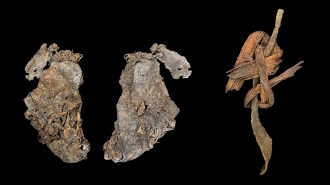
The world’s oldest piece of clothing might be an Ice Age–era hide from Oregon
Two pieces of elk hide connected by a twisted-fiber cord are the earliest evidence of sewing. But what they were used for is still a mystery.
- Archaeology
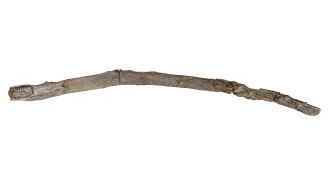
This ancient stick may be the world’s oldest handheld wooden tool
These 430,000-year-old wooden tools from Greece are a rare find and provide a glimpse at the technical know-how of our early human ancestors.
- Anthropology
This hand stencil in Indonesia is now the oldest known rock art
The work suggests early Homo sapiens developed enduring artistic practices as they moved through the islands of Southeast Asia.