Ecosystems
- Ecosystems
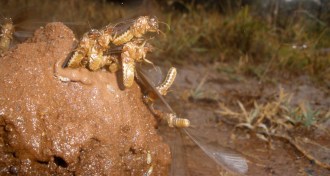
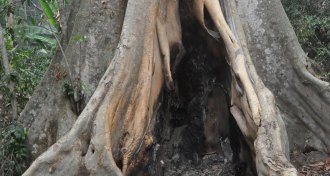
Termite mound paradises help buffer dry land against climate change
Landscapes dotted by Africa’s great termite mounds look on the verge of turning into desert but are, in fact, more resilient.
- Ecosystems
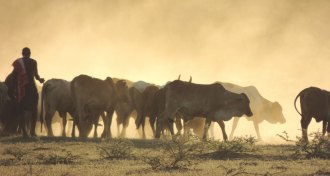
‘Earth: A New Wild’ puts people in the picture
PBS nature series ‘Earth: A New Wild’ shows humans living with, and not off, their environments
- Animals
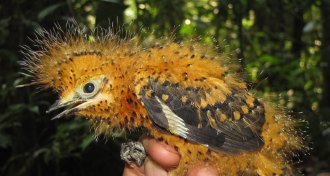
Amazonian bird may act the part of its hairy caterpillar disguise
A rare view of a baby cinereous mourner feeds debate over whether the bird both looks and acts the part of a toxic hairy caterpillar as defense against predators.
- Climate
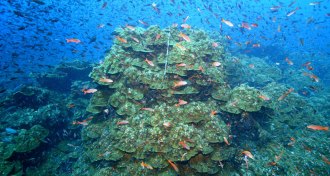
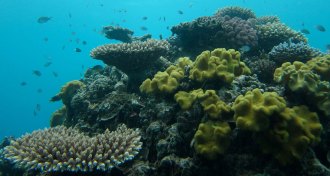
Galápagos waters preview future for corals
Posthumous analysis of Galápagos coral reefs reveals how climate change, carbon dioxide and pollution could kill off reefs worldwide by 2050.
- Ecosystems
Lessons for the new year
SN Editor in Chief, Eva Emerson, reflects on looking to nature for insights on how to constructively look ahead - even if just a year -drawing from a handful of this issues natural science stories for her 2015 resolutions.
- Life
Insect-eating bats implicated as Ebola outbreak source
Insect-eating bats, not fruit bats, may have started the Ebola epidemic.
- Ecosystems
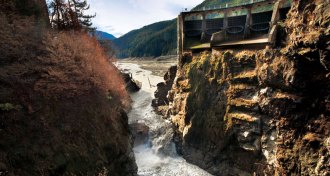
Dam demolition lets the Elwha River run free
Removing a dam involves more than impressive explosions. Releasing a river like Washington state's Elwha transforms the landscape and restores important pathways for native fish.
- Ecosystems
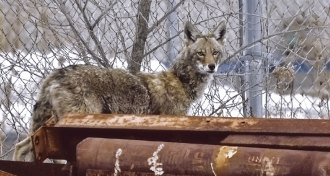
Cities are brimming with wildlife worth studying
Urban ecologists are getting a handle on the varieties of wildlife — including fungi, ants, bats and coyotes — that share sidewalks, parks and alleyways with a city’s human residents.
- Animals
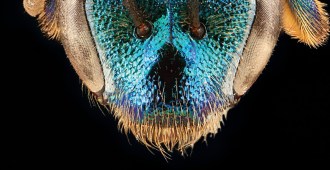
Bees, up close and personal
A photo archive from the U.S. Geological Survey's Bee Inventory and Monitoring Lab offers detailed photos of bee species.
- Ecosystems
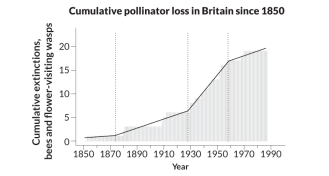
Bee losses followed World Wars
British historical records show a century-long decline of important pollinators: bees and some wasps.
- Earth
Mineralogy’s link to ecology makes an Earth twin unlikely
Earth’s unique blend of minerals emerged with the evolution of life, making it extremely unlikely that another planet has Earth’s exact mineral composition.
- Climate
Resilience protects corals from hurricanes — and climate change
Coral reefs have evolved to be resilient in the face of hurricanes that can devastate human populations. But climate change is reducing the ability of reefs to bounce back from disaster.