Neuroscience
- Neuroscience
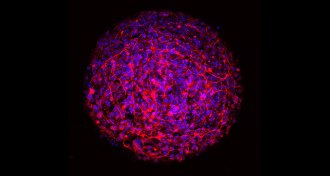
Tiny bare-bones brains made in lab dishes
A reliable way to make standard-issue minibrains could help scientists study the human brain.
- Neuroscience
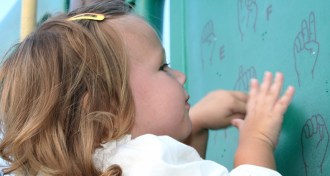
Early exposure to signing helps deaf kids on mental task
Deaf kids exposed to sign language from birth performed better on a task that required attention and impulse control.
- Neuroscience
Cancer drug’s usefulness against Alzheimer’s disputed
A preliminary report questions the anti-Alzheimer’s activity of a cancer-fighting drug.
- Neuroscience
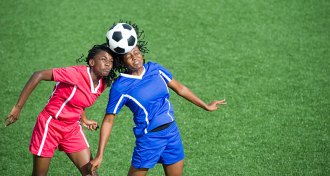
Mouse study offers clues to brain’s response to concussions
The brain needs time to recover between head hits, a study in mice suggests.
- Neuroscience
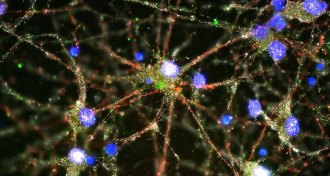
Immune system gene leads to schizophrenia clue
Excessive snipping of nerve cell connections may contribute to schizophrenia.
- Health & Medicine
Monkeys with human gene show signs of autism
Genetically altered monkeys may help scientists understand autism.
- Neuroscience
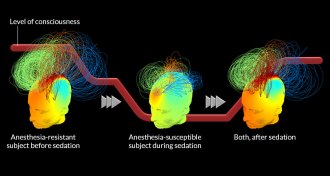
Measuring brain waves may help predict a patient’s response to anesthesia
Brain signatures hint at whether a person will resist or succumb to anesthesia.
- Science & Society
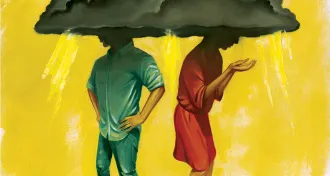
Insights into sexes’ differing responses to stress
Chronic stress takes its toll on everyone. One of our reporters follows a line of research suggesting that stress hits women harder (or at least differently) than men.
- Animals
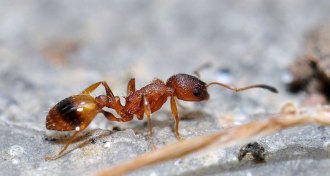
Ants don’t make decisions on the move
Worker ants stand still while processing environmental cues and planning their next moves, a new study suggests.
- Neuroscience
His stress is not like her stress
When the pressure doesn’t let up, men and women react differently. The root of the difference may be messaging within the brain.
-
-