Paleontology
- Paleontology
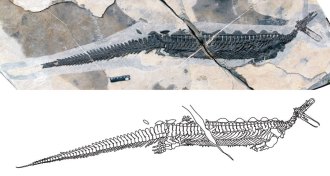
Tiny eyes make a bizarre, ancient platypus-like reptile even weirder
An ancient oddball marine reptile had teeny-tiny eyes, suggesting it probably used senses other than sight to catch food.
- Animals
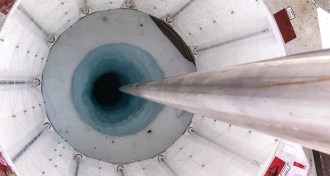
Cryptic remains of tiny animals have turned up in an Antarctic lake
Researchers were surprised to find vestiges of what appear to be tiny animals in mud from Antarctica’s ice-covered Lake Mercer.
- Paleontology
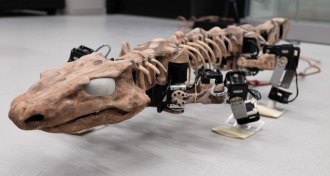
A four-legged robot hints at how ancient tetrapods walked
Using fossils, computer simulations and a life-size walking robot, researchers re-created how an early tetrapod may have made tracks.
- Astronomy
These 2018 findings could be big news — if they turn out to be true
Discoveries about fossils, the Big Bang and more could shake up the scientific world – if they turn out to be true.
- Paleontology
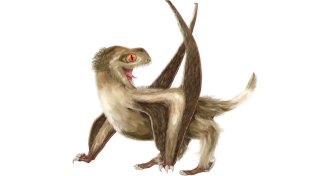
Pterosaurs may have been covered in fur and primitive feathers
A new study provides evidence of plumelike structures in ancient flying reptiles.
- Paleontology
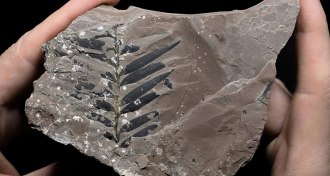
More plants survived the world’s greatest mass extinction than thought
Fossil plants from Jordan reveal more plant lineages that made it through the Great Dying roughly 252 million years ago.
- Earth
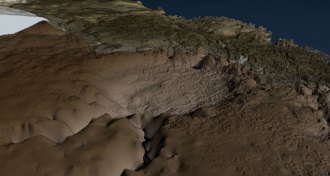
Greenland crater renewed the debate over an ancient climate mystery
Scientists disagree on what a possible crater found under Greenland’s ice means for the Younger Dryas impact hypothesis.
- Oceans
Volcanic eruptions that depleted ocean oxygen may have set off the Great Dying
Massive eruptions from volcanoes spewing greenhouse gases 252 million years ago may have triggered Earth’s biggest mass extinction.
- Paleontology
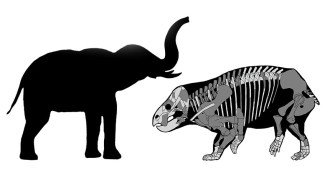
This huge plant eater thrived in the age of dinosaurs — but wasn’t one of them
A newly named plant-eater from the Late Triassic was surprisingly hefty.
- Ecosystems
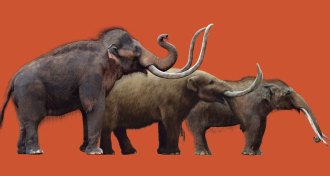
How mammoths competed with other animals and lost
Mammoths, mastodons and other ancient elephants were wiped out at the end of the last ice age by climate change and spear-wielding humans.
- Paleontology
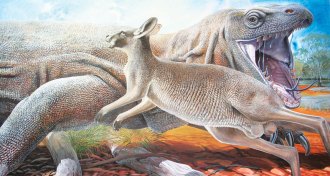
‘End of the Megafauna’ examines why so many giant Ice Age animals went extinct
‘End of the Megafauna’ ponders the mystery of what killed off so many of Earth’s big animals over the last 50,000 years.
- Paleontology
Eggs evolved color and speckles only once — during the age of dinosaurs
Birds’ colorful eggs were inherited from their nonavian dinosaur ancestors.