Paleontology
- Paleontology
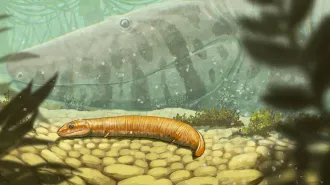
A textbook assumption about early land vertebrates may be wrong
Three species that lived about 308 million years ago challenge the idea that the first land vertebrates underwent amphibian-like metamorphosis.
- Paleontology
Frozen squirrel poop hints at sights and smells of Ice Age ecosystems
DNA preserved in ancient scat reveals what Yukon ground squirrels ate and what animals shared their world.
- Paleontology
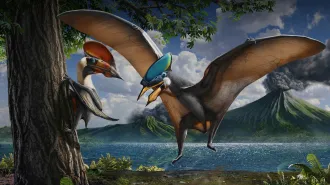
Some pterosaurs may have boasted bold iridescence
A new analysis of a 120-million-year-old fossil suggests at least one pterosaur species shimmered in iridescent greens and magentas.
- Paleontology
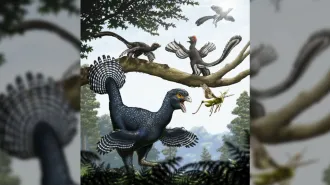
If wings came before flight, what were they for?
Scientists use simulated dinosaurs to trigger real insect brains and test how wings originally evolved.
- Animals
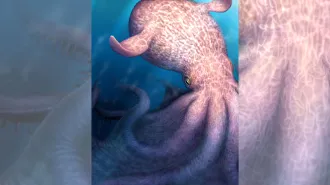
Giant, kraken-like octopuses may have ruled the Cretaceous deep
Some octopuses that lived over 72 million years ago were as long as whales. These huge predators may have been the largest invertebrates ever.
- Paleontology
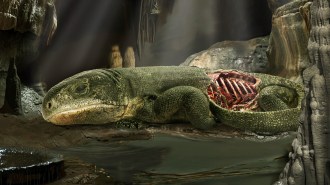
Mummified reptile hints at the origins of how we breathe
A cave preserved two animals’ rib cages, cartilage and even traces of protein, revealing a flexible breathing apparatus like that of today’s land dwellers.
- Paleontology
The ‘oldest fossil octopus’ is probably another animal
In 2000, researchers thought they found the oldest fossil octopus, which lived over 300 million years ago. But it may just be a half-rotten nautilus.
- Paleontology
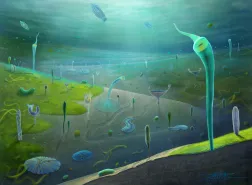
Fossils reveal many complex animals existed before the Cambrian explosion
Hundreds of Chinese fossils from the dawn of animal evolution may change how scientists think of this critical period of prehistory.
- Paleontology
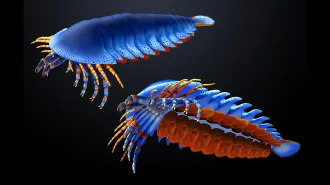
A fossil reveals early relatives of spiders — armed with claws
A Utah fossil shows early relatives of spiders and scorpions already had distinctive front claws 500 million years ago.
- Paleontology
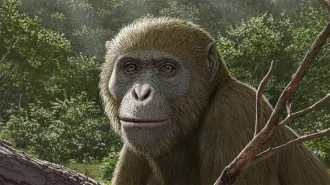
Early apes may not have evolved in East Africa
Fossil jaw remains found in Egypt suggest that the earliest modern apes evolved in North Africa, not in East Africa where most fossils have been found.
- Paleontology
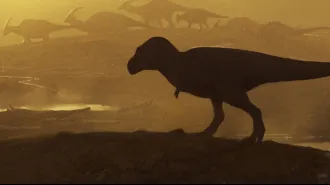
A large fossil leg bone hints at T. rex’s origins, but scientists disagree
A new analysis of a large fossil shinbone suggests T. rex ancestors came from North America instead of Asia. Not everyone agrees.
- Anthropology
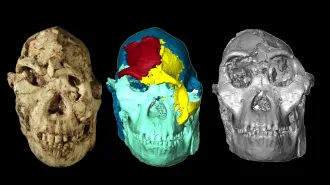
The ancient human ancestor ‘Little Foot’ gets a new face
A new digital reconstruction of the face of an early Australopithecus specimen helps add details about the origins of our own species.