Plants
- Climate
Forest management not so hot at fighting warming
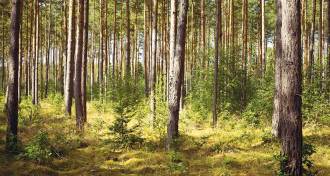
Forest management practices in Europe have slightly worsened climate change, new research shows.
- Plants
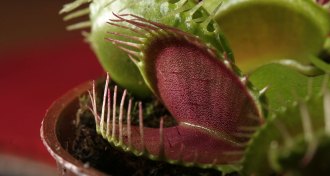
To catch a meal, a Venus flytrap counts to five
It takes two taps to trigger a Venus flytrap to close. Another three, a new study finds, are needed to turn on genes for producing enzymes.
- Animals
Alien species fly on the wings of ducks and other waterbirds
Ducks, geese and other waterbirds can transport nonnative species and help alien invaders establish themselves.
- Plants
Single gene influences a petunia’s primary pollinator
Mutations on a single gene determine how much ultraviolet light a petunia flower absorbs, and in turn, which animal pollinates the flower.
- Plants
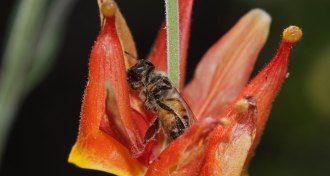
Pretty flower uses dead arthropods to lure protectors
A sticky columbine from California lures arthropods to their death to lure protectors to the plant, a new study suggests.
- Life
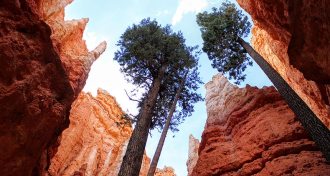
DNA doubled in conifer ancestors
The genomes of conifers — pine, cypress and yew trees — doubled twice in the distant past.
- Plants
Conifer ancestors had a double dose of DNA
The genomes of conifers — pine, cypress and yew trees — doubled twice in the distant past.
- Plants
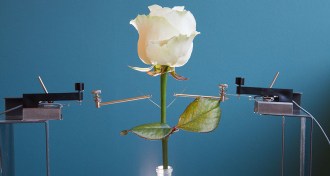
Roses rigged with electrical circuitry
Bioelectric molecules can form wires and conduct electricity in cut roses, researchers find.
- Life
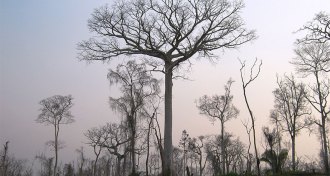
Many Amazon trees endangered
Large numbers of Amazon tree species are threatened by deforestation.
- Plants
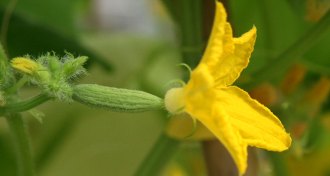
Genetic battle of the sexes plays out in cukes and melons
Genetics reveals new approach to preventing inbred seeds and encouraging more fruitful crops.
- Plants
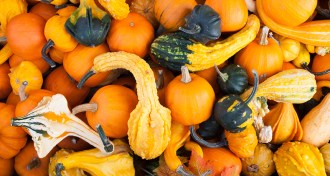
Ancient gardeners saved the gourd
Domestication might have helped early vine plants like pumpkin survive after seed-dispersing megafauna went extinct.
- Plants
Ancient gardeners saved the gourd
Domestication might have helped early vine plants like pumpkin survive after seed-dispersing megafauna went extinct.