All Stories
- Animals
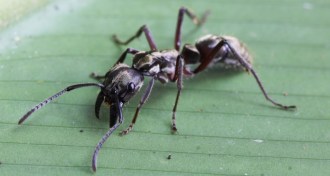
Swimming evolved several times in treetop ants
Certain ants living in tropical forest canopies turn out to be fine swimmers.
-
- Tech
Scientists struggle to find signals in the noise
Even in a simple system like email, detecting the signal from the noise is not always easy. It can be even more difficult separating a dazzling discovery from dust or whether a breast mass is cancerous or benign.
- Health & Medicine
Mammography’s limits becoming clear
It may be time to move way from blanket recommendations about mammography and empower women to decide for themselves, new work suggests.
- Cosmology
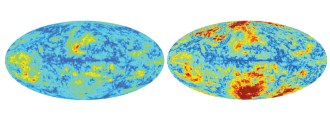
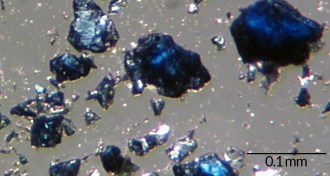
Dazzle or dust?
The unpredictable glow of galactic dust could undermine the biggest cosmological discovery in years.
- Earth
Earth’s deep interior holds vast reservoir of water
Ocean’s worth of water trapped in Earth’s mantle, lab experiments and seismic data suggest.
- Animals
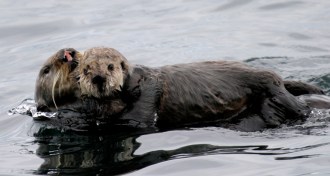
It’s hard being a sea otter mom
The energy requirements of lactation may explain why some female sea otters abandon their young.
- Life
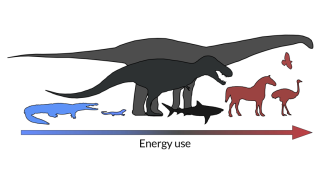
Dinos straddled line between cold- and warm-blooded
Tyrannosaurus rex and other dinosaurs straddled line between cold- and warm-blood, a new analysis finds.
- Tech
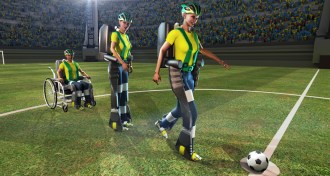
Exoskeleton helps paraplegic kick off World Cup
A paralyzed person wearing a brain-controlled robotic exoskeleton has made the first kick at the 2014 soccer World Cup.
- Health & Medicine
If timing’s right, cats and roaches may be good for kids’ allergies
Exposure to mice, roaches and cats before a child’s first birthday may confer protection against asthma and allergies, a new study suggests.
- Life
California mite becomes fastest land animal
Despite being the size of a sesame seed, the Paratarsotomus macropalpis mite can outpace Usain Bolt and even a cheetah in terms of body lengths per second.
- Genetics
Chimp and human lineages may have split twice as long ago as thought
New estimates of chimpanzee mutation rates suggest humans and chimps last shared a common ancestor 13 million years ago.