All Stories
- Climate
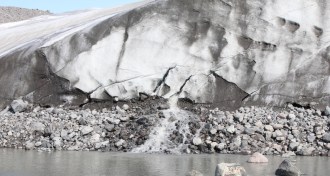
Glacial microbes gobble methane
While some bacteria produce methane in Greenland’s melting ice sheet, others may consume the greenhouse gas as it escapes.
- Astronomy
More details of super-bright supernova released
A supernova whose light was magnified by a large galaxy in front of it is changing the way astronomers think about distant cosmic objects.
- Animals
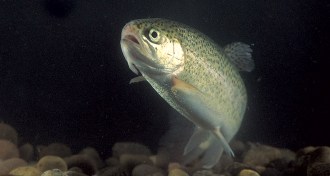
Frustrated fish get feisty
Smaller rainbow trout become more aggressive towards bigger fish when they don’t their usual treats.
- Psychology
Word-streaming tech may spell trouble for readers
Technologies like Spritz that display one word at a time on a screen reduce reading comprehension, a new study concludes.
- Materials Science
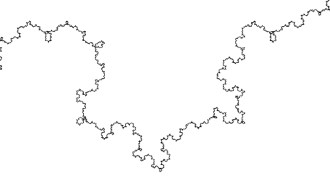
How fractals jam glassy materials
Understanding the intricate energy landscape of glasses could help to explain what happens when glassy materials are deformed or when coffee beans in a container jam.
- Genetics
Farmers assimilated foragers as they spread agriculture
While some European hunter-gatherers remained separate, others mated with the early farmers that introduced agriculture to the continent.
- Humans
Could the menstrual cycle have shaped the evolution of music?
A new study suggesting that women select better musicians shows how women’s role in evolution is being redefined.
- Genetics
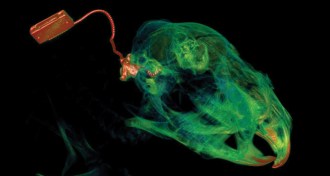
Gene therapy with electrical pulses spurs nerve growth
Deaf guinea pigs' hearing improves with electrical pulses from a hearing implant are combined with gene therapy, a new study shows.
- Health & Medicine
Enzyme may help aspirin protect against colon cancer
Aspirin may not reduce colon cancer risk in people with low levels of a protective enzyme called 15-PGDH.
- Quantum Physics
Major step taken toward error-free computing
Physicists have achieved nearly perfect control over a bit of quantum information, bringing them a step closer to error-free computation.
- Animals
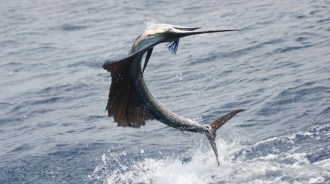
Secrets of a sailfish attack
The large, long-nosed sailfish use their rostrums more like a sword than a spear to attack prey.
- Animals
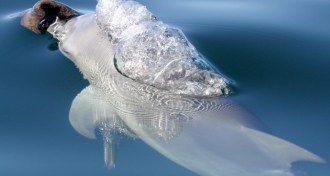
Dolphins use sponges to dine on different grub
The animals can learn to use tools to exploit food sources that would be otherwise unavailable, a study suggests.