All Stories
- Genetics
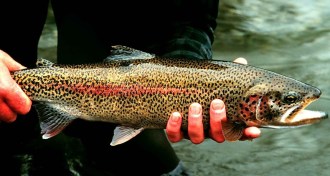
Rainbow trout genome shows how genetic material evolved
The finding challenges the idea that whole genome duplications are followed by quick, massive reorganization and deletions of genetic material.
- Animals
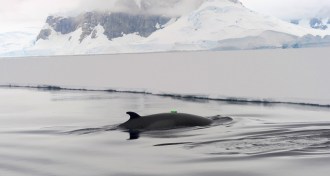
Submariners’ ‘bio-duck’ is probably a whale
First acoustic tags on Antarctic minke whales suggest the marine mammals are the long-sought source of the mysterious bio-duck sound.
- Math
Doctors flunk quiz on screening-test math
Many doctors, and the news media, don’t understand that because of the statistics of screening tests, a test with 90 percent accuracy can give a wrong diagnosis more than 90 percent of the time.
- Neuroscience
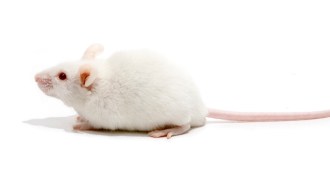
Pain curbs sex drive in females, but not males
When in pain, female mice’s interest in sex takes a hit but males still want to mate.
- Health & Medicine
Babies cry at night to prevent siblings, scientist suggests
Babies who demand to be breastfed in the night might be delaying the birth of a sibling, scientist proposes.
- Genetics
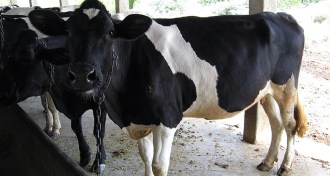
New antibiotic resistance genes found in cow manure
Identifying these genes offers clues to how antibiotic resistance could move from agricultural ecosystems to other communities of organisms.
- Genetics
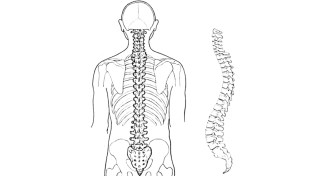
Neandertal, modern human DNA deviates even more
An analysis of genetic material of Neandertals and modern humans shows genetic differences in the species' population sizes and even the curves of their spines.
- Planetary Science
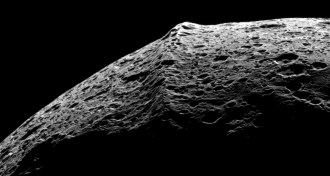
Mountains on Saturn moon may have come from space
A mountainous ridge around the equator of Iapetus, one of Saturn’s moons, may have formed from cosmic debris.
- Environment
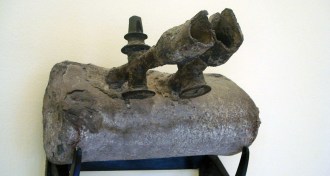
Lead levels in ancient Rome’s water were high, but not toxic
Ancient Romans probably drank tap water with up to 100 times more lead than the levels found in local spring water.
- Neuroscience
Bingeing rats show the power of food habits
Rats allowed to binge on sweetened milk show a bad habit for food. But while food might change our habits, a bad food habit may not necessarily be an addiction.
- Life
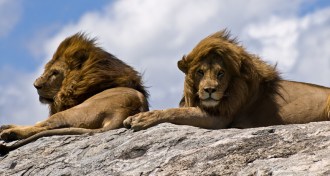
Cheetahs, but not wild dogs, manage to live with lions
One conservation tenet says that cheetahs can’t survive when lions are around, but it’s wild dogs that disappeared in one lion-dense area of the Serengeti.
- Animals
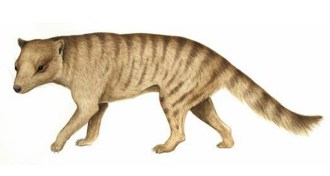
Little thylacine had a big bite
A reconstruction of the skull of a thylacine, an extinct, fox-sized Australian marsupial, reveals that the animal could have eaten prey much larger than itself.