All Stories
- Neuroscience
Autism may be detectable in baby’s first months of life
Infants later diagnosed with an autism spectrum disorder lose tendency to gaze at others’ eyes during first half-year, researchers find.
- Science & Society
Feedback
Our redesigned cover and the astronomy stories from the Oct. 19 issue get readers' reviews.
- Science & Society
Replacing paradigms requires open minds
Cosmological crises require creativity, but science enforces conformity.
- Animals
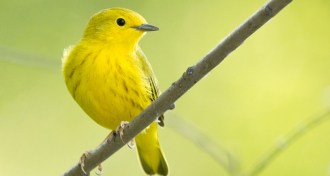
Birds avoid the sounds of roads
The sound of cars driving down a road is enough to deter many bird species from an area.
- Animals
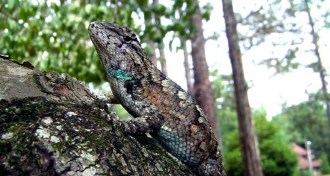
‘Bearded ladies’ are less sexy to male lizards
Females with masculine neck marks are passed over as mates.
- Health & Medicine
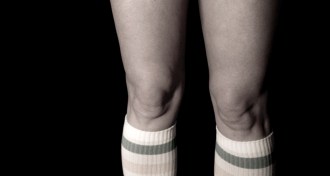
Knee ligament gets a closer look
Surgeons have done a detailed study of a band of fibrous tissue along the front side of the joint.
- Life
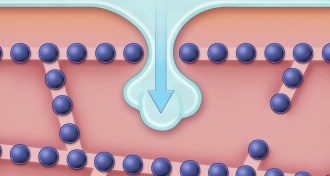
Ice crystals form along cells’ seamlike structures
A detailed view of how ice forms among cells could lead to better tissue preservation.
- Paleontology
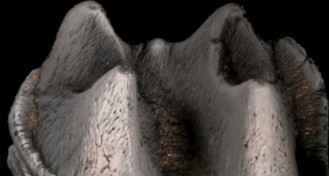
Giant platypus tooth found
A fossil molar found in Australia reveals a previously unknown extinct species of the mammal.
- Animals
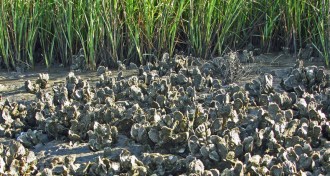
The reefs are alive with the sound of oysters
How does an oyster figure out where to settle down in life? It listens for where the party’s at. A new study shows that oyster larvae can detect sound in the water.
- Animals
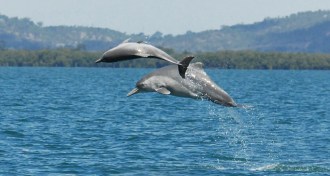
Dolphin without a name
While splitting the dolphin family tree, researchers found a new species.
- Materials Science
Ice aided construction of Forbidden City
Workers slid heavy stone using liquid and frozen water to move it forward.
- Astronomy
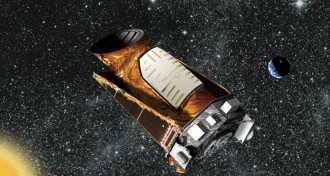
Billions and billions of Earth-sized planets call Milky Way home
Using Kepler data, astronomers estimate that a sizeable fraction of the galaxy’s sunlike stars have Earth-sized planets that could support liquid water.