All Stories
- Earth
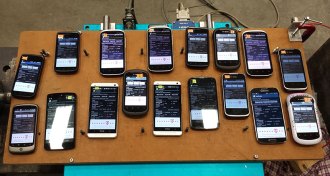
New app puts an earthquake detector in your pocket
Smartphone app MyShake uses motion-sensing accelerometers to detect nearby quakes. The app could provide early warnings of incoming tremors, its creators say.
- Physics
‘Gravity waves’ is an OK way to refer to gravitational radiation
There’s not lexicographical basis for complaints that ‘gravity wave’ is incorrect usage for gravitational waves.
- Genetics
Neandertal DNA may raise risk for some modern human diseases
Neandertal DNA may once have helped humans, but now may contribute to disease.
- Physics
The long road to detecting gravity waves
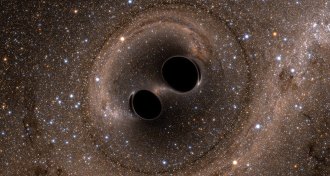
Thanks to two colliding black holes, Einstein's historic prediction of gravitational waves disturbing the fabric of spacetime has finally been realized.
- Physics
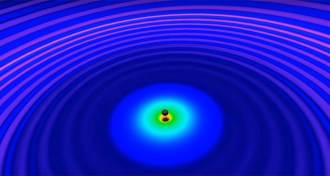
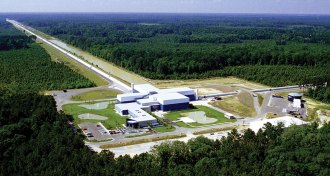
Gravitational waves explained
Colliding black holes send ripples through spacetime that can be detected here on Earth. What are these gravitational waves, and how did Advanced LIGO detect them?
- Physics
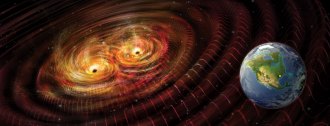
Gravity waves from black holes verify Einstein’s prediction
Gravitational waves, tremors in the cosmic fabric of space and time predicted by Einstein a century ago, have finally been detected, opening a new avenue for exploring the universe.
- Anthropology
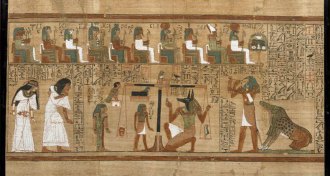
Rise of human civilization tied to belief in punitive gods
Beliefs in all-knowing, punitive deities may have fueled the growth of human civilizations.
- Animals
Africa’s poison arrow beetles are key in traditional hunting method
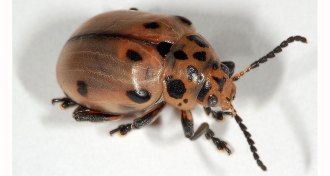
In the Kalahari of Namibia, some San people still hunt with a traditional method — arrows laced with poison taken from beetle larvae.
- Astronomy
Readers tussle over top science stories of 2015
Readers tussle over the top spot in our top 25, questions about engineered vocal cords, and more in the February 20 Feedback.
- Astronomy
In all sorts of circumstances, life finds a way
Editor in Chief discusses the new marine habitats formed by human pollution and the alarming rise of the Zika virus.
- Life
Images probe artery-hardening plaques
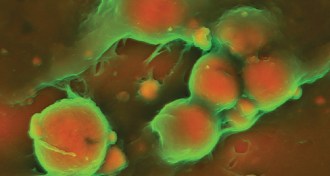
Zooming in on hardened arteries shows researchers which plaques pose heart attack risks.
- Planetary Science
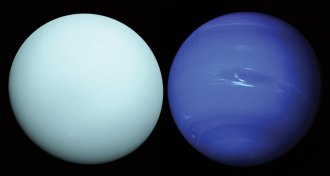
Support grows for a return to ice giants Uranus and Neptune
Thirty years ago, Voyager 2 cruised past Uranus and then on to Neptune. Now planetary scientists think it’s time to go back.