All Stories
- Science & Society
Sometimes busting myths can backfire
When Neil deGrasse Tyson busted the flat-Earth myth on Twitter, he got the world’s attention. But did the myth-busting work? Or did it backfire?
- Neuroscience
Re-creating womb sounds perks preemies’ attention
Babies born prematurely may benefit from hearing a recording of their mothers’ voices and heartbeats.
- Neuroscience
Tiny bare-bones brains made in lab dishes
A reliable way to make standard-issue minibrains could help scientists study the human brain.
- Astronomy
Planets may emerge from stellar duo gathering icy dust
Gas freezing onto dust grains around a binary star could be setting up a site where comets or even planets might someday form.
- Animals
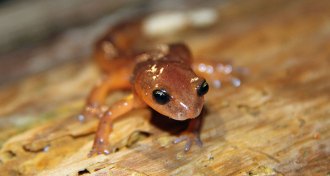
Saving salamanders from amphibian killer may take extreme measures
Experience from lethal Bd fungus outbreak is helping researchers defend North America’s salamander paradise from new Bsal threat.
- Neuroscience
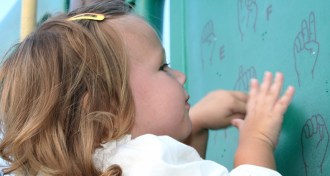
Early exposure to signing helps deaf kids on mental task
Deaf kids exposed to sign language from birth performed better on a task that required attention and impulse control.
- Health & Medicine
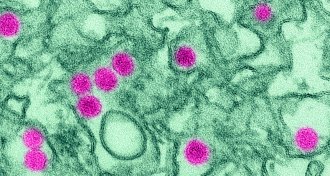
Unknowns about Zika virus continue to frustrate
As worry about the Zika virus outbreak continues to ratchet up, scientists are scrambling to understand what threats the virus poses and how to stop it from spreading.
- Environment
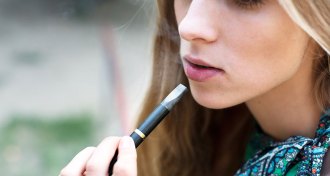
Vaping linked to host of new health risks
Animal studies and analyses of gene activity point to broad range of potential new health risks from vaping affecting everything from sperm to heart and immunity to mental health.
- Health & Medicine
The best advice on Zika virus and pregnancy is to know the unknowns
There are some practical steps pregnant women and women who want to be pregnant can take to minimize risk of Zika virus infection.
- Microbes
Microbe mix varies by kind of home
Urban homes hold more human-associated bacteria compared with rural homes. Subdivided houses with lots of rooms and poor ventilation could be to blame.
- Earth
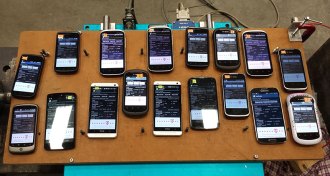
New app puts an earthquake detector in your pocket
Smartphone app MyShake uses motion-sensing accelerometers to detect nearby quakes. The app could provide early warnings of incoming tremors, its creators say.
- Physics
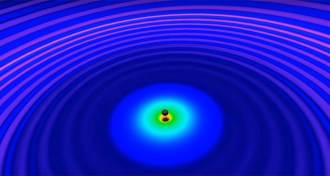
‘Gravity waves’ is an OK way to refer to gravitational radiation
There’s not lexicographical basis for complaints that ‘gravity wave’ is incorrect usage for gravitational waves.