Uncategorized
- Neuroscience
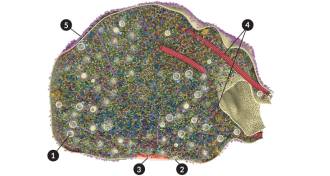
Visualization offers view of a nerve cell’s dispatch center
To get a closer look at how messages move in the brain, researchers created a 3-D visualization that provides a clearer view of how nerve cells communicate.
- Health & Medicine
Ulcer microbe changes quickly to avoid immune attack
During the initial weeks of infection, Helicobacter pylori, the bacterium that causes stomach ulcers, mutates at a high rate, apparently to evade the body’s defenses.
- Environment
E-cigarettes may inflame lungs as much as cigarettes do
Acute lung impacts of e-cigarettes and tobacco cigarettes are nearly identical, new study finds.
- Physics
Energy-efficient laser works at room temperature
A room-temperature polariton laser, which requires little electricity, could improve electronics and medical devices.
- Neuroscience
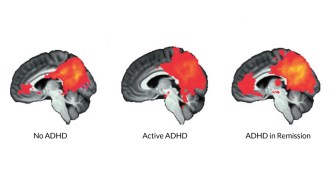
Brain signal reappears after ADHD symptoms fade
In adults who no longer have ADHD, brain synchrony appears.
- Health & Medicine
Obesity on the rise globally
Some 2.1 billion people, almost 30 percent of the world’s population, are overweight or obese.
- Paleontology
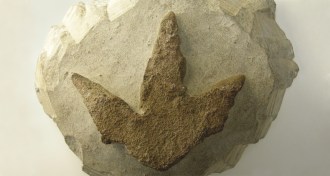
‘Dinosaurs Without Bones’ gives glimpse of long-gone life
Ichnologist Anthony J. Martin explains his research piecing together dinosaurs’ lives from footprints and other traces.
- Science & Society
‘Prisoners, Lovers, and Spies’ reveals the secrets of invisible ink
Kristie Macrakis takes readers on a tour of invisible ink’s history and the need to hide information, from the earliest empires to the Internet age.
- Animals
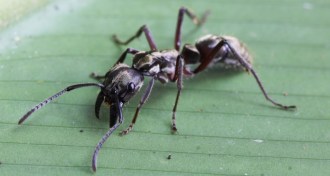
Swimming evolved several times in treetop ants
Certain ants living in tropical forest canopies turn out to be fine swimmers.
-
- Tech
Scientists struggle to find signals in the noise
Even in a simple system like email, detecting the signal from the noise is not always easy. It can be even more difficult separating a dazzling discovery from dust or whether a breast mass is cancerous or benign.
- Health & Medicine
Mammography’s limits becoming clear
It may be time to move way from blanket recommendations about mammography and empower women to decide for themselves, new work suggests.