How warming is shifting microbial worlds
Climate change is affecting microbes, and that has implications for all life on Earth
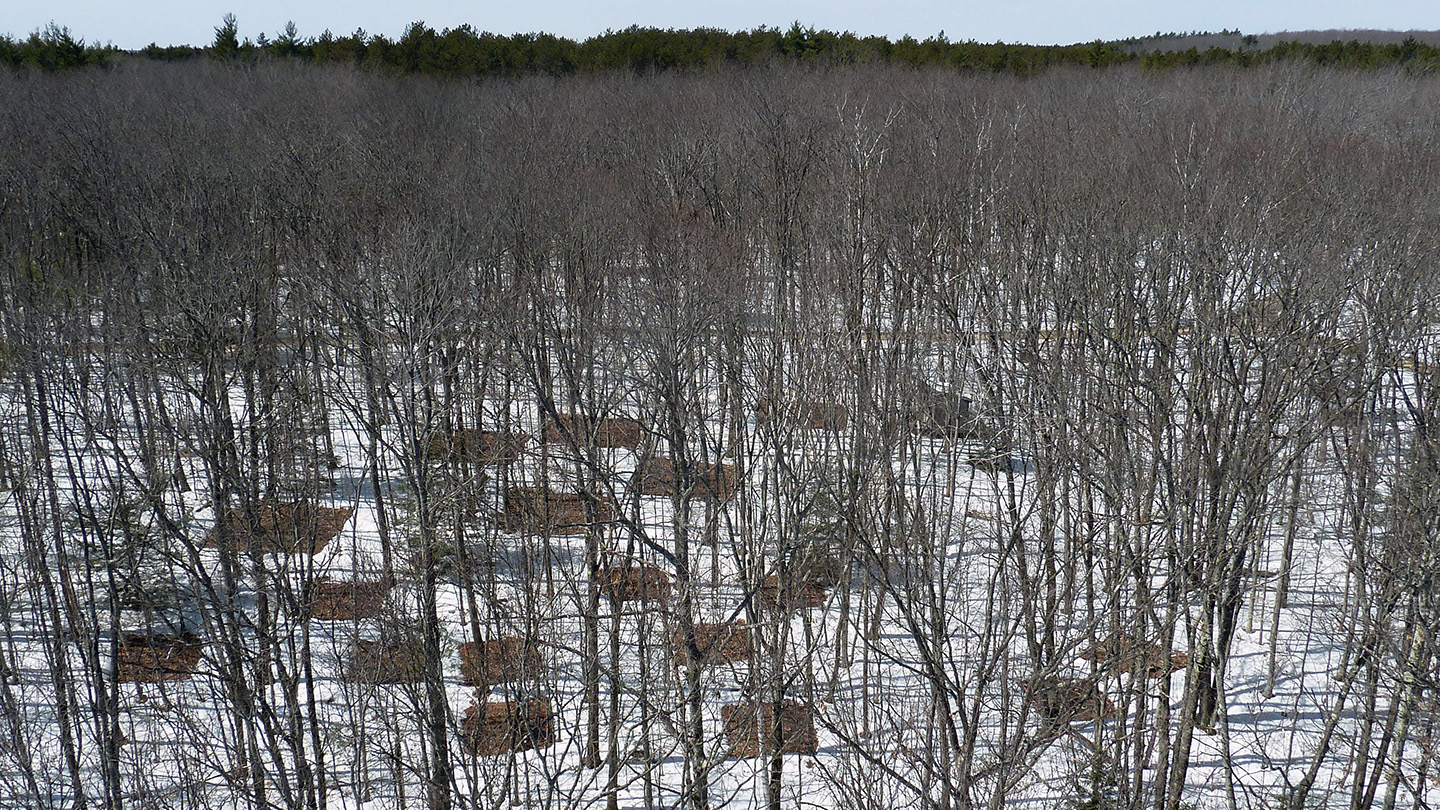
At the Prospect Hill field site in Harvard Forest, an experiment that imitates the effects of climate change on soil has been running for 35 years.
Courtesy of Audrey Barker Plotkin
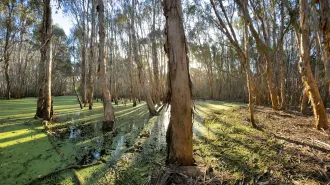
At first glance, Harvard Forest seems like an ordinary woodland. Oak trees shade the terrain among small shrubs and other trees, mostly maple, birch and beech. Fallen leaves coat the ground below. What makes this 1,600-hectare patch of land in north central Massachusetts special is buried in the soil.
Some 10 centimeters below, scientists have installed a subterranean network of wires — some of which have been active for about 35 years — that warms the forest floor. By continuously heating the soil 5 degrees Celsius above ambient soil temperature, these wires imitate the warming effects of climate change for researchers who want to understand what a hotter world might mean for the surrounding ecosystem.
Ecologist Serita Frey of the University of New Hampshire in Durham has certainly noticed changes since she started working at Harvard Forest in 2003. These days, more rain and less snow falls in winter. Summers are drier than they used to be. More trees are falling victim to disease, and some invasive species are moving in. But what is less noticeable — and what she’s keen to learn — is what’s happening to the bacteria, fungi and other microbes that make their homes in the dirt below the forest floor.
Microbes, like all life on Earth, are facing a warming climate. With underground wires artificially warming the soil, Frey and her team can collect soil samples to monitor how microorganisms that make their homes in Harvard Forest’s soil are faring. They’ve learned, for instance, that two decades of warming have altered populations of bacteria inhabiting the topsoil of heated plots, as well as the makeup of the microbial community found in clumps of soil.
Overall, human-driven climate change is “shifting the composition of the community in terms of who’s there,” Frey says. “But we’re also shifting its function.”
Scientists have long known that microbes play a crucial role in maintaining the levels of carbon and other nutrients in our environment. As microbes break down dead animal and plant matter, these organisms can both absorb and produce climate-altering gases, including carbon dioxide, methane and nitrous oxide. In a warming world, that cycle could start to look different, with serious consequences for other life on the planet. Frey is among many researchers working to understand how climate change will affect microbes — and if humans can harness them to reduce its impacts.
Carbon on the move
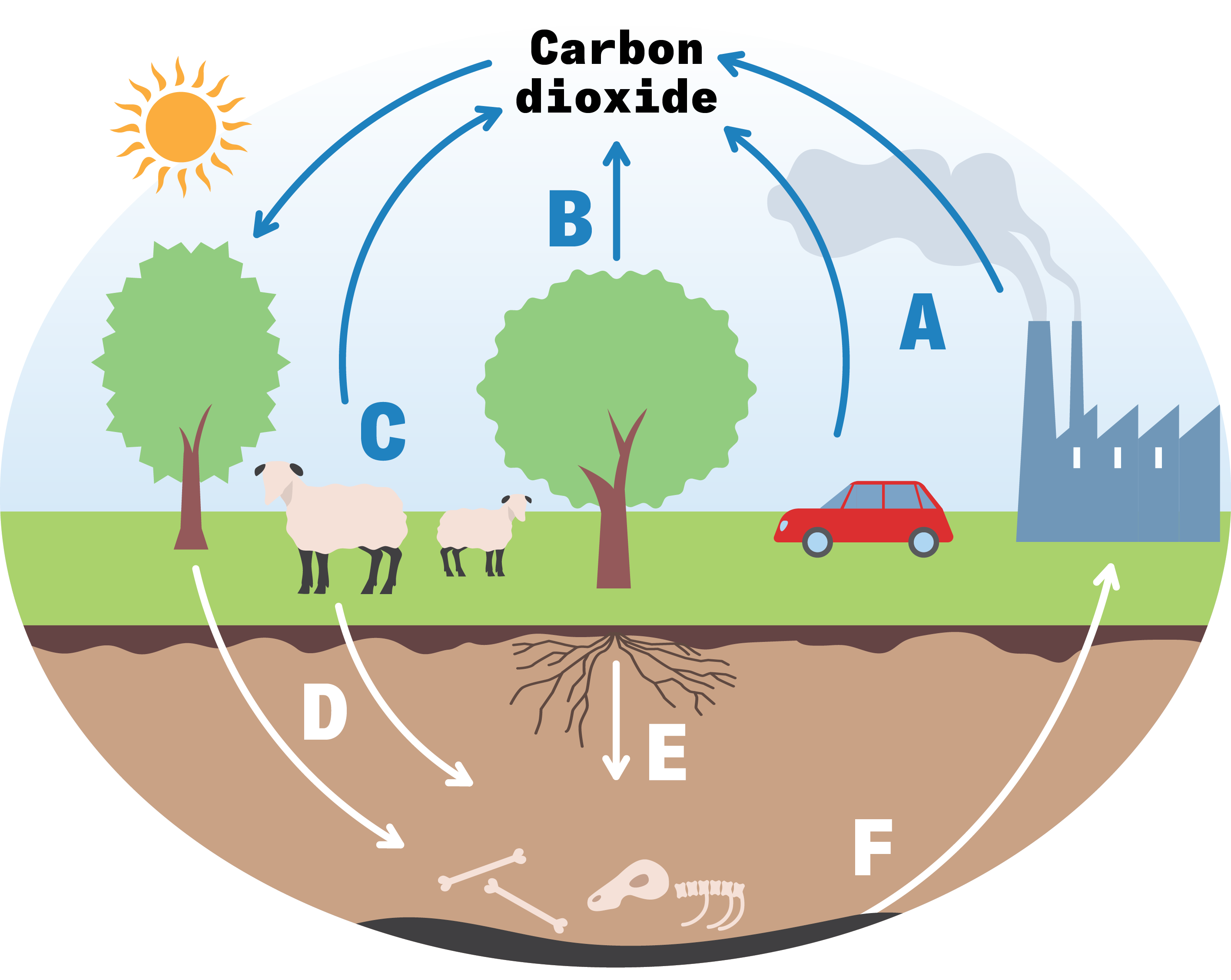
Carbon moves continuously through soils, waterways, organisms and the atmosphere in a process called the carbon cycle.
Carbon dioxide enters the atmosphere from respiring
plants (B, E) and animals (C), as well as through human
activities (A).
As microbes break down dead organisms in soil or water (D), they push carbon into underground stores (F) or the deep ocean.
But, similar to animals and plants, microbes can also release carbon into the atmosphere as a by-product of making energy.
Like with the soil work, research elsewhere is revealing that viruses and other microbes in thawing permafrost may add more carbon to the atmosphere as they break down previously frozen matter. But other microbial abilities might have the opposite effect and prove beneficial against climate change–induced consequences. For example, when paired with helpful soil fungi, plants at risk of losing their habitat could get a boost to endure environmental stress or disease.
Understanding how microbes respond to warming temperatures, drought, flooding and more is key for identifying strategies that might prevent additional carbon from seeping into the atmosphere or help manage transforming ecosystems, says microbial ecologist Jizhong “Joe” Zhou of the University of Oklahoma in Norman. Earth’s microbes have weathered 3.5 billion years of oscillating climates. For them, change is the only constant.
Changing communities
Roughly 2,300 kilometers away from Harvard Forest’s shaded terrain, tall prairie grasses and small trees cover a vast expanse of rolling hills south of Oklahoma City. Dotting the grassland are long, tubelike infrared lamps that hover 1.5 meters above the soil and are spread evenly across experimental plots, each a few meters wide.
Part of an experiment that Zhou leads at the University of Oklahoma’s Kessler Atmospheric and Ecological Field Station, or KAEFS, the lamps heat the dirt and surrounding air to 3 or 4 degrees Celsius above ambient temperature. Like at Harvard Forest, the goal behind this experiment is to zoom in on soil’s smallest life-forms to see if and how quickly new microbes might take over, in this case, warmer grassland soils.
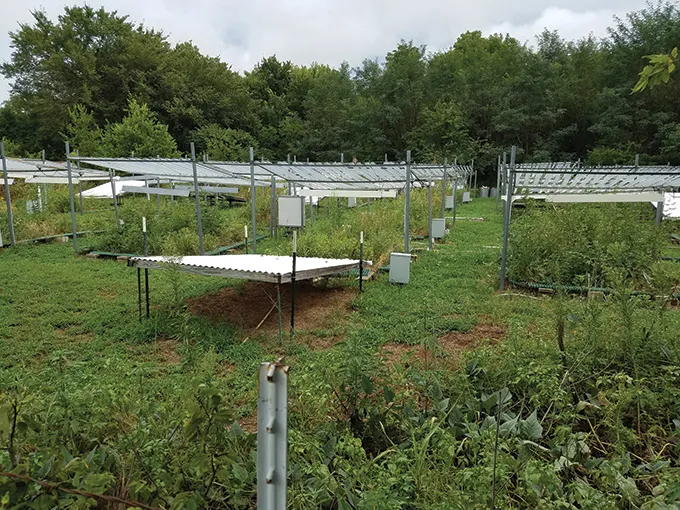
Experiments in other research sites use outdoor chambers to create hotter experimental plots or, as Harvard Forest does, warm the soil directly. But heating air and soil together is a more realistic way of looking at how increasing temperatures impact subterranean ecosystems, Zhou says. In nature, “warming generally affects the air first.”
Since the project began in 2009, Zhou and his team have collected a trove of data. Wires made of a mix of copper and nickel and placed as deep as 75 centimeters in the soil record the temperature every 15 minutes. The team also regularly measures the soil’s water content and keeps tabs on which plants are growing and how much carbon is in the soil. Every year, when plant growth peaks in September or October, researchers pull a 15-centimeter-deep chunk of soil from three spots in each plot to assess the microbial makeup.
After roughly five years of artificial warming, many of the microbes inhabiting the grassland plots changed, Zhou and colleagues reported in 2018 in Nature Climate Change. These included bacteria such as Actinobacteria, which help maintain nutrient levels to keep soil fertile, and Ascomycota fungi, which also help stabilize soil. Such organisms either dominated other microbes or died out altogether under higher temperatures compared with control plots. Warming also pushed these microbial populations to change faster over time. Population shifts that might have happened naturally over the course of decades instead happened in just a few years.
As Zhou and colleagues continued to monitor changes for an additional two years, they found that the microbial diversity in the soil decreased. Fewer species of bacteria and fungi occupied grassland plots that experienced continuous warming and drought. When that happens, relationships between the species that remain can become increasingly complex, sometimes forcing them to battle one another to persist in a changing environment.
“If we look at the future, 15, 20 years, 50 years or 100 years later,” Zhou says, “the whole community could be quite different from right now.” And as microbial populations fluctuate, so can their roles in the ecosystem.
Parsing differences
For all that Zhou and others have learned about changing microbial communities, piecing together which organisms are doing what in their environment is tough. Scientists haven’t historically had a solid grasp on which microbes live where. That may come as no surprise, because our planet may host as many as 1 trillion different species living across vastly different landscapes.
Because microbes are invisible to the unaided eye, scientists have to rely on indirect ways of studying them. DNA from the environment can provide a window into who’s there, says Michael Van Nuland, a Portland, Ore.–based ecologist and evolutionary biologist with the Society for the Protection of Underground Networks. But it can be hard to know if that genetic material is coming from part of the microbial community as it is today, “or if you’re capturing remnant pieces of DNA that had been floating around in the past.”
It’s also difficult to link the organism with its function. Scientists can find molecular signals in soil that suggest what some microbes do in an ecosystem, but such data don’t readily specify how fast the organisms grow, how they draw carbon and other nutrients into soils or how they spread through the environment.
Over the last decade, projects to map microbes, from bacteria and fungi in soils to viruses that inhabit the oceans, have begun to help researchers fill some of these gaps. Such baseline maps can help researchers document fluctuations in response to swings in temperature or storms in certain regions, Van Nuland says.
Van Nuland’s project is creating an atlas of mycorrhizal fungi, which are in symbiotic relationships with a wide range of plants around the world, from crops such as corn, wheat and blueberries to common trees such as maple and pine. As temperatures rise, such fungi might adjust to the heat or shift their habitat to a more suitable location, even if the trees they exist in symbiosis with might not be able to follow, Van Nuland and colleagues reported in 2024 in the Proceedings of the National Academy of Sciences. Other fungi might persist in a stressed state, waiting for favorable conditions to return. Or they might simply die.
Fungi help most plants take in nutrients such as nitrogen and phosphorus and can provide a physical shield against pathogens. Losing such benefits could send destructive ripples through ecosystems. “It’s not just understanding how climate change is affecting a single species,” Van Nuland says. It’s also “the network of interactions that these species have with other organisms in the environment that allow them to persist and thrive. We need to be taking that into account in order to understand how species respond to climate change.”
Disrupted cycles
Warming is just one factor causing changes to microbial life. Other factors impacted by climate change, such as precipitation and pollution, can also have unpredictable ramifications.
Droughts, for instance, are becoming increasingly common. For the microbes occupying Zhou’s experimental plots in Oklahoma’s prairie landscape, a double punch of heat and drought is a push toward becoming more active and unleashing more carbon into the atmosphere, Zhou and colleagues report in a paper to appear in Nature Climate Change. But climate change can also lead to heavier, more unpredictable rainstorms. In wetter conditions, microbes seem to keep carbon in the soil, the team found.
Although impacts would probably vary dramatically across different ecosystems, the findings from Oklahoma suggest that carbon stocked away in soils might get released as droughts worsen around the world, the researchers say. Future warming might worsen as microbes’ natural carbon cycling process gets disrupted. Drylands, which cover roughly 40 percent of Earth’s surface, could be particularly vulnerable.
In Harvard Forest, Frey is interested in the dual influence of climate change and pollution. Like many forests across the northeastern United States, Harvard Forest’s soil has historically been high in nitrogen from human-caused pollution such as car exhaust and power plant emissions (although atmospheric levels of nitrogen have improved over the last decade thanks to the Clean Air Act). But nitrogen is also essential for plant growth, allowing plants to make proteins and photosynthesize.
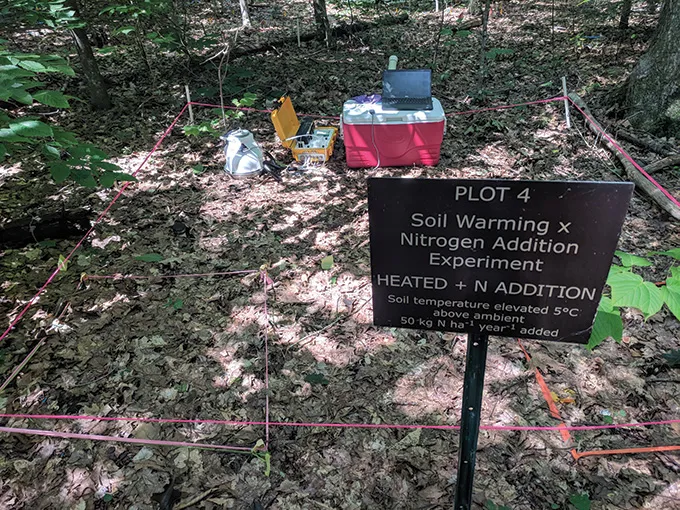
Unlike warmer temperatures, which cause microbes to work overtime and release more carbon into the atmosphere, extra nitrogen puts the brakes on microbes, slowing decomposition and keeping organic compounds in the soil. Frey thought that adding extra nitrogen to Harvard Forest’s soils would follow this principle and slow microbes down, offsetting the carbon that they would otherwise be emitting because of the artificial heat.
Instead, soil carbon dioxide emissions were actually higher in plots treated with both heat and nitrogen compared with just one of those factors, she and colleagues reported in 2024 in Nature Ecology & Evolution. The total amount of carbon in the soil, however, remained roughly the same.
“There’s been this concern that with warming we’re going to lose carbon from the system, and that’s going to deplete soil nutrients,” Frey says. However, it’s possible that warming soils and extra nutrients boost plant growth in a way that pulls in more carbon from the atmosphere. “In systems that are more nutrient-rich to begin with, that have plenty of nitrogen around, maybe that loss of carbon will be lessened.”
Because her team’s experimental plots are small, predicting what the findings might mean for the ecosystem’s carbon balance writ large would require computational simulations, Frey says. At least for now, studies suggest that Harvard Forest is doing exactly what it is designed to do and is taking in more carbon than it is releasing.
Thawing permafrost
Much of the work to dissect the influence of climate change on microbes focuses on fungi and bacteria because they do much of the work of moving nutrients through ecosystems. But viruses may also play a role, working behind the scenes to make sure that everything runs smoothly — or at least to their own advantage.
This dynamic is on display in the Arctic, a region warming almost four times as fast as other parts of the globe. To better understand the effect of climate change on viral communities, some researchers have turned to the permafrost — a layer of soil that remains frozen from year to year. As it thaws, revived bacteria, fungi and other microbes come to life, decomposing dead plant matter and adding carbon dioxide and methane to the atmosphere. Newly awakened viruses can then prey on these microorganisms.
As viruses infect, and sometimes kill, their hosts, they affect what microbes are living in a system, says Akbar Adjie Pratama, a viral ecologist at the Friedrich Schiller University Jena in Germany and Ohio State University in Columbus. As with other dead organisms, the hosts that viruses kill release carbon and other nutrients that get cycled back into the ecosystem. But this additional carbon could burden an already carbon-rich atmosphere.
In 2024, Pratama and colleagues reported in Environmental Microbiology that, over a span of seven years, a viral community in permafrost in Sweden remained surprisingly stable. Some of those viruses carried genes that, if the soil were to thaw, could help degrade carbon in the ecosystem. A few may infect Methanoflorens archaea, a group of microbes that emit methane into the atmosphere. Understanding the viral controls that naturally keep gas-leaking microbes in check, the team wrote, could help researchers find ways to do it artificially.
Uncovering the impact of viruses on ecosystems around the globe requires pinpointing which organisms viruses infect in permafrost, water and soil, Pratama says. But it’s a tough task. He and colleagues have so far managed to link only a small fraction of permafrost viruses with their microbial hosts, and even fewer in groundwater. “How can we make a meaningful conclusion on the role of viruses when we can only link like 1 percent?” Pratama says.
Change for the better
Understanding the roles that viruses and other microbes play in climate change — both the organisms themselves and the processes they contribute to — has the potential to identify allies that could help humans mitigate some of its effects.
For instance, viruses such as soil-dwelling phages that infect carbon- or nitrogen-emitting soil microbes could help curb greenhouse gas emissions, Pratama says. In places like the Netherlands, where the agricultural industry produces more nitrogen per hectare than most other countries in the European Union, adding such viruses to the soil could help cut down on nitrogen-fueled algal blooms that infiltrate waterways and degrade water quality.
Fungi could be collaborators, too. Planting trees to restore forests following a wildfire may have a better chance of succeeding if trees’ fungal partners are also transplanted. “They are ecosystem engineers,” Van Nuland says. “They work across kingdoms of life to get things done.”
Beyond hypothetical uses, however, some scientists have already been applying what they know about microbes to aid stressed coral reefs during marine heat waves, which are coming on more frequently thanks to climate change.
Coral reefs host various algae that display a kaleidoscope of color and who in turn host myriad beneficial microbes. Heat waves push those algae to produce toxins that not only provoke corals to evict them — which we see as color-drained or bleached corals — but also kill off some of the good bacteria. In this environment, pathogens can start to grow. “An entire situation that is already bad is going to get worse,” says marine ecologist Raquel Peixoto of King Abdullah University of Science and Technology in Thuwal, Saudi Arabia.
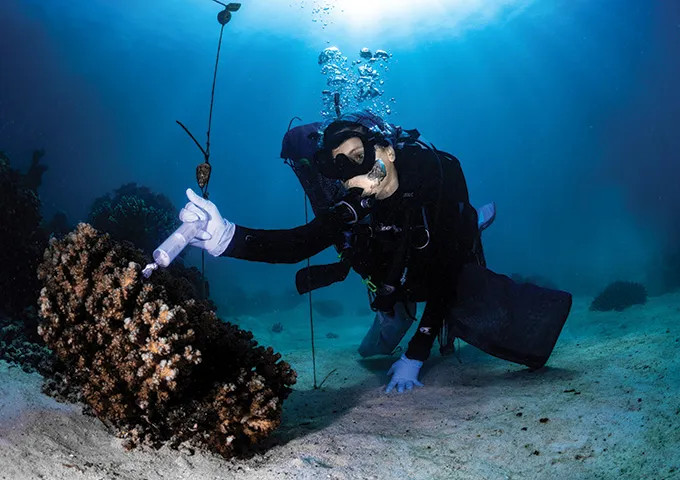
Peixoto has been experimenting with restoring healthy bacteria to bleached corals as a way to keep these marine animals alive. In 2021, she and her colleagues reported in Science Advances that using probiotics to restore the bacterial community was effective at protecting corals in an aquarium. The team has since tested their probiotic treatment in the wild. During a 2022 marine heat wave, treated corals were healthier than untreated organisms, the researchers reported last year in a paper posted to bioRxiv.org.
“We keep applying [the probiotic treatment] for the weeks where corals are in really bad shape,” Peixoto says. Not only do corals benefit, but the microbiomes of fish, algae and sponges also improve. “We’re seeing in the reef that that makes a difference,” she says.
Such experiments with microbe-based solutions, however, are still few and small. Deploying such solutions to tackle climate change would require tremendously scaling up human attempts to engineer helpful microbes. And although it is clear that Earth’s changing climate is altering microbes and their communities, the consequences remain murky. Regardless of what the future holds, what is certain is that microbes will play an essential part in what is to come.
“Microbes are shaping, and have been shaping, our planet, our atmosphere, for all of our existence,” Peixoto says. Microbes as a whole are not going to go extinct. “They will evolve, they will be replaced, they will still be here,” she says. But their role in keeping our planet functioning, “this is changing.”