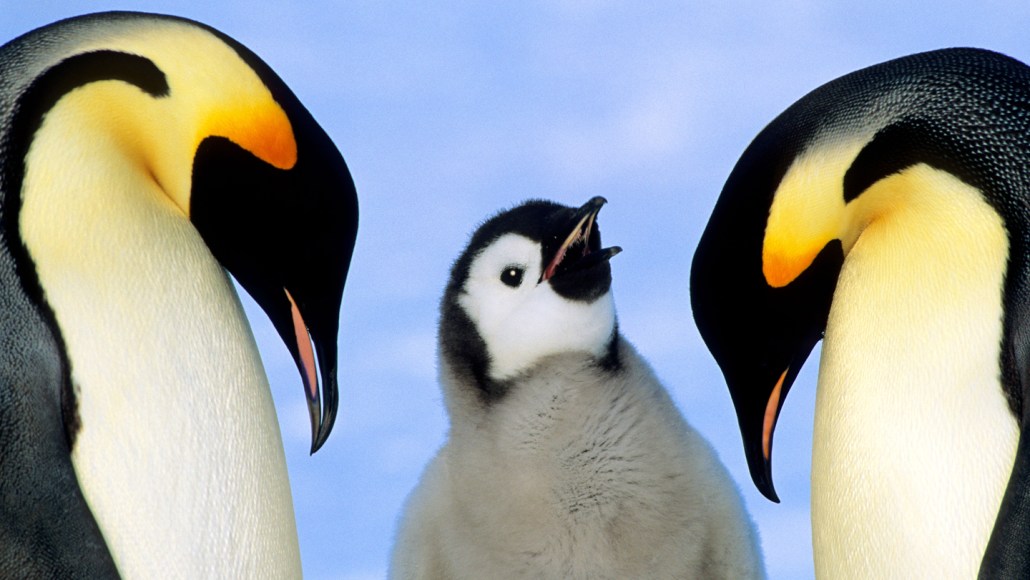
A scene like this of two adult emperor penguins with a chick may become rare; the iconic Antarctic birds are now listed as “Endangered,” a leading conservation group announced April 9.
Wayne Lynch/All Canada Photos/Alamy
Emperor penguins have braved cold, storms, starvation and predation to breed, ensuring their population survives. But climate change might defeat the iconic Antarctic birds.
On April 9, the largest of all penguins (Aptenodytes forsteri) were officially moved from threatened to endangered status by the International Union for Conservation of Nature. The network of about 17,000 scientists and experts from over 160 countries maintains the IUCN Red List, a running tally of how threatened different species are in the wild. “Endangered” status means the birds are now considered to face “a very high risk of extinction in the wild.”
It’s the breakup and loss of sea ice around Antarctica that is driving the birds toward the brink, scientists say. Over the last decade, Antarctica has seen record lows in the expanse of sea ice that fringes the continent, and the breakup of the ice is also occurring earlier in the year. That’s devastating for emperor penguins, which require “fast” ice — sea ice that is immobile for most of the year — to breed and raise their young. If the ice breaks apart too soon, it puts the chicks in grave danger of drowning or freezing to death, as the young birds don’t yet have waterproof feathers.
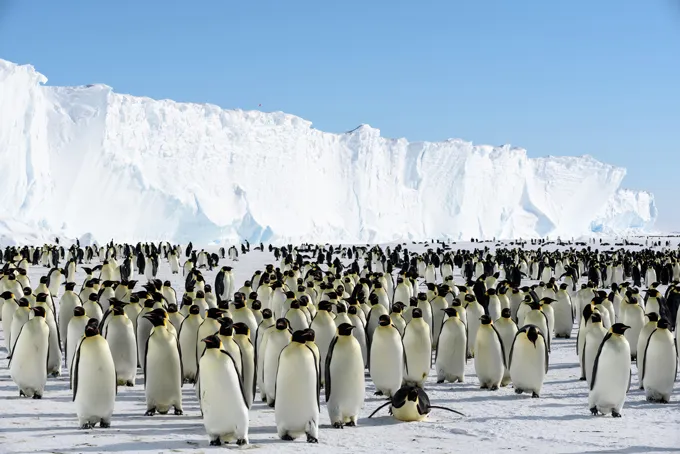
In 2022, satellites observed the catastrophic loss of five separate emperor penguin breeding colonies near the Bellingshausen Sea: The sea ice beneath them broke apart, leading to an estimated loss of some 10,000 chicks. Current emperor penguin populations are estimated at around 595,000 adults, a decrease of 10 percent to 22 percent relative to 2009. The current population number is expected to halve by 2080, IUCN says.
“The emperor penguin’s move to Endangered is a stark warning: Climate change is accelerating the extinction crisis before our eyes,” Martin Harper, CEO of BirdLife International, said in a statement. The organization led the emperor penguin assessment.
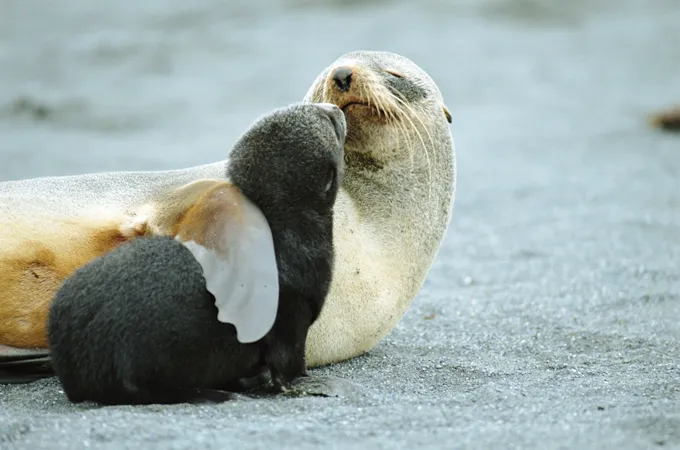
The loss of sea ice is also responsible for rapidly shunting the Antarctic fur seal (Arctocephalus gazella) several notches closer to extinction, the IUCN report says. In 1999, the animals were considered of “least concern” on the IUCN Red List, with the adult population of Antarctic fur seals at around 2,187,000. But by 2025, that population had plunged to 944,000, a dramatic drop that has earned the seals endangered status.
Climate change is also the culprit in the seals’ decline: Rising ocean temperatures and shrinking sea ice are pushing their primary food source, tiny crustaceans called krill, to deeper ocean depths. As a result, seal pups are far less likely to survive their first year.