
All Stories by Lisa Grossman
- Planetary Science
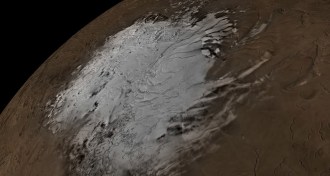
Mars (probably) has a lake of liquid water
A 15-year-old Mars orbiter has spotted signs of a salty lake beneath the Red Planet’s south polar ice sheets.
- Astronomy
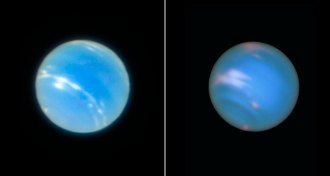
Move over, Hubble. This sharp pic of Neptune was taken from Earth
A new strategy at the Very Large Telescope lets astronomers take space telescope–quality pictures from the ground.
- Planetary Science
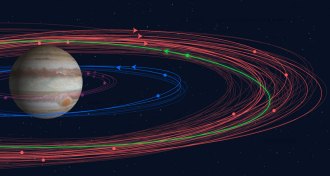
Jupiter has 12 more moons than we knew about — and one is bizarre
Astronomers found a dozen previously unknown moons of Jupiter, and one may be a remnant of a larger moon that was all but ground to dust.
- Planetary Science
First global maps of Pluto and Charon show the worlds’ highs and lows
New charts of Pluto and its moon Charon, compiled using New Horizons’ data, reveal high peaks, deep depressions and strange ridges.
- Astronomy
The ecosystem that controls a galaxy’s future is coming into focus
An invisible cloak called the circumgalactic medium controls a galaxy’s life and death.
- Astronomy
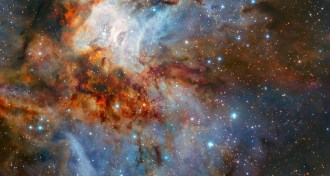
See this star nursery shine in a stunning new infrared image
A newly released image of star cluster RCW 38 shows the intricate details of wisps of gas and dust surrounding newborn stars.
- Planetary Science
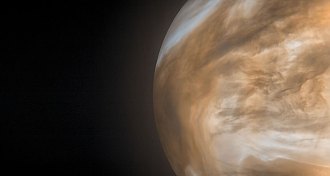
Venus’ thick atmosphere speeds up the planet’s spin
Venus’ thick atmosphere can push on mountains on the surface, changing its rotation period by a few minutes every day.
- Astronomy
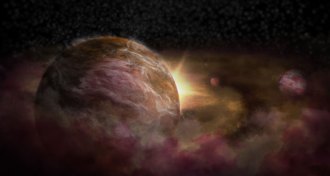
Swirling gases reveal baby planets in a young star’s disk
A new technique pinpointed three planets forming around a young star about 330 light-years from Earth.
- Planetary Science
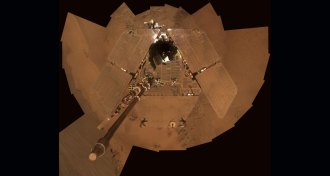
The Mars rover Opportunity is sleeping, not dead, NASA says
Opportunity is hunkered down in a deep sleep on Mars to ride out what’s looking to be a long dark dust storm.
- Planetary Science
Opportunity rover waits out a huge dust storm on Mars
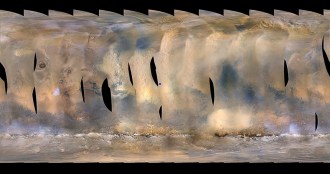
NASA’s Opportunity rover is in low-power mode to preserve battery life while a vast dust storm blankets part of the Red Planet.
- Planetary Science
Curiosity finds that Mars’ methane changes with the seasons
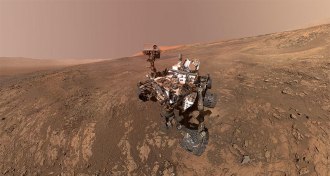
The Curiosity rover found seasonally changing methane in Mars’ atmosphere and more signs of organic molecules in an ancient lake bed.
- Planetary Science
New Horizons wakes up to begin Kuiper Belt exploration
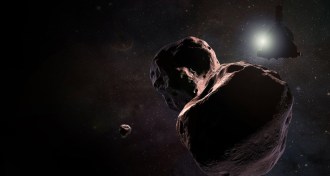
The New Horizons spacecraft just woke up to get ready for its New Year’s Day flyby of the distant space rock Ultima Thule.