Archaeology meets big tech, the cognitive cost of AI, heat-proofing plants, and energy-saving computer chips
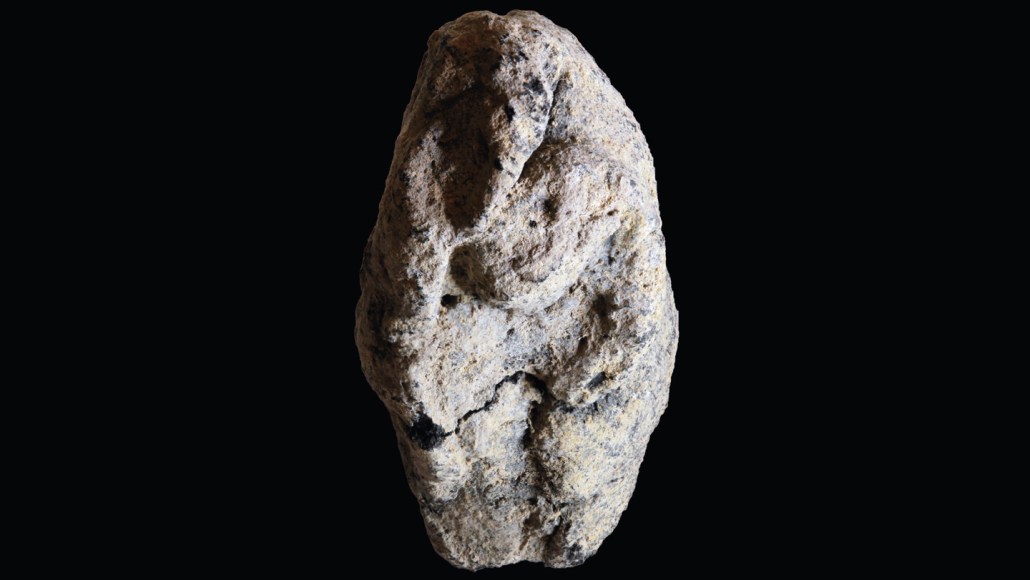
A tiny clay figure is shown on a black background. It is said to depict a goose embracing a woman.

This newly discovered clay figurine shows a goose interacting with a woman. It points to a shift in spiritually inspired artwork and storytelling around 12,000 years ago in the Middle East.

© Laurent Davin

📜 A 12,000-year-old story

A recent archaeological discovery suggests a major cultural milestone: the onset of naturalistic depictions of people with animals around 12,000 years ago, almost three thousand years earlier than previously estimated. Science News’s Bruce Bower has more on this ancient narrative shift.

🖌️ The original content creators

For millennia, Paleolithic art was dominated by animals. Think cave paintings of bison, carvings of horses and not many humans among them. A new finding, unearthed in modern-day Israel, marks a departure.Archaeologists studying an ancient figurine, timeworn and abstract to the naked eye, used “technological, archaeometric and dermatoglyphic analyses” to reconstruct a figure of a woman and a goose in a relationship of intimacy, or perhaps domestication.

Say what? Let’s parse these techniques one by one: 👇

Technological analysis refers to the scientific study of how an object was made, in order to reconstruct the sequence of actions, the knowledge and the tools used by ancient artisans. This could include microscopy (using high-powered optical or scanning electron microscopes), or radiography (using X-rays or CT scans), to see inside complex objects. 

Archaeometry is the application of the physical and chemical sciences to determine composition, date and provenance of artifacts and environmental remains. 

Premium Subscription

Access to this content is for Investors Lab subscribers only. Investors Lab delivers exclusive, data-backed insights into scientific breakthroughs set to disrupt industries.